
TOEFL
20
Refining Your TOEFL Writing: 4 Academic Essay Techniques
Embed quotations as snippets, introduce authors with full name and role, turn passive voice into active, and replace weak reporting verbs like says with precise academic verbs. Four ways to refine an academic essay, with examples.
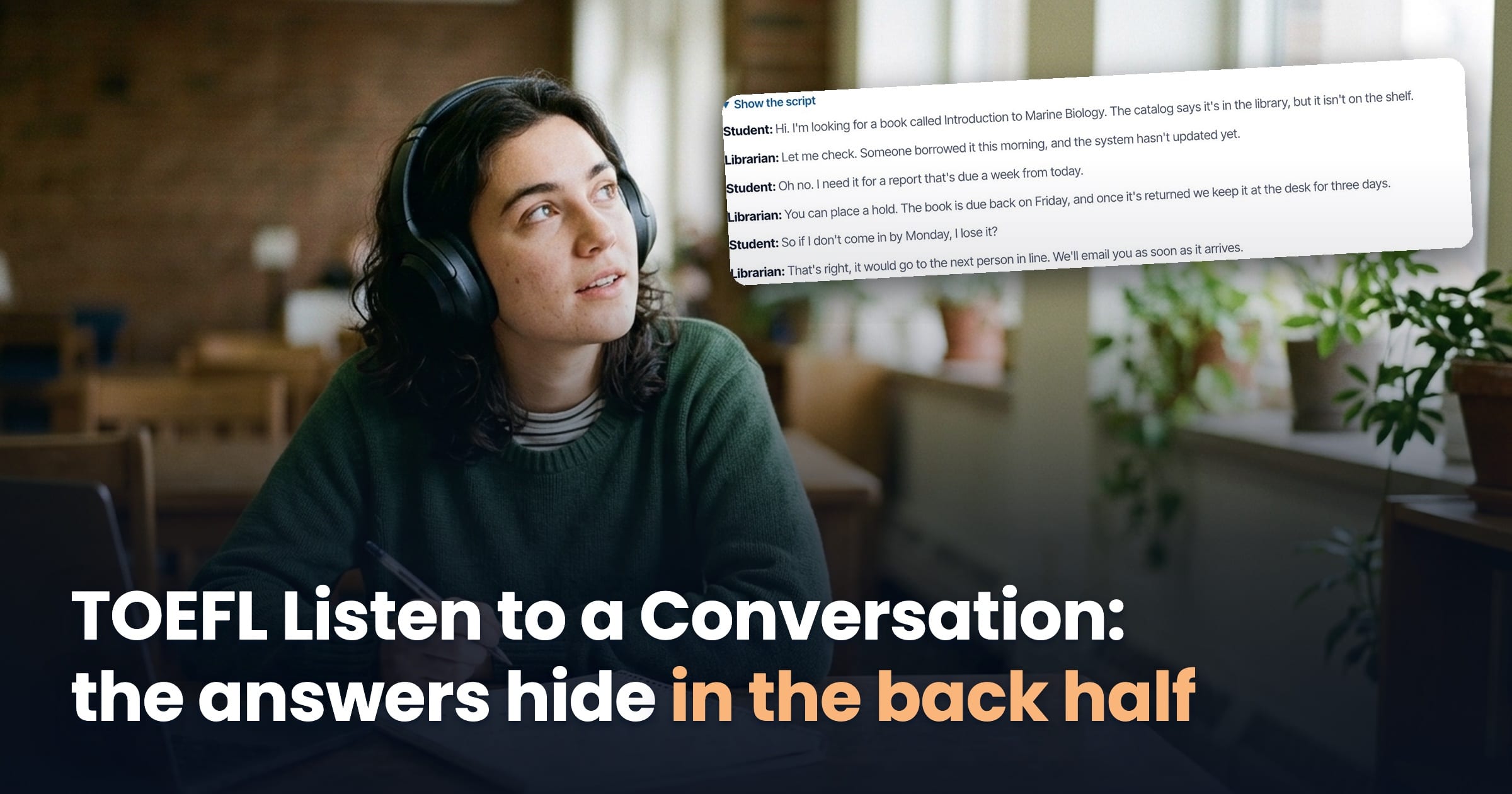
TOEFL Listen to a Conversation: 6 Tips
How to answer TOEFL Listen to a Conversation in the 2026 Listening section. Based on 60 conversations and 120 questions from our full practice tests: where answers sit in the script, date and condition questions, Why questions, speaker-intent questions and spoken expressions, and structured note-taking.
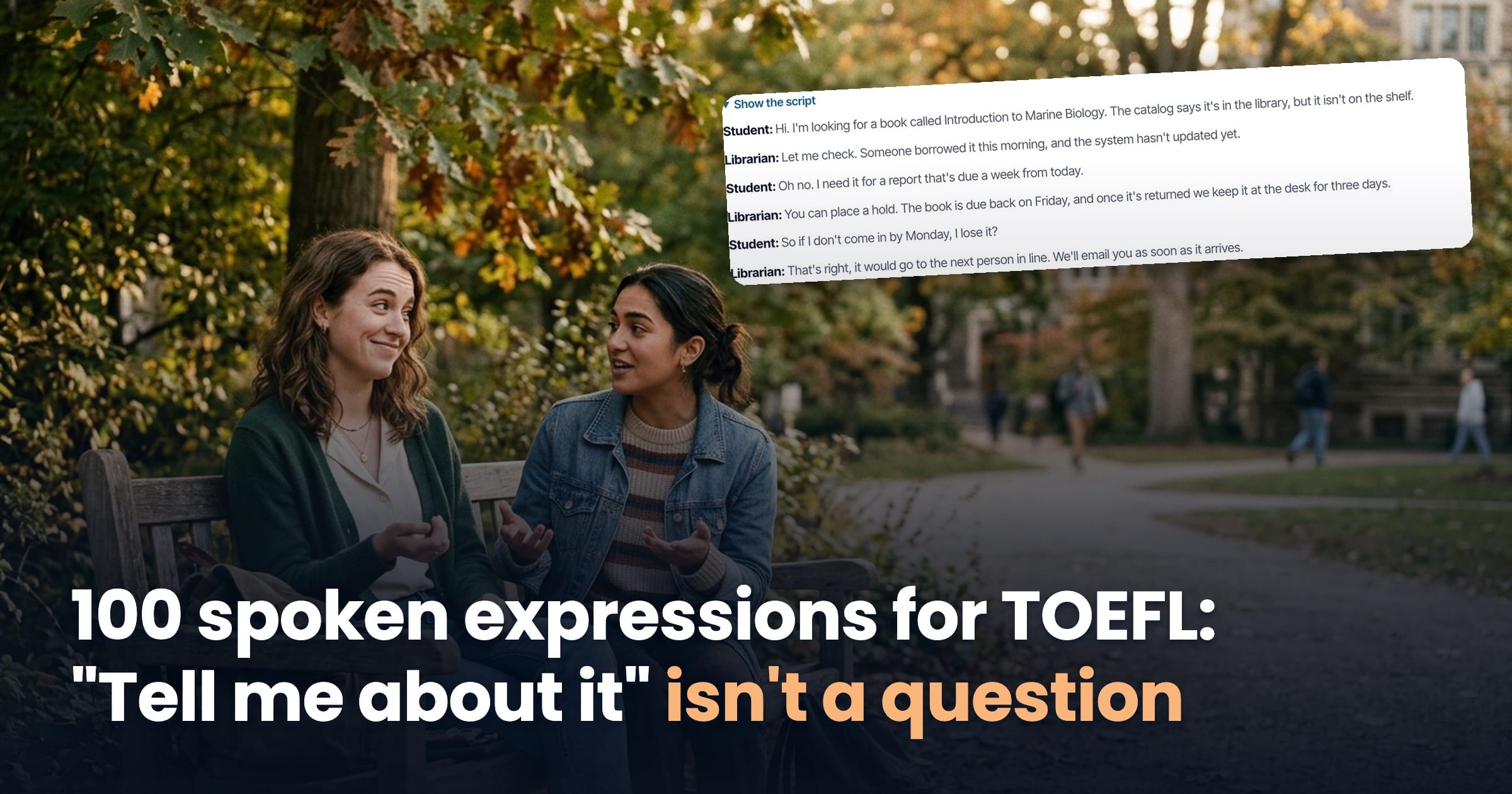
100 Spoken English Expressions for TOEFL Listening Conversations
Speaker-intent questions in TOEFL Listening conversations turn on what everyday expressions really mean. 100 expressions in 10 groups by intent, each with its real meaning and a campus example, from Tell me about it to I wouldn't count on it, plus counts from 44,000 words of our own listening scripts.
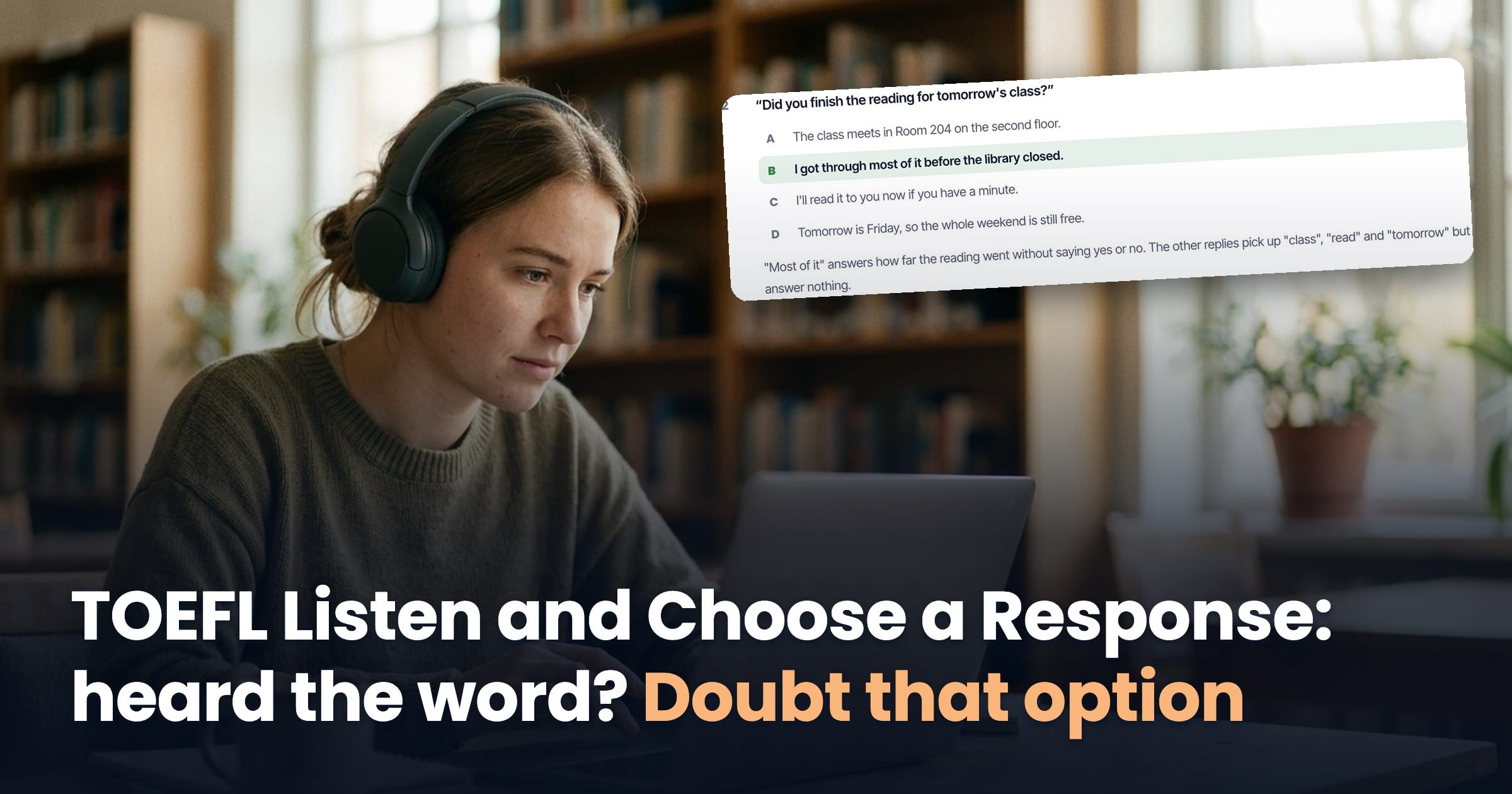
TOEFL Listen and Choose a Response: 5 Tips
How to answer TOEFL Listen and Choose a Response, the first task in the 2026 Listening section. Based on 228 questions from our full practice tests: wh- words, yes/no questions, remarks that aren't questions, repeated-word traps and either/or questions, plus how to practice.
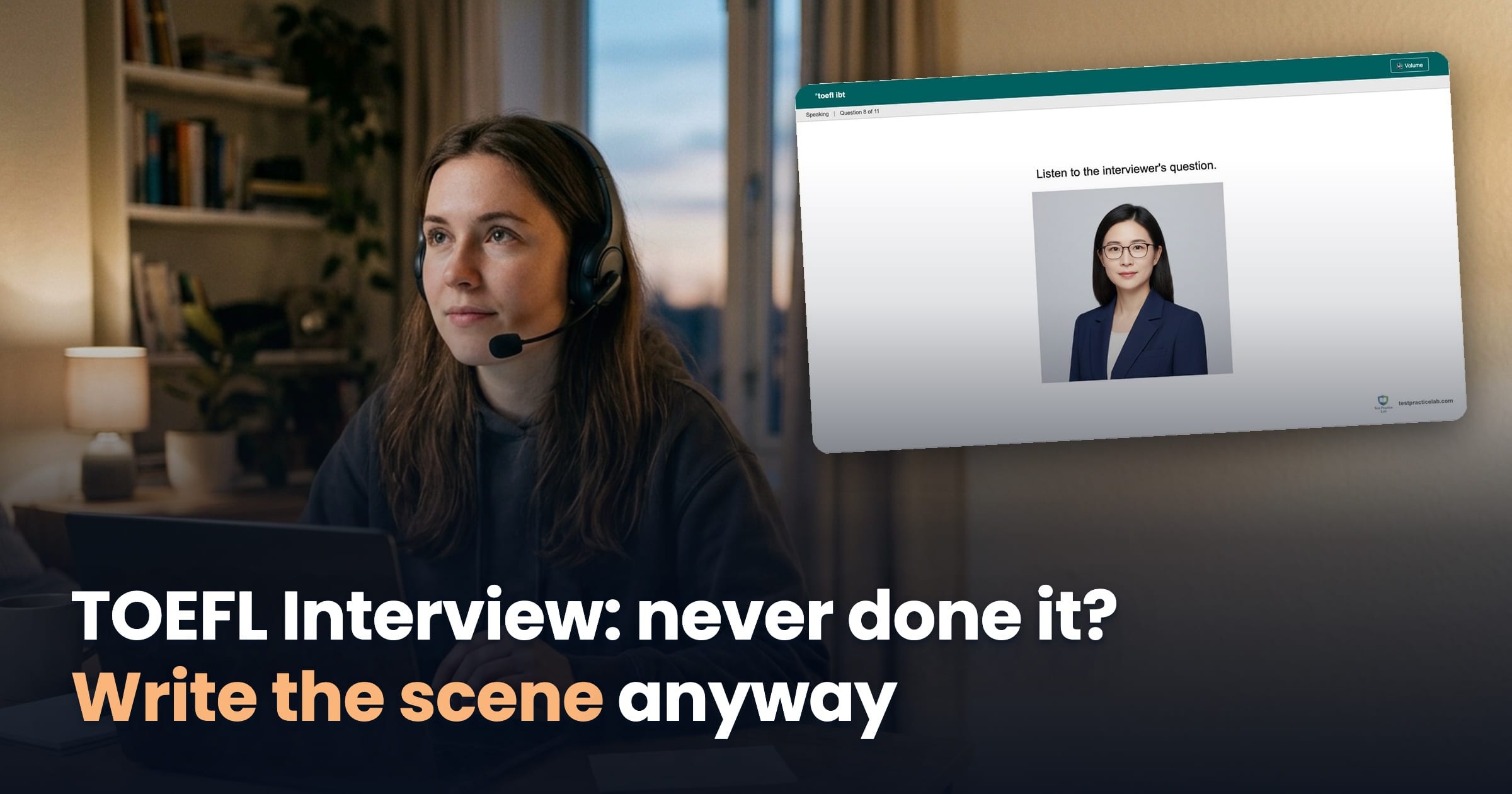
TOEFL Take an Interview: Hear the Question Once, Answer in 45 Seconds
In the 2026 TOEFL Speaking section, Take an Interview plays each question once and gives you 45 seconds with no prep time. Here is where ETS draws the line between a 5 and a 4, how to split 45 seconds into four slots, what to do when you are asked about something you have never done, and how long our own model answers really are.
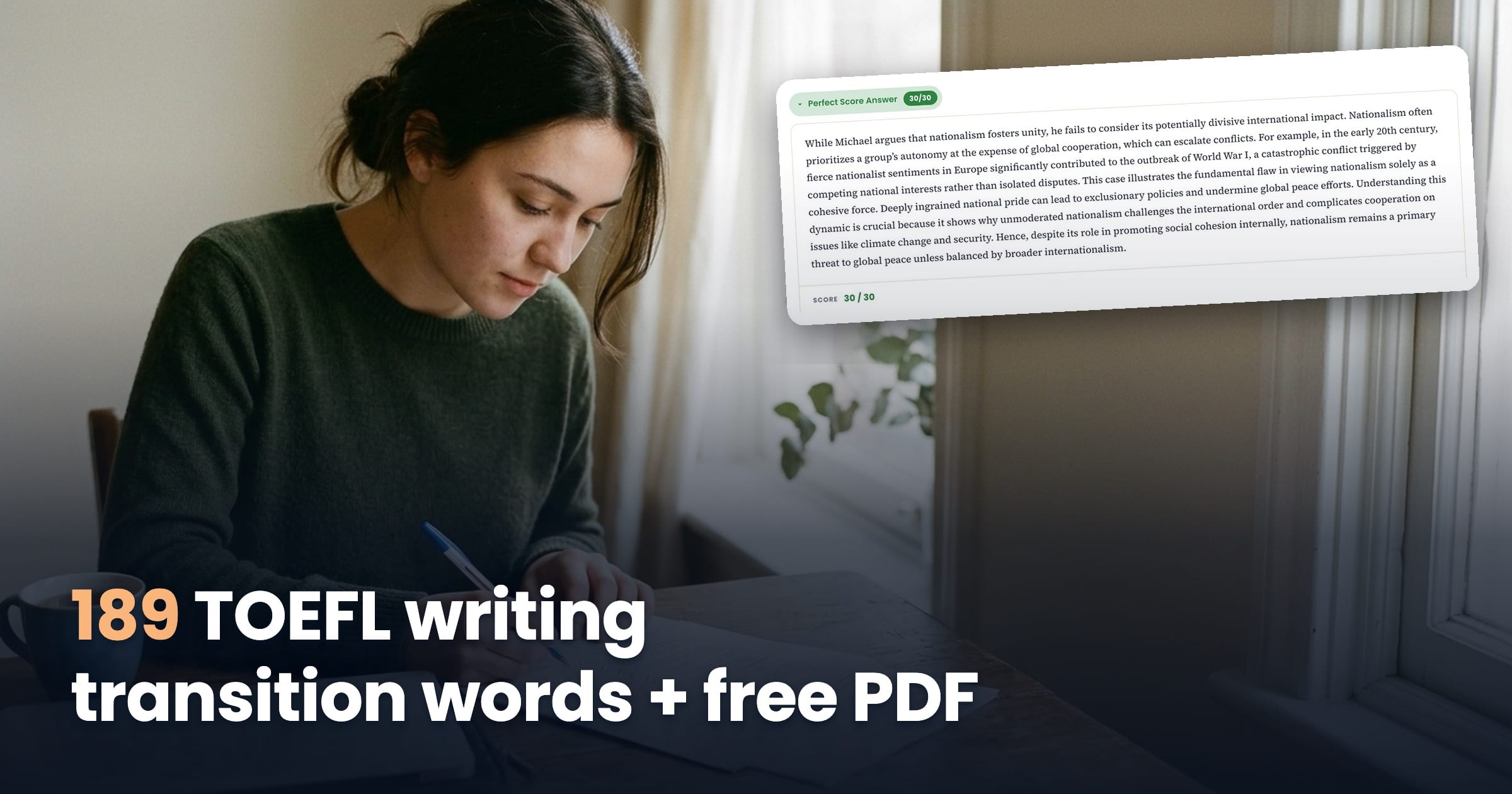
189 TOEFL Writing Transition Words, With Examples (Free PDF)
189 transition words and phrases for the 2026 TOEFL Write an Email and Academic Discussion tasks, grouped into 14 sets with test-style examples, a printable PDF, and counts from 114 of our model answers.
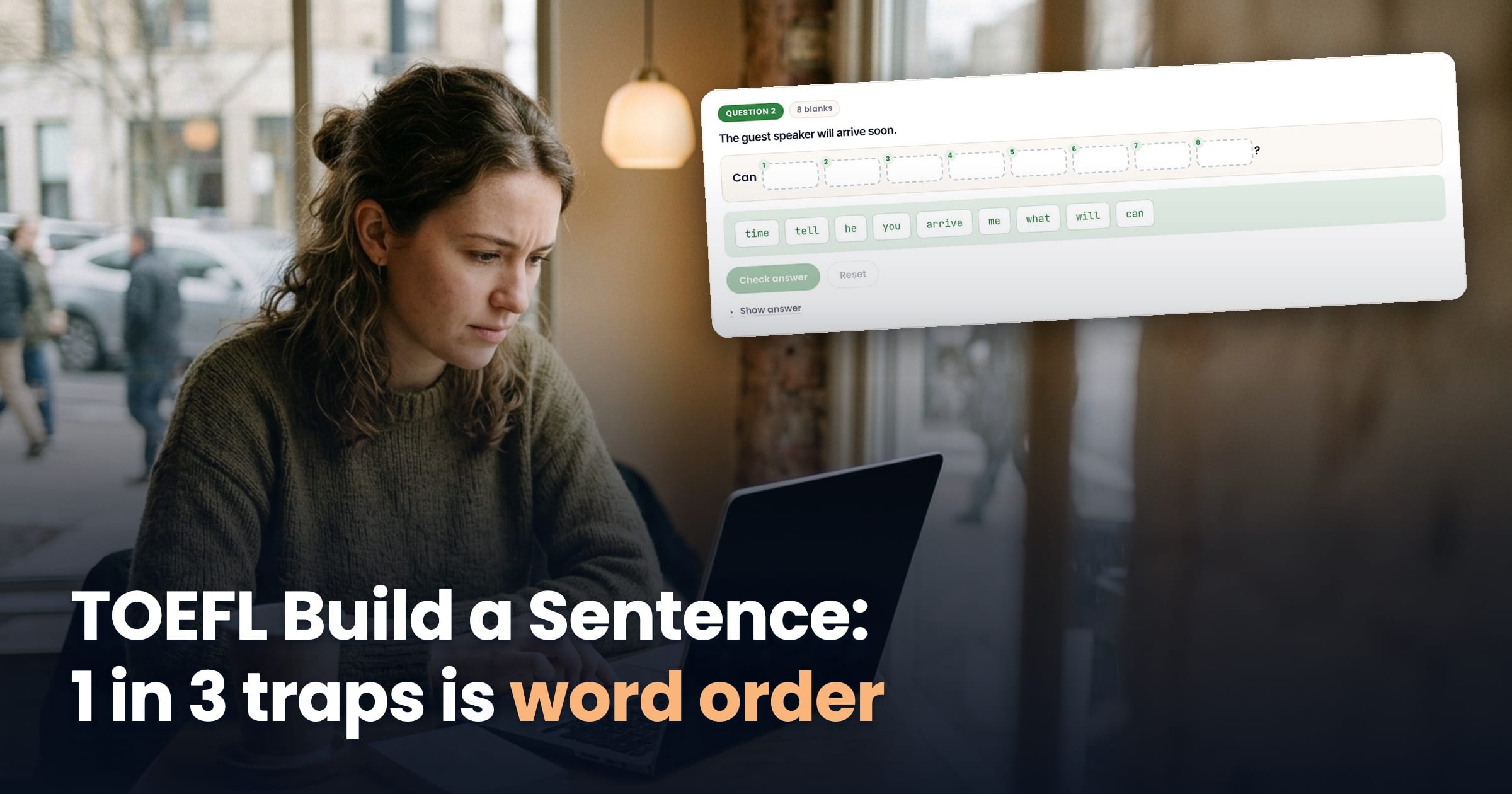
TOEFL Build a Sentence: We Sorted 120 Trap Tiles
TOEFL Build a Sentence asks you to arrange word chunks into one sentence. We sorted the trap tiles hidden in 120 of our items to show the three most common traps, the rule behind each, a teacher's practice drills, and how to pace it.
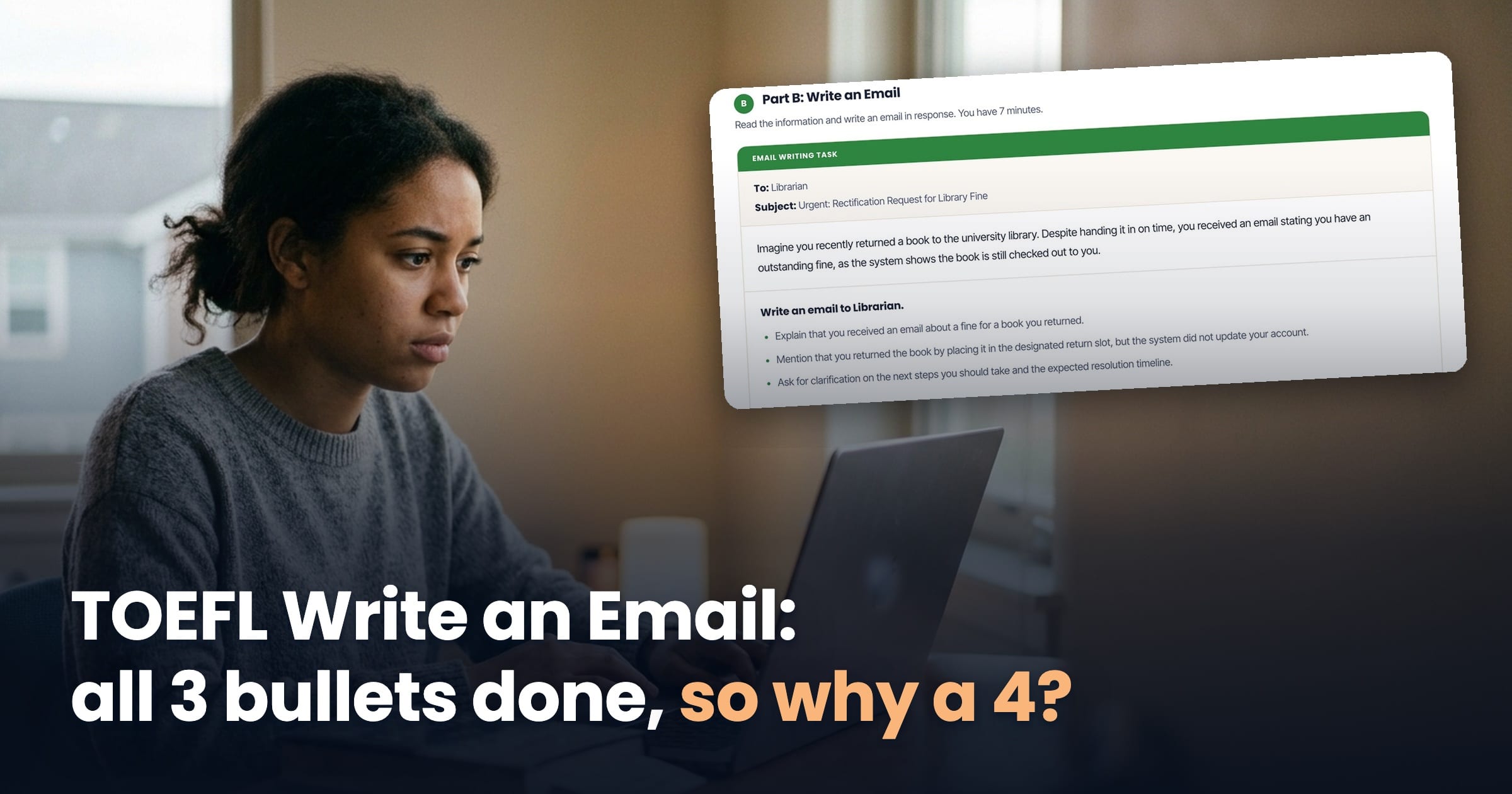
TOEFL Write an Email: You Covered All Three Bullets. Why Only a 4?
TOEFL Write an Email gives you 7 minutes to answer three bullet points. We counted 25 of our own email tasks to show the pattern in the prompts, where 4 and 5 split, how long to write, and how to ask politely.
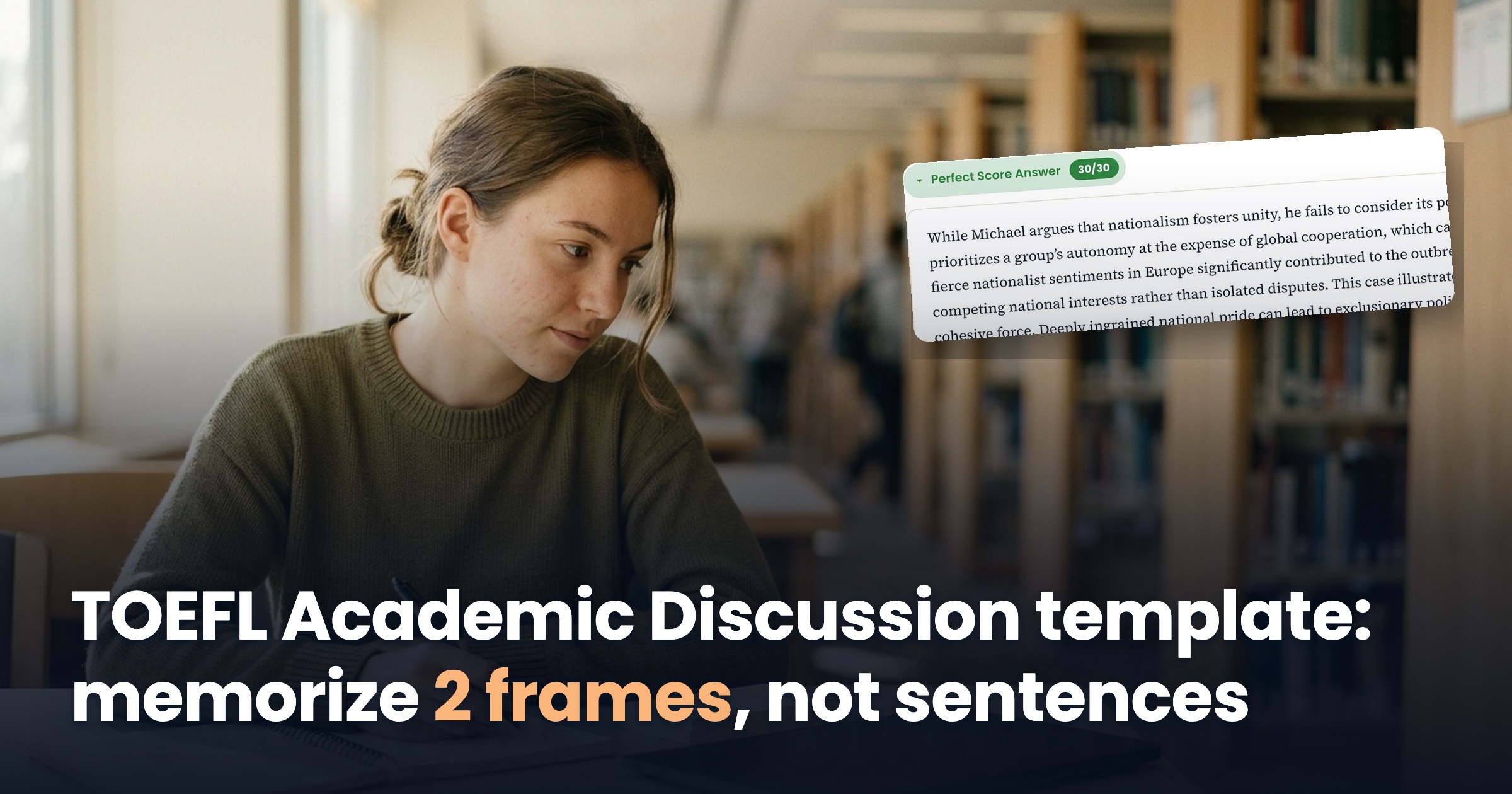
TOEFL Academic Discussion Templates: Memorize the Frame, Leave the Content Blank
TOEFL Academic Discussion templates reverse-engineered from our top 15 model answers: two frames, how to choose between them, how to handle the other student, and when to memorize.
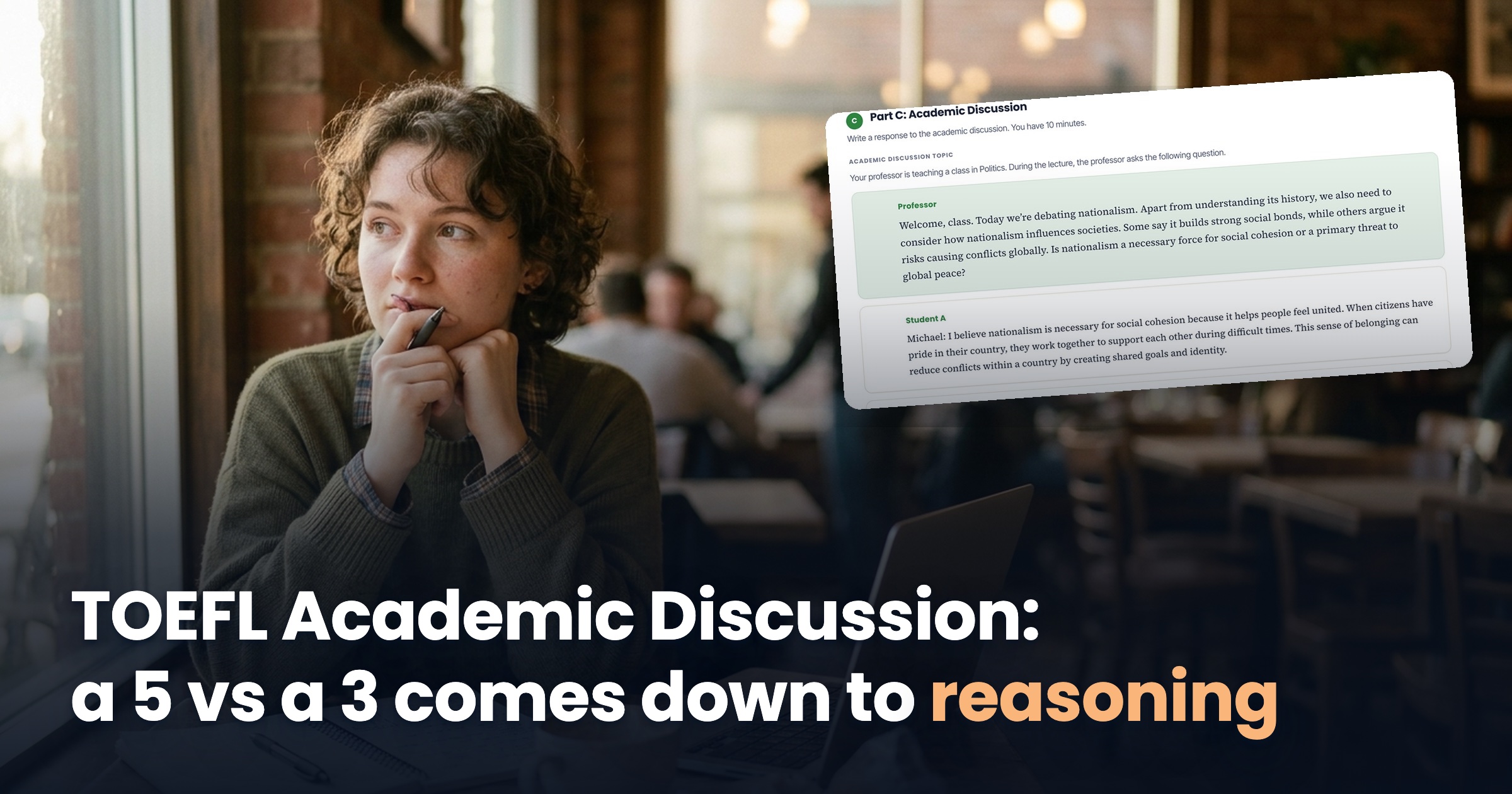
TOEFL Academic Discussion: Where a 5 and a 3 Split
The official scoring guide for TOEFL Write for an Academic Discussion, a comparison of 30 of our model answers, what a 12-year instructor sees behind low scores, and 10 ways to build the reasoning that lifts them.
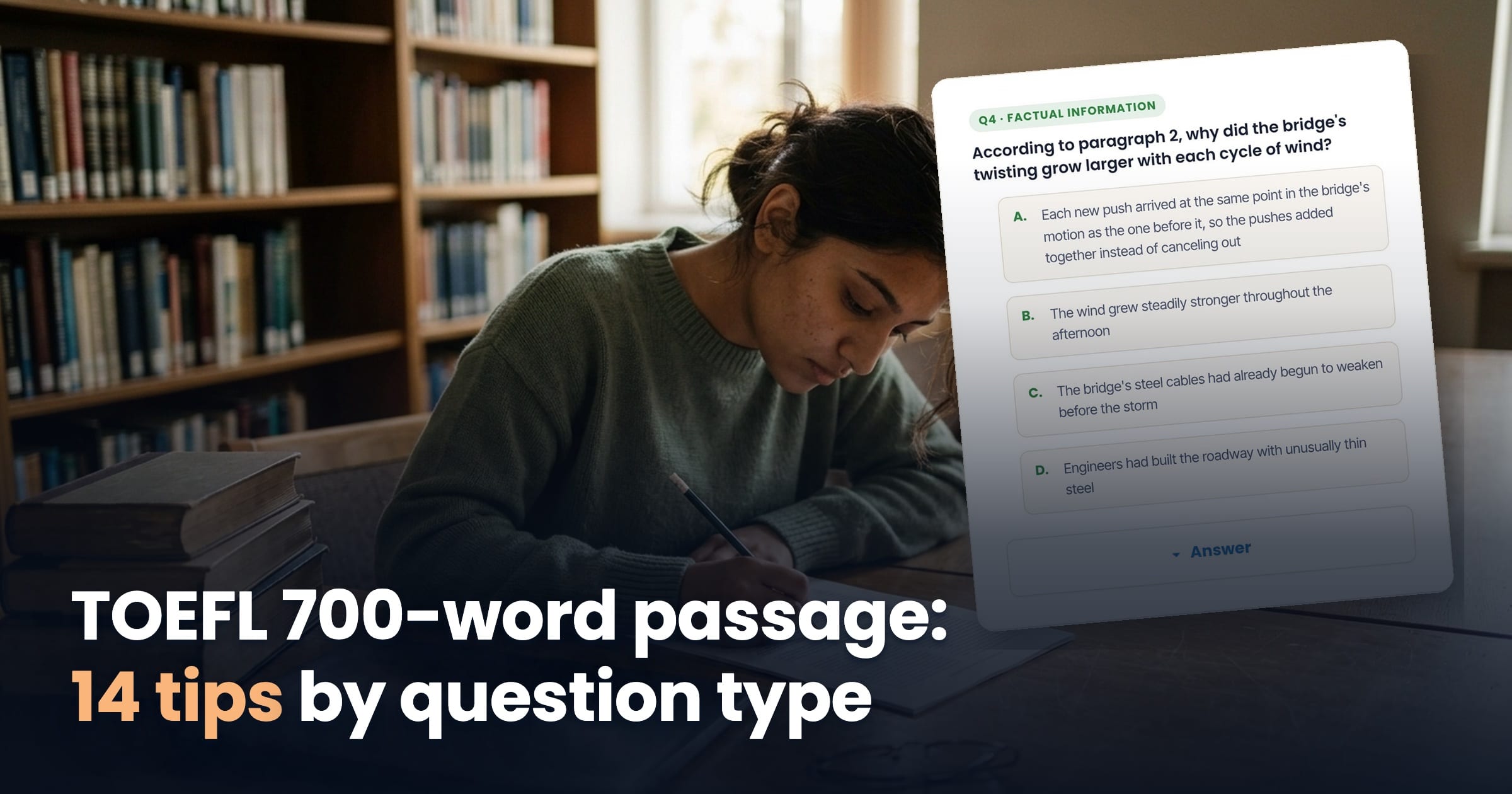
TOEFL Read an Academic Passage: How to Handle a 700-Word Text
Read an Academic Passage is the heaviest task in TOEFL Reading. Here are real test screens for each question type and 14 worked-example tips for avoiding the usual mistakes.
TOEFL Read in Daily Life: How to Handle 4 Text Types
The new TOEFL Reading task Read in Daily Life throws emails, notices, memos, and social posts at you. Here's how to read each of the 4 text types with real test screens, plus 12 worked-example tips for every question type.

2 Mistakes Almost Every First-Time TOEFL Taker Makes
Good English but a lower score than expected on your first TOEFL? After 12 years of teaching, I see first-time test takers lose points in two places: improvising on unfamiliar topics and timing a full test.
TOEFL Writing Evidence: 6 Types With Everyday Examples
An opinion without evidence scores flat. Learn the six types of evidence with pictures and everyday examples, plus four ways to use evidence well.
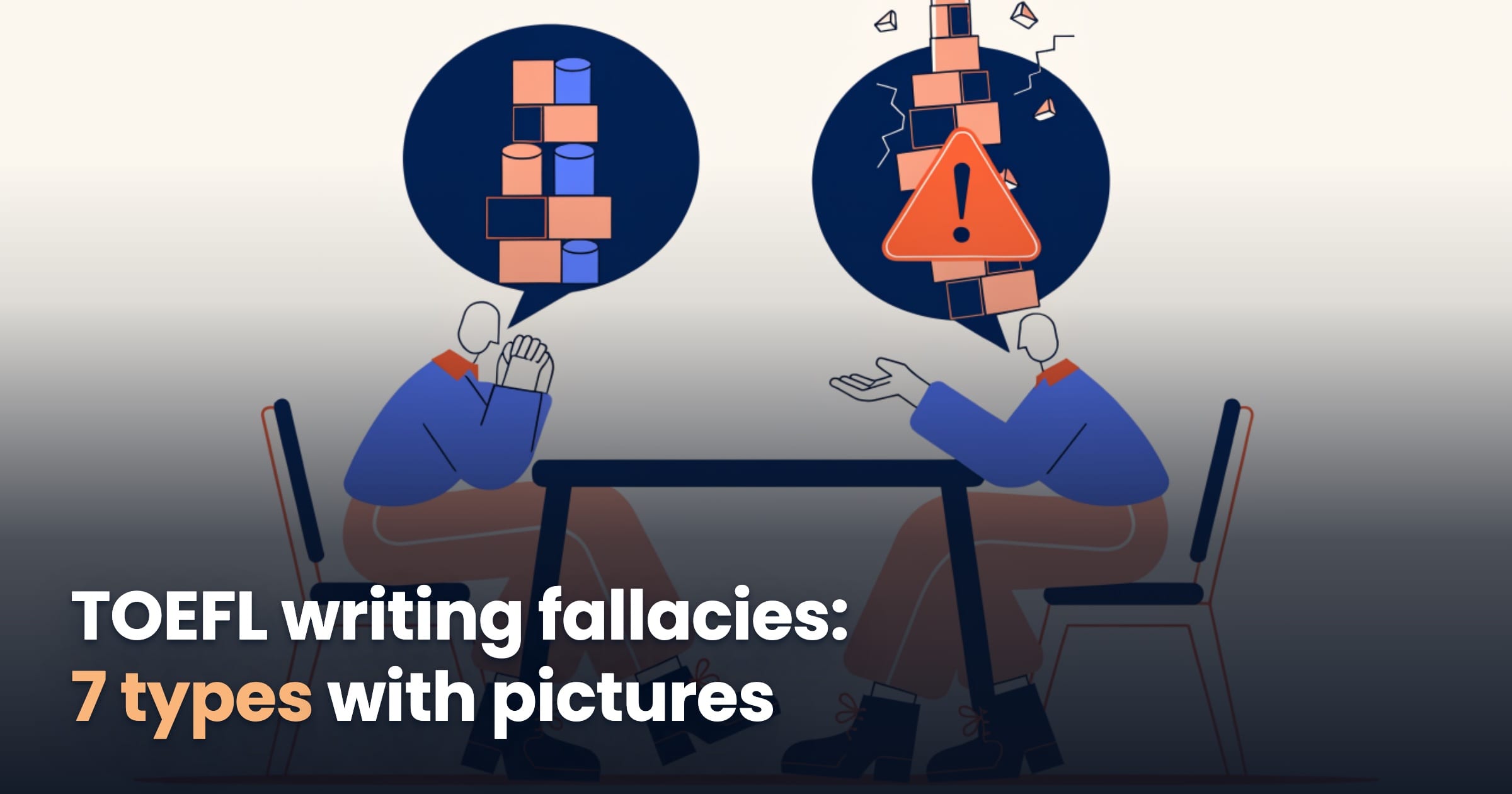
TOEFL Writing Logical Fallacies: 7 Types With Everyday Examples
Seven logical fallacies that weaken an argument, each with a picture, a plain definition, and an everyday example. Learn how to avoid them in TOEFL Academic Discussion.
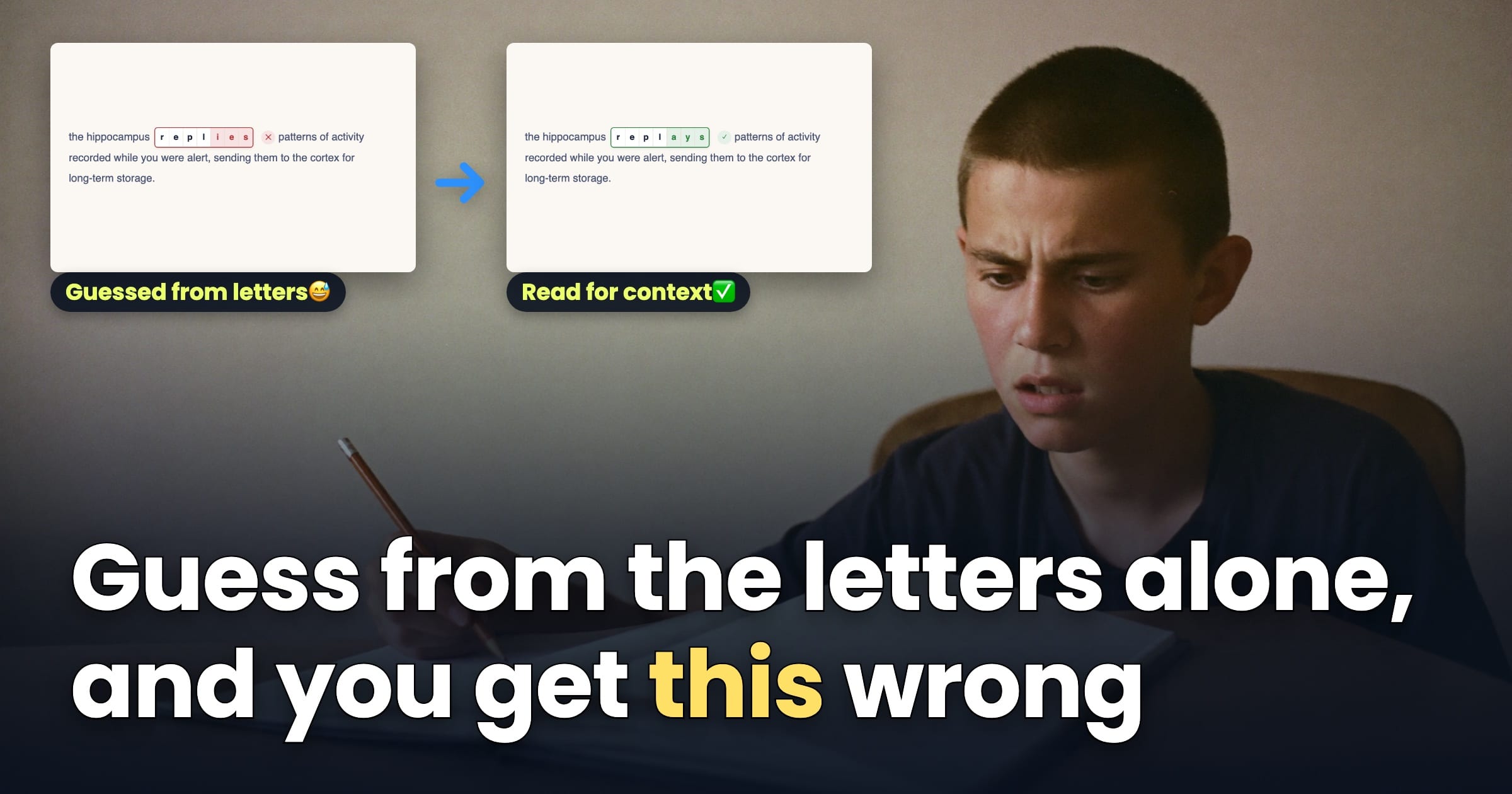
5 Tips for Fill in the Missing Letters in TOEFL Reading
TOEFL 2026's new Fill in the Missing Letters task tests context reconstruction, not spelling. 5 practical tips from 12 years of teaching Reading.

TOEFL Speaking: How to Go From 22 to 28
Students plateaued at 20-23 and at 24-25 on TOEFL Speaking are stuck for different reasons. A 12-year speaking teacher breaks down the fix for each score band and why it matters most on Task 2.
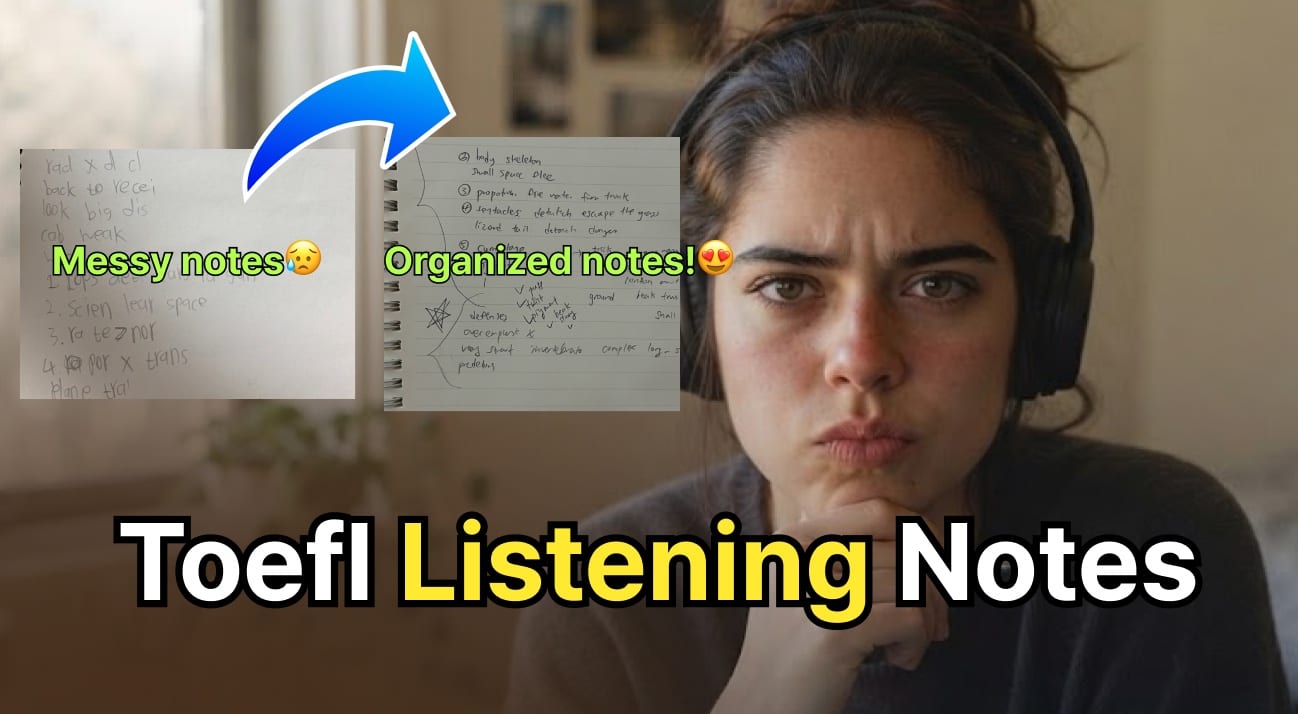
Wait, Is This How You're Taking TOEFL Listening Notes?
The most common TOEFL listening note-taking mistake is writing down everything without judging what matters. Based on 12 years of teaching and real student notes, here's why judgment, structure, and shorthand beat speed.

TOEFL 80 → 100: How to Actually Get There
Students stuck at TOEFL 80 usually fall into one of two groups: balanced low scores across all sections, or fluency-only weak scores. A 12-year TOEFL coach breaks down how to tell them apart and how long each path actually takes.

Middle Schoolers Should Start TOEFL Now, Not Suneung English
Korea pours enormous money into English private education, yet the payoff barely beats the world average. Here's the data-backed case for starting TOEFL in middle school instead of Suneung English, and why 80 is the realistic first target.

Duolingo English Test
10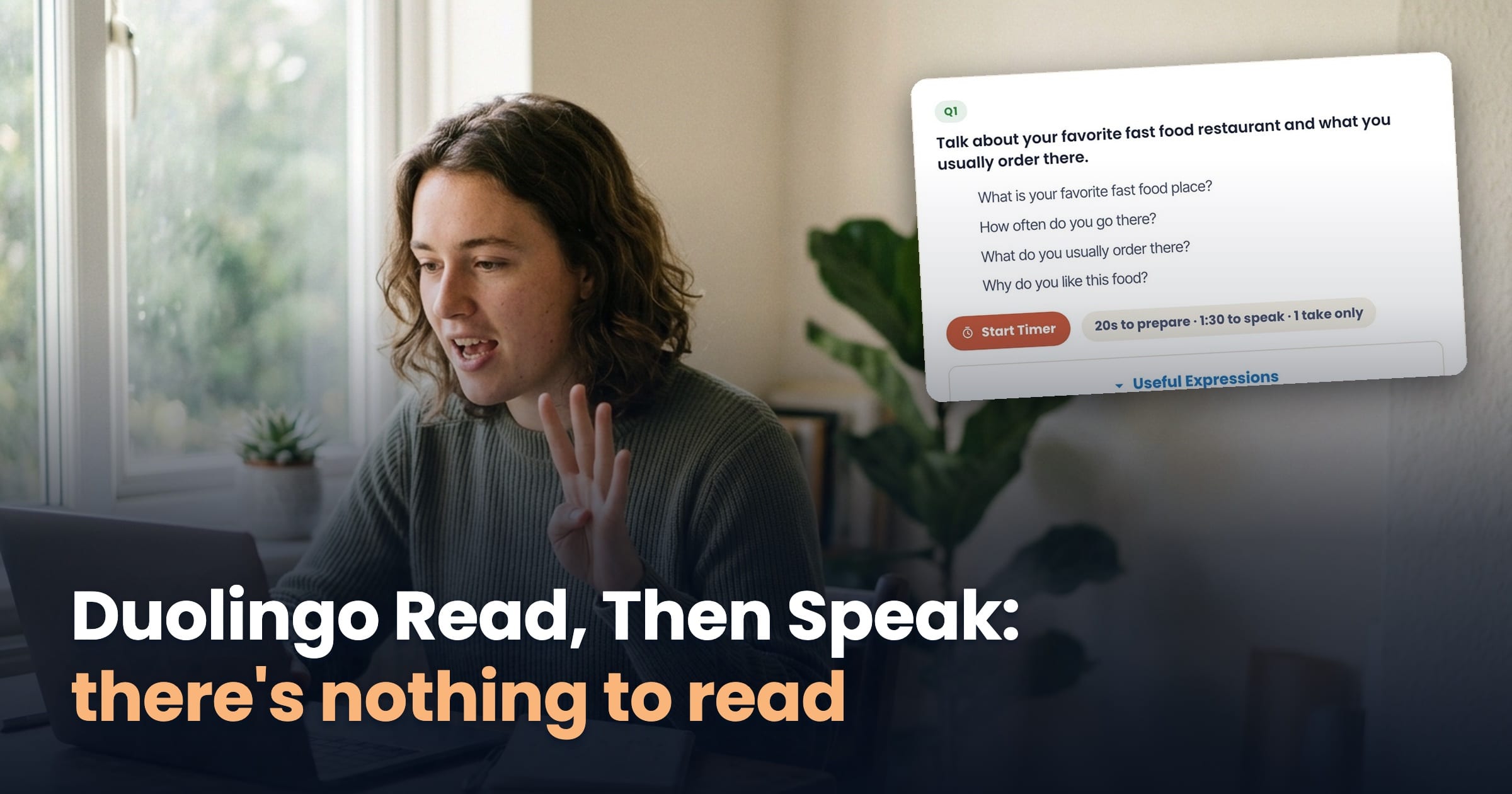
Duolingo Read, Then Speak: 5 Tips
Duolingo's Read, Then Speak has nothing to read. You get one topic line and four guide questions. Here is what to note in the 20 seconds, how to split 90 seconds across four questions, and what we found counting our 30 model answers.
Duolingo Interactive Writing: 5 Tips
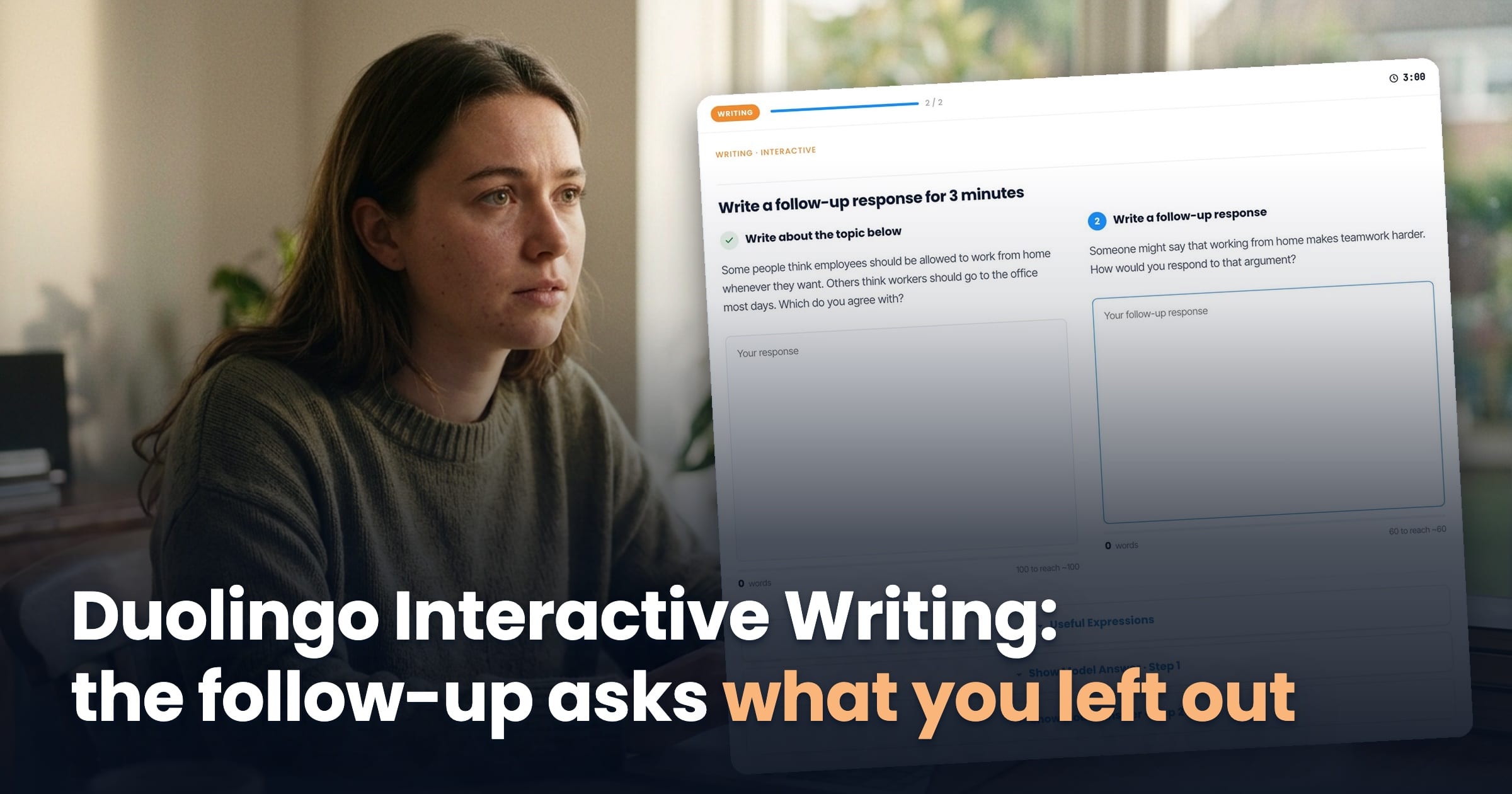
How to answer Duolingo Interactive Writing (5 + 3 minutes). Why the follow-up asks about what you left out, what 28 model responses from our 14 practice sets have in common, three angles for finding reasons, first sentences for each follow-up type, and an 8-minute plan.
Duolingo Speak About the Photo: 5 Tips
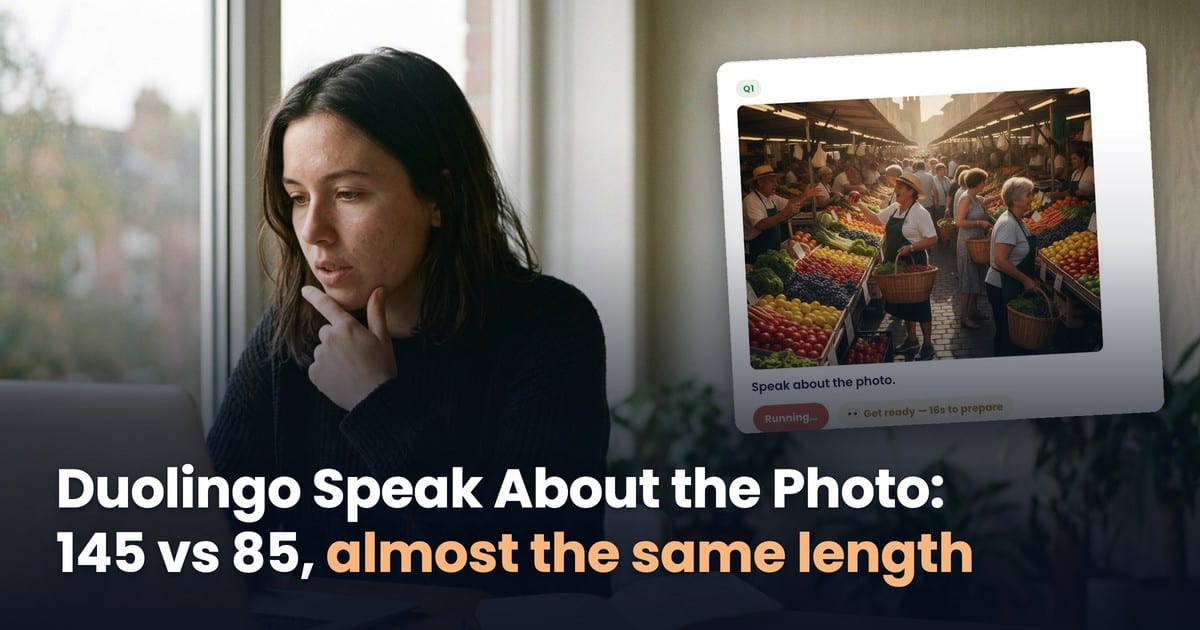
In Duolingo's Speak About the Photo, you look at a photo for 20 seconds and speak for up to 90. We put the official 145, 115 and 85 sample answers side by side to find what actually separated them, then lay out the key words to recall in 20 seconds and a four-part order that fills 90 seconds.
Duolingo Interactive Listening: Following One Official Conversation From Start to Finish
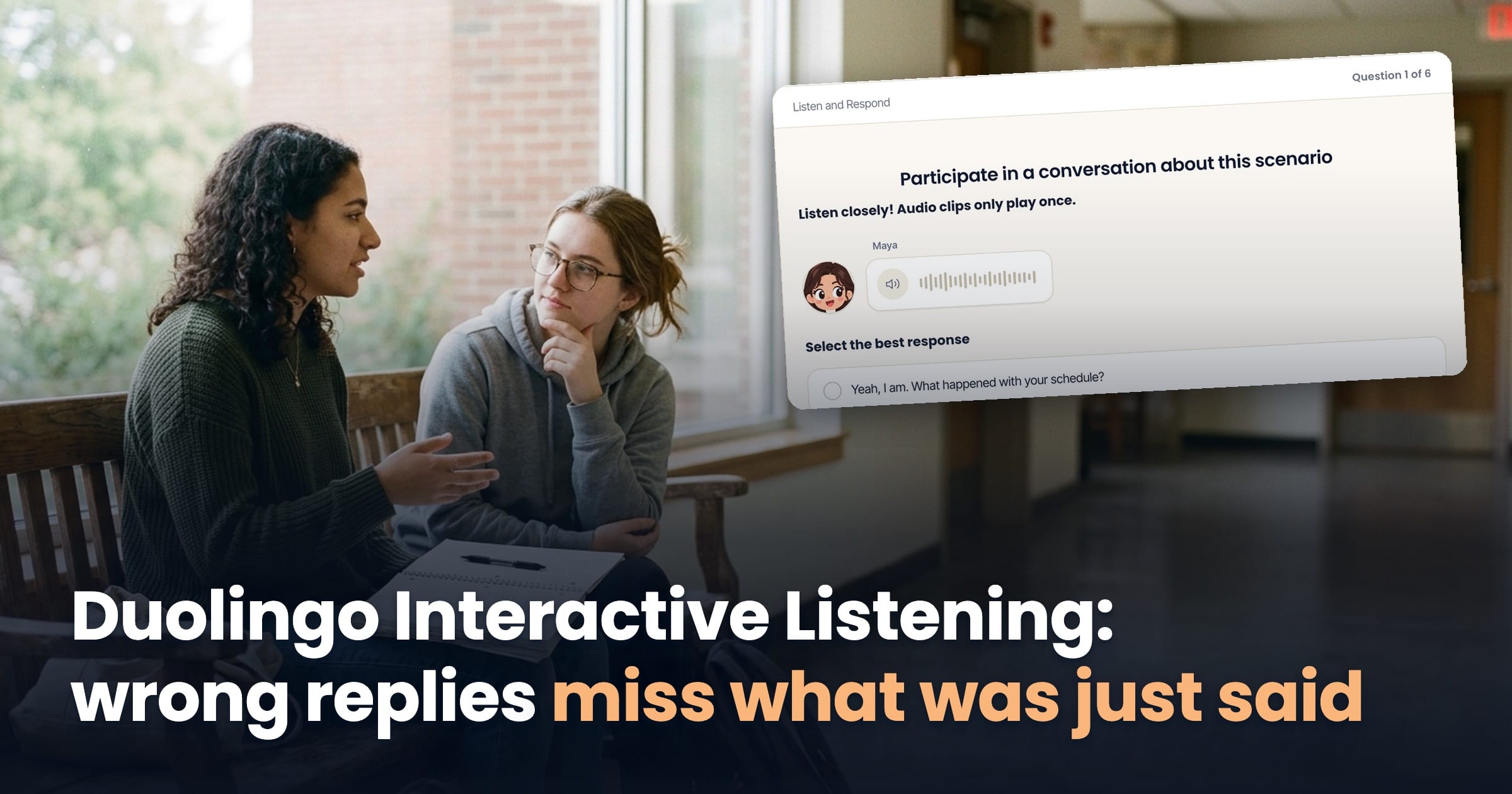
Duolingo Interactive Listening has you fill in blanks, choose replies in a conversation, and write a summary. We followed one official sample conversation turn by turn to show why wrong replies are wrong, how to pick an opening line, and how to write the summary.
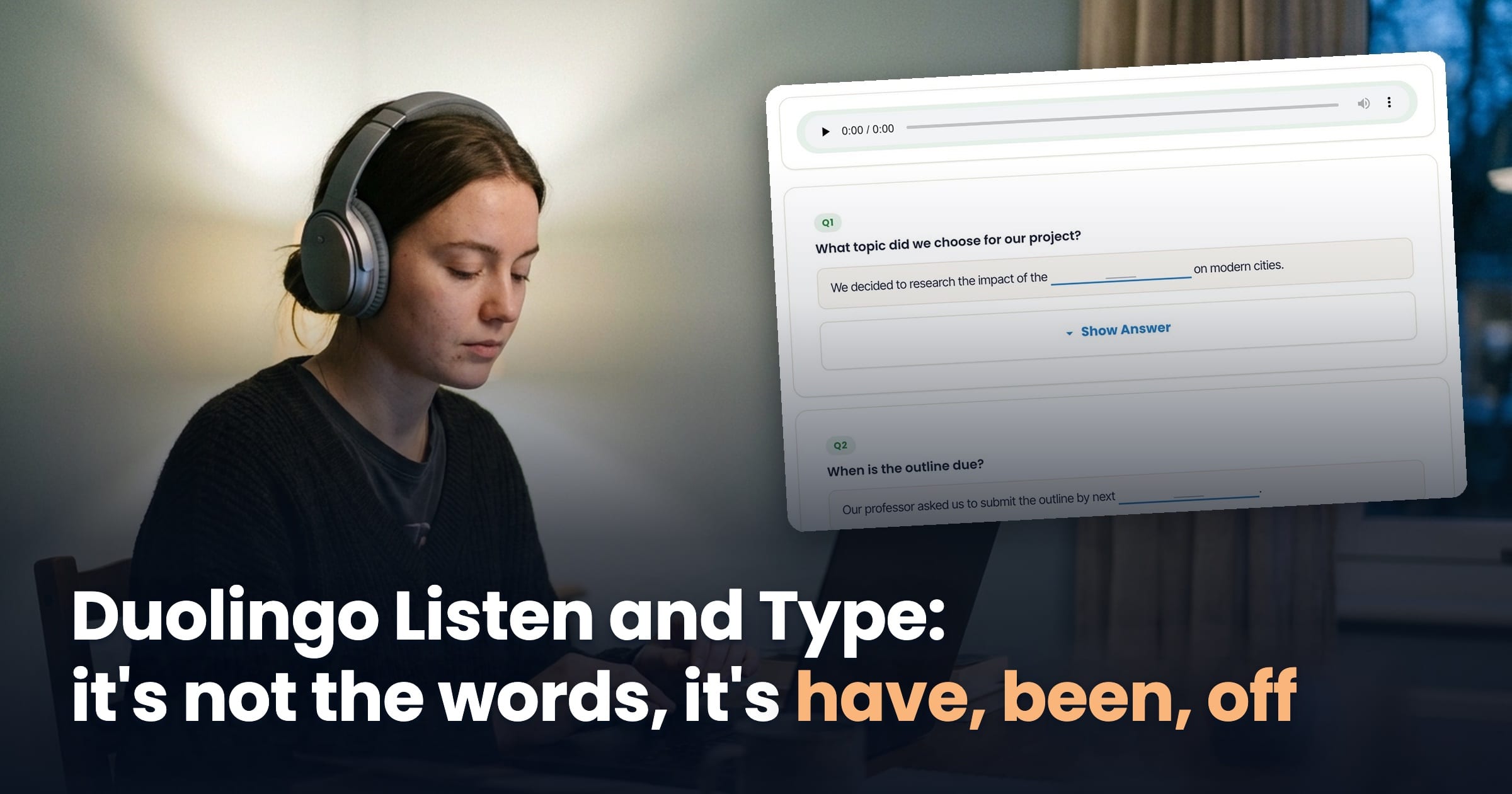
Duolingo Listen and Type: What 60 Official Sentences Show About Where It Gets Hard
Duolingo Listen and Type asks you to type a sentence you hear within one minute. We counted 60 official sample sentences to show where they get harder, how to split your three plays, and the dictation rules hidden in the official answers.
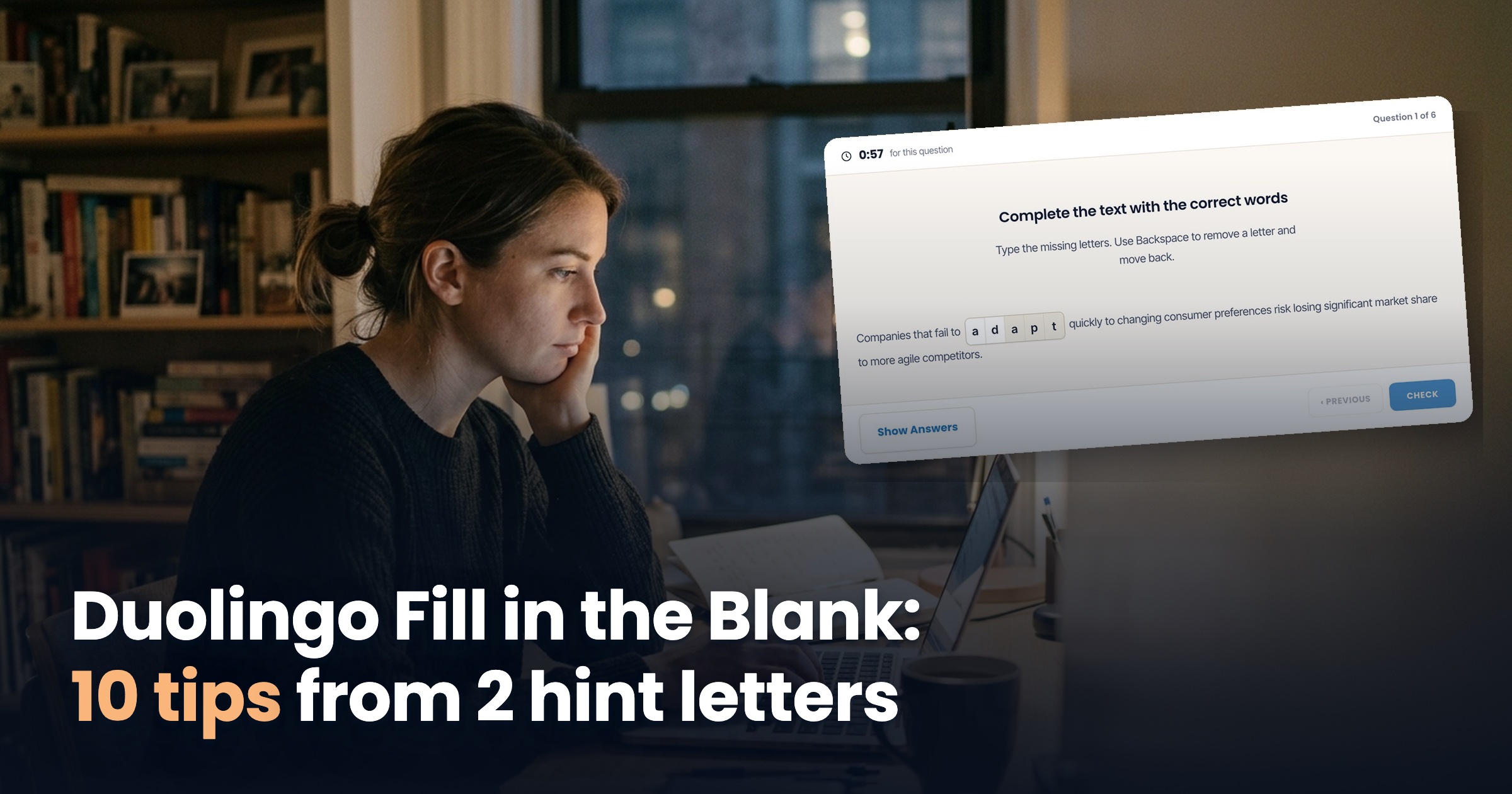
Duolingo English Test Fill in the Blank: Finding the Word from 2 or 3 Letters
Duolingo English Test Fill in the Blank asks you to type the rest of one incomplete word in a sentence. Real screens and 10 worked-example tips, step by step: part of speech, context, typing.
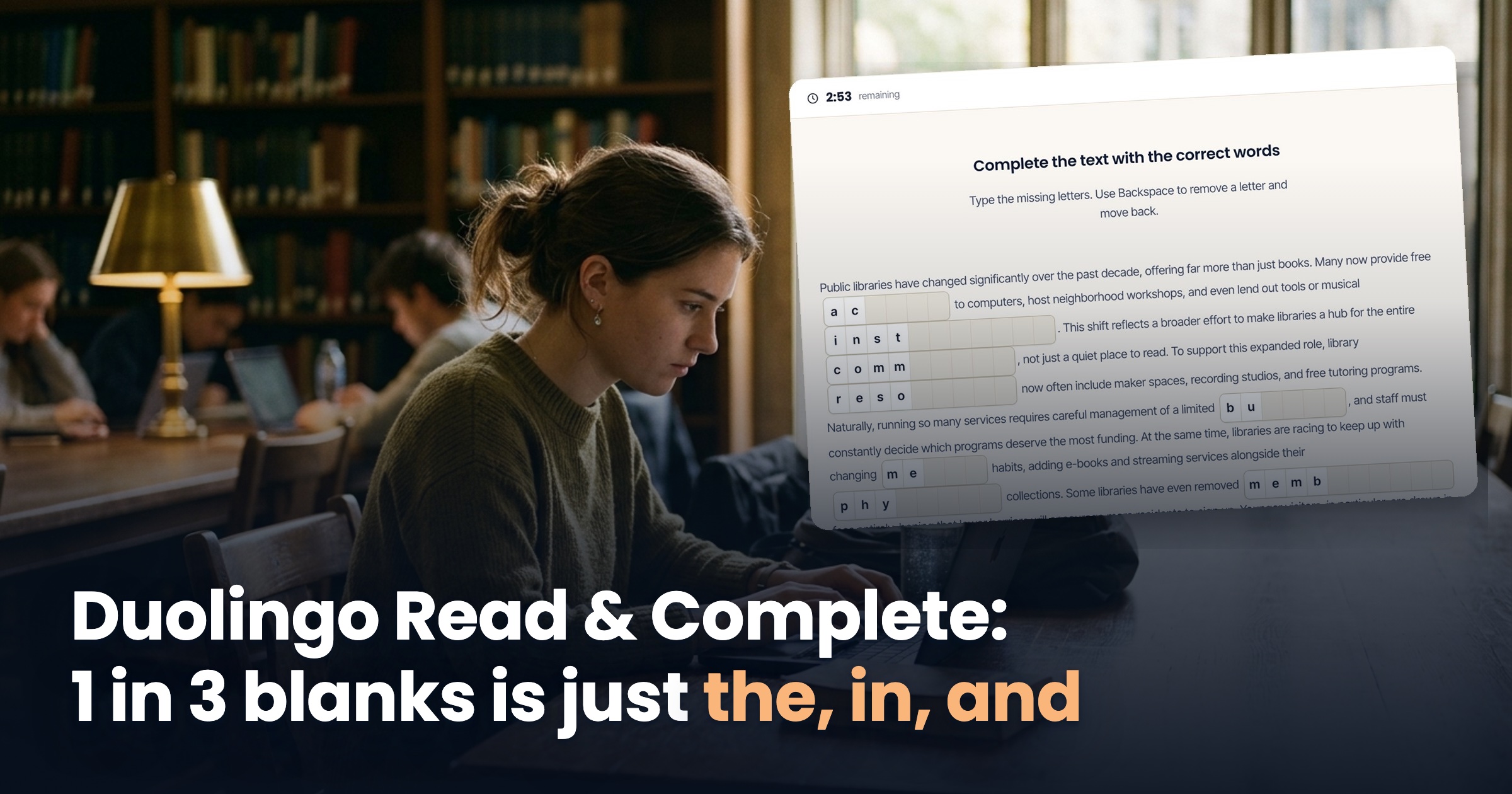
Duolingo Read & Complete: What 40 Official Samples Say About How to Solve It
Duolingo Read and Complete gives you 3 minutes to finish the missing halves of words in a passage. We counted about 500 blanks across 40 official samples. Here are the numbers, a 3-pass time plan, and one passage solved blank by blank.
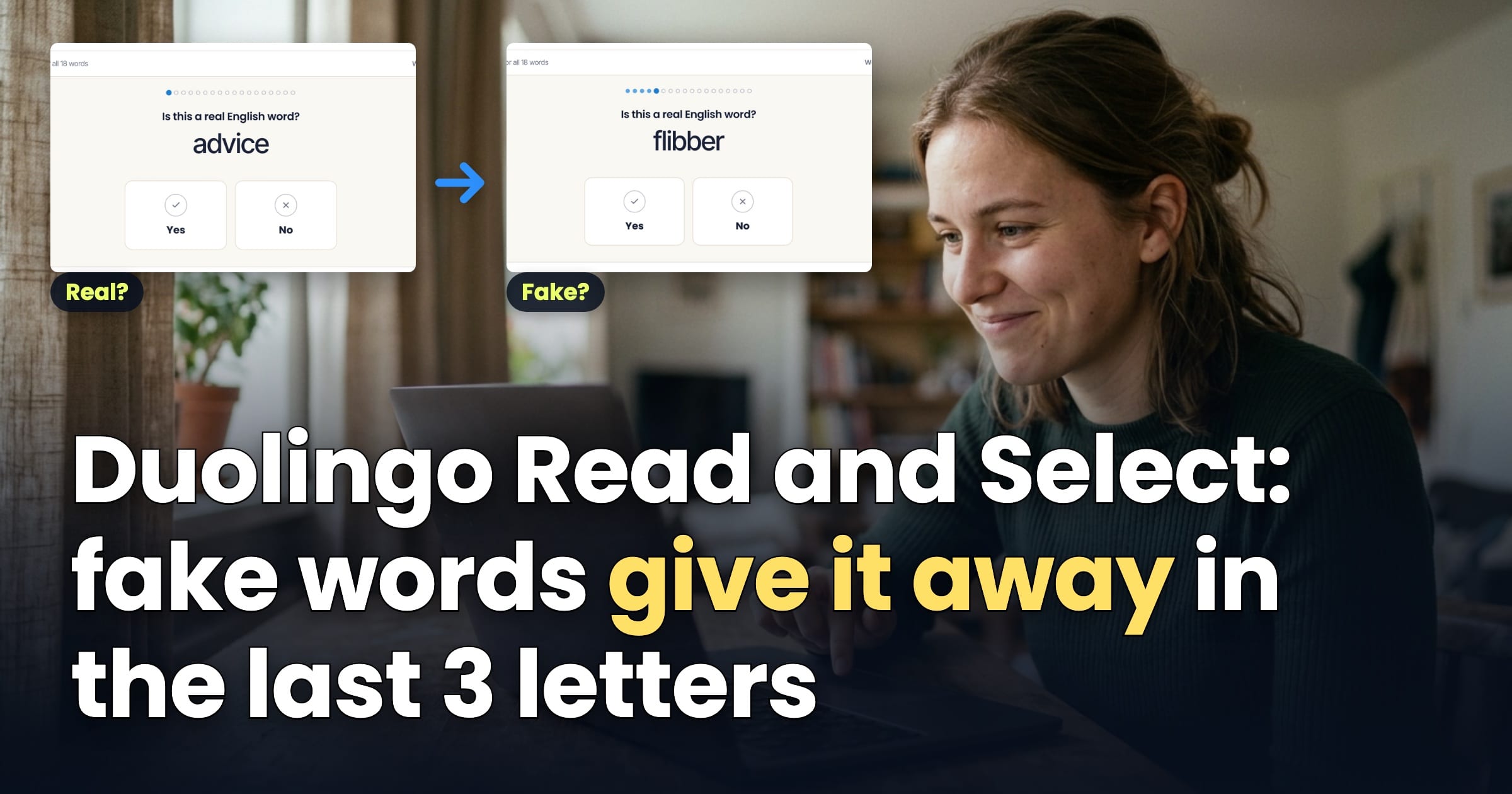
Duolingo Read and Select: Judge Part of Speech by Suffix in 3 Seconds
The Read and Select section of the Duolingo English Test (DET) asks you to distinguish real English words from made-up ones in 90 seconds across 18 words. You can't study your way to a high score here. What matters is your core vocabulary and how fast you recognize the ending patterns (suffixes) at the end of a word.
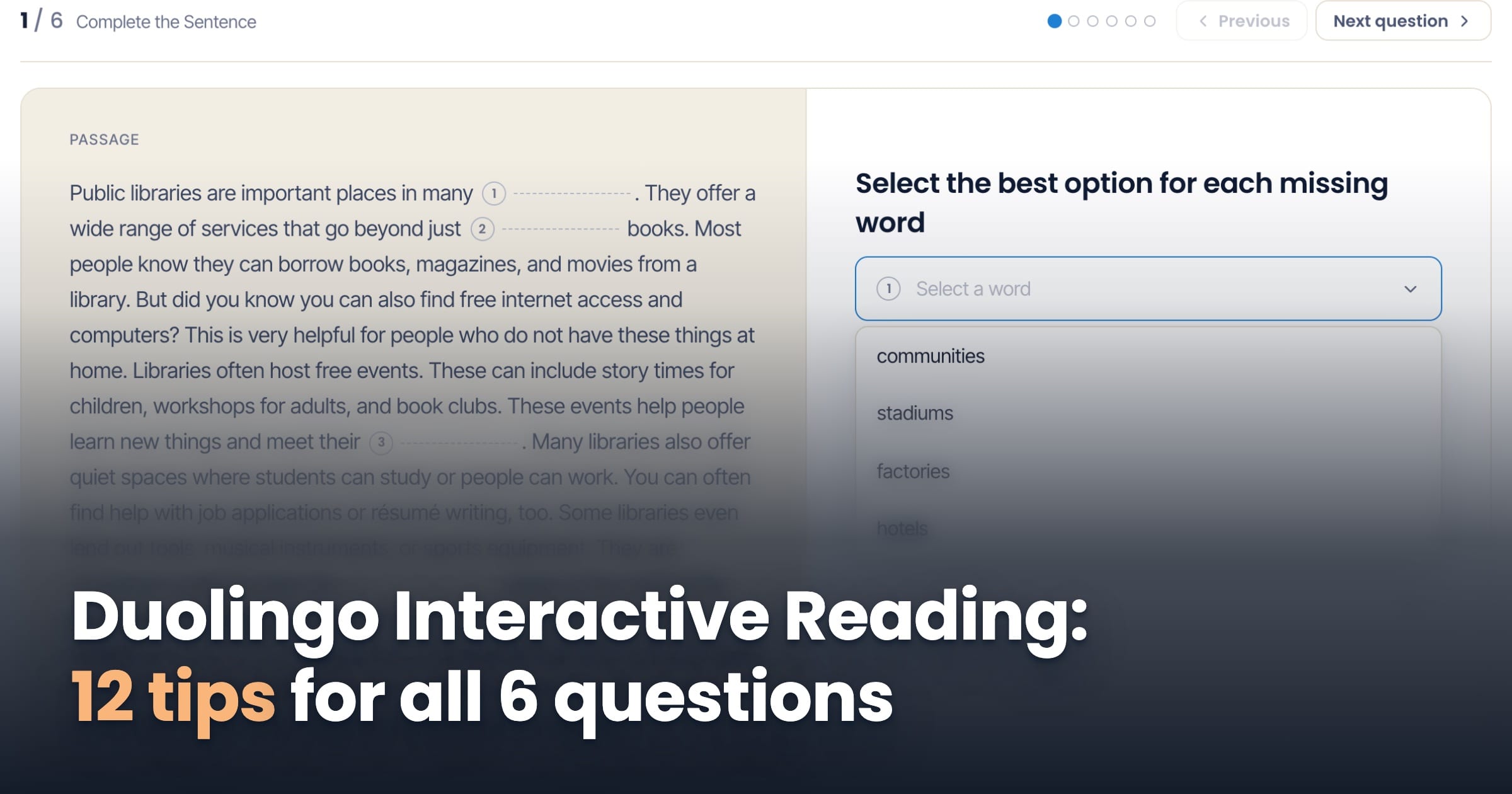
Duolingo Interactive Reading: How to Solve All 6 Question Types
One Interactive Reading set on the Duolingo English Test is one passage with six questions. Here is each question type with a real test screen, plus 12 tips you can see in action through worked examples.

100 Descriptive Expressions for Duolingo Speak About the Photo
100 adjectives and adverbs for the Duolingo English Test's Speak About the Photo task, grouped by color, position, atmosphere, texture, and action — with meanings and example sentences.
Both exams and general
2
TOEFL vs. Duolingo English Test: Which Should You Take?
A teacher's side-by-side breakdown of TOEFL and the Duolingo English Test: what each one actually measures, how universities treat the scores, cost and turnaround time, and a clear answer for who should pick which.
Test Practice Lab Was Featured on PeekWire
Test Practice Lab was featured on PeekWire, both in a roundup of free TOEFL resources and a deep-dive interview about why it builds custom, age-appropriate practice tests.