Wait, Is This How You're Taking TOEFL Listening Notes?

The students who take the most notes during a listening lecture are often the ones whose scores don't move. Their hand never stops, but when the lecture ends and you look at the notebook, the part that actually gets tested, the conclusion, is blank. After 12 years of teaching TOEFL listening, I've landed on a simple rule: note taking isn't about writing fast. It's about judgment. A student who can't decide what to write will fall behind no matter how quickly they write.
The most common mistake: not knowing what to write
Almost every note taking problem in TOEFL listening comes down to one thing. Students try to write down everything they hear without judging what matters first. Because they can't separate the important part from the part they can let go, they end up copying full sentences, and by the time the next sentence starts, they haven't finished the last one. That gap widens as the lecture goes on, and by the end, right where most questions are aimed (the conclusion, the comparison), the notes are the thinnest they'll be all lecture.
Real student notes show this pattern clearly. Below is a notebook page from a lecture on WWII radar technology.
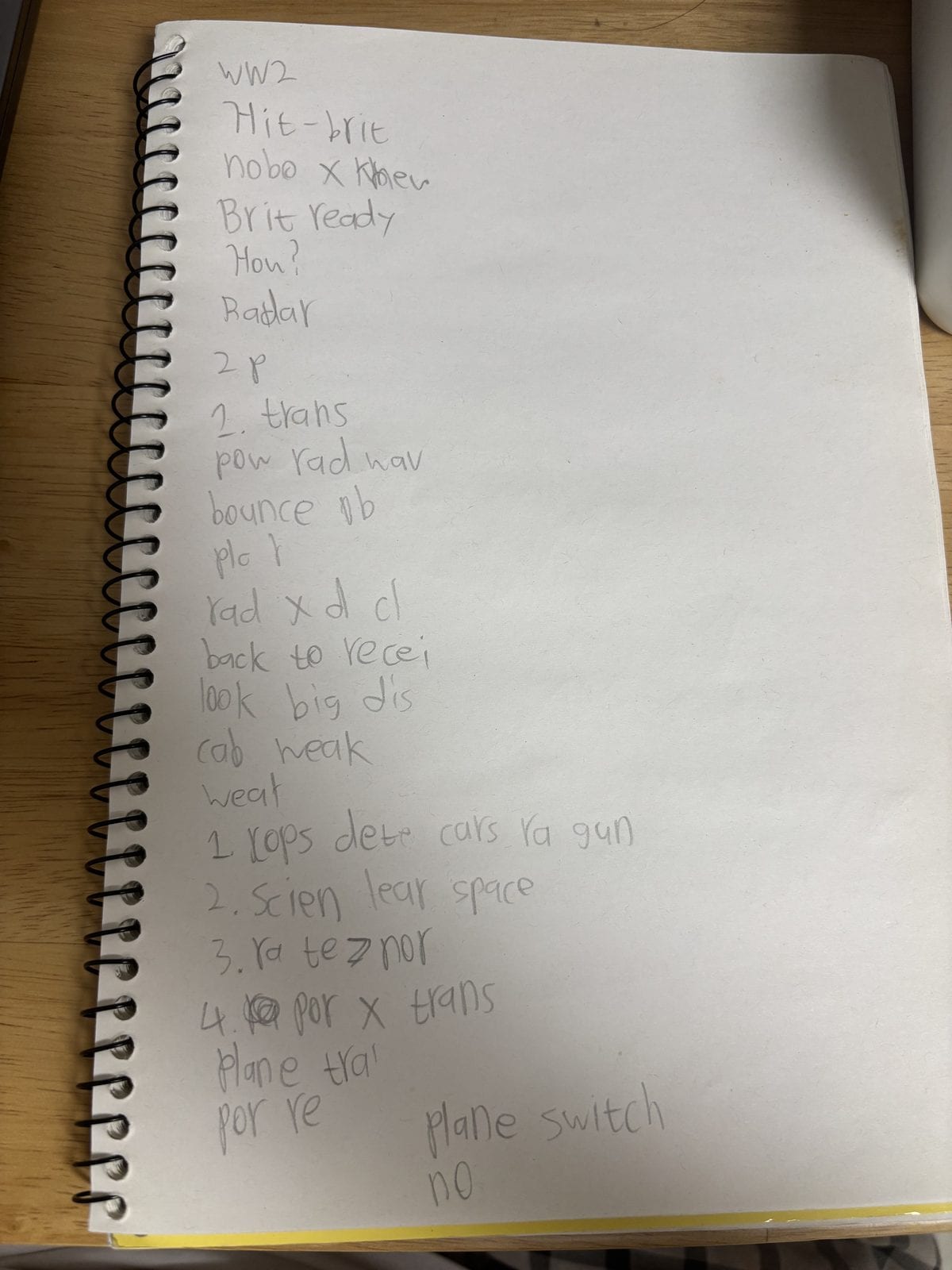
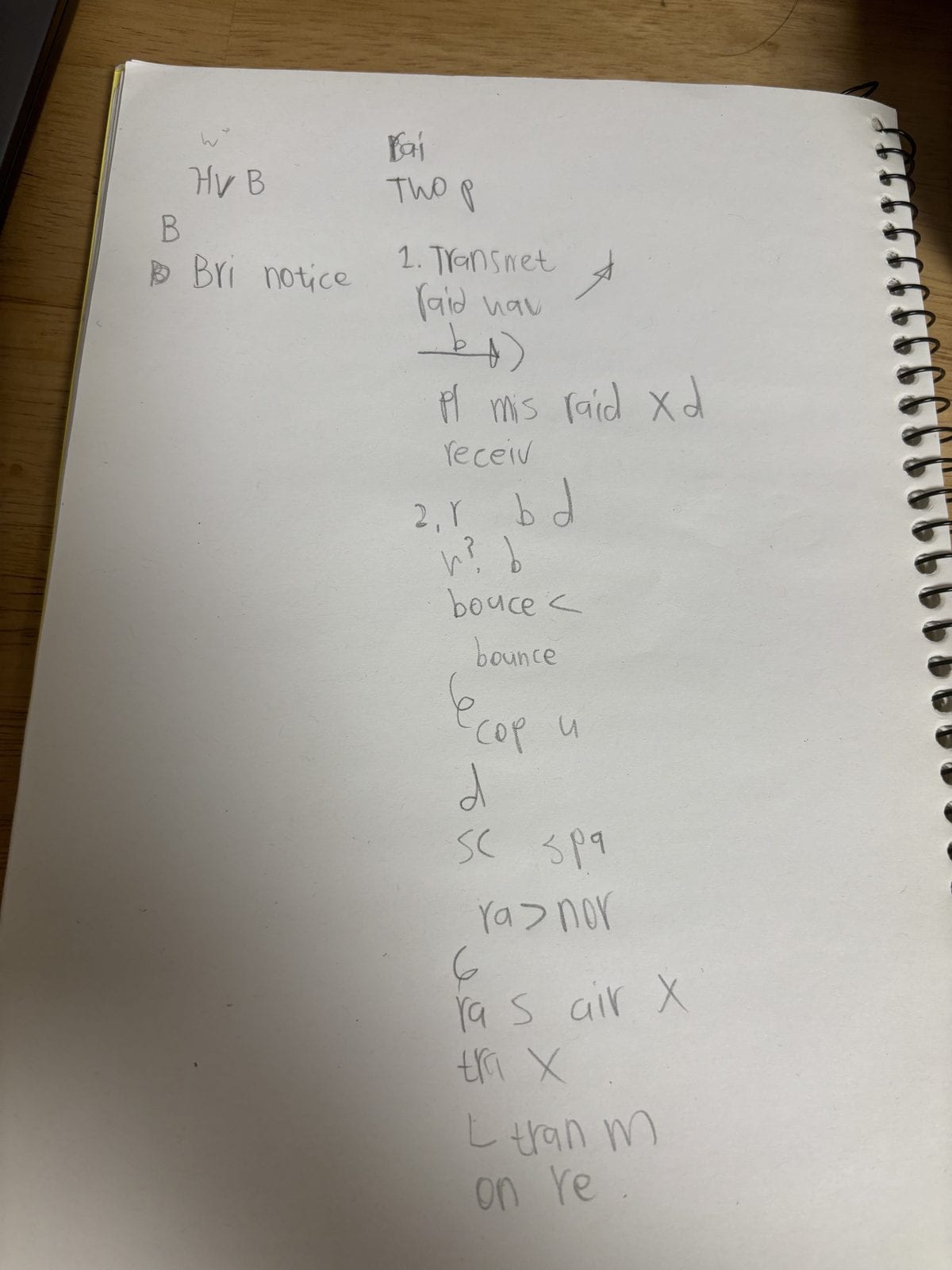
The problem here isn't messy handwriting. There's no attempt to separate what matters from what doesn't, so the student gets stuck holding onto one piece of information, misses the next one, and later can't use the notes to reconstruct what the lecture actually said.
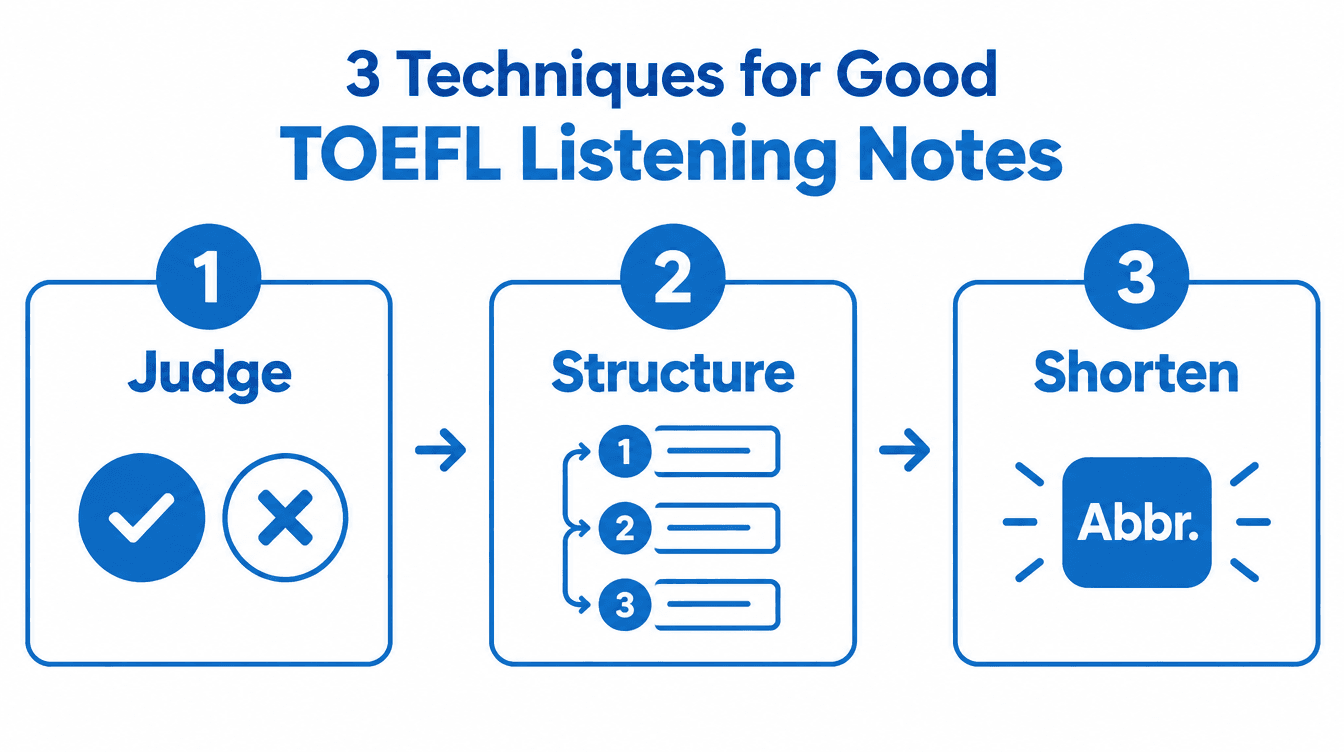
Good notes come down to three things: judgment, structure, and shorthand
The students who take notes well aren't faster writers. They're doing three things at once while they listen.
- Deciding in real time whether a piece of information is worth writing down.
- Structuring the relationships between ideas on the spot with numbers, arrows, or brackets.
- Using their own abbreviations and symbols instead of full sentences to buy speed.
Here's a notebook page from a lecture on octopus defense mechanisms.
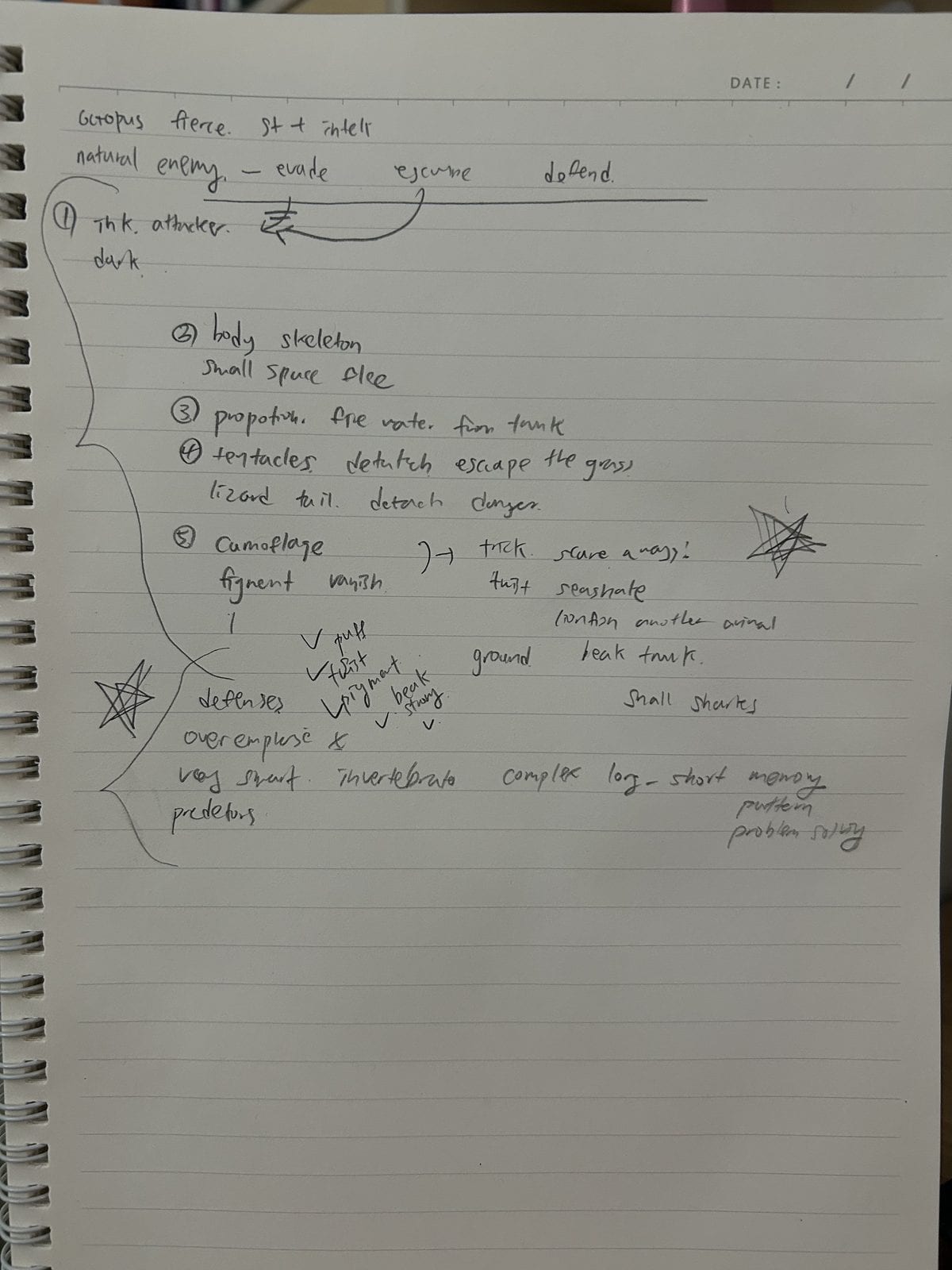
The defenses are numbered one through five, and related items are grouped together with a bracket. Instead of full sentences, only the key words remain, "camouflage, pigment, vanish", but the notes still let you reconstruct the whole lecture later.
The same pattern shows up in a lecture on glacier movement.
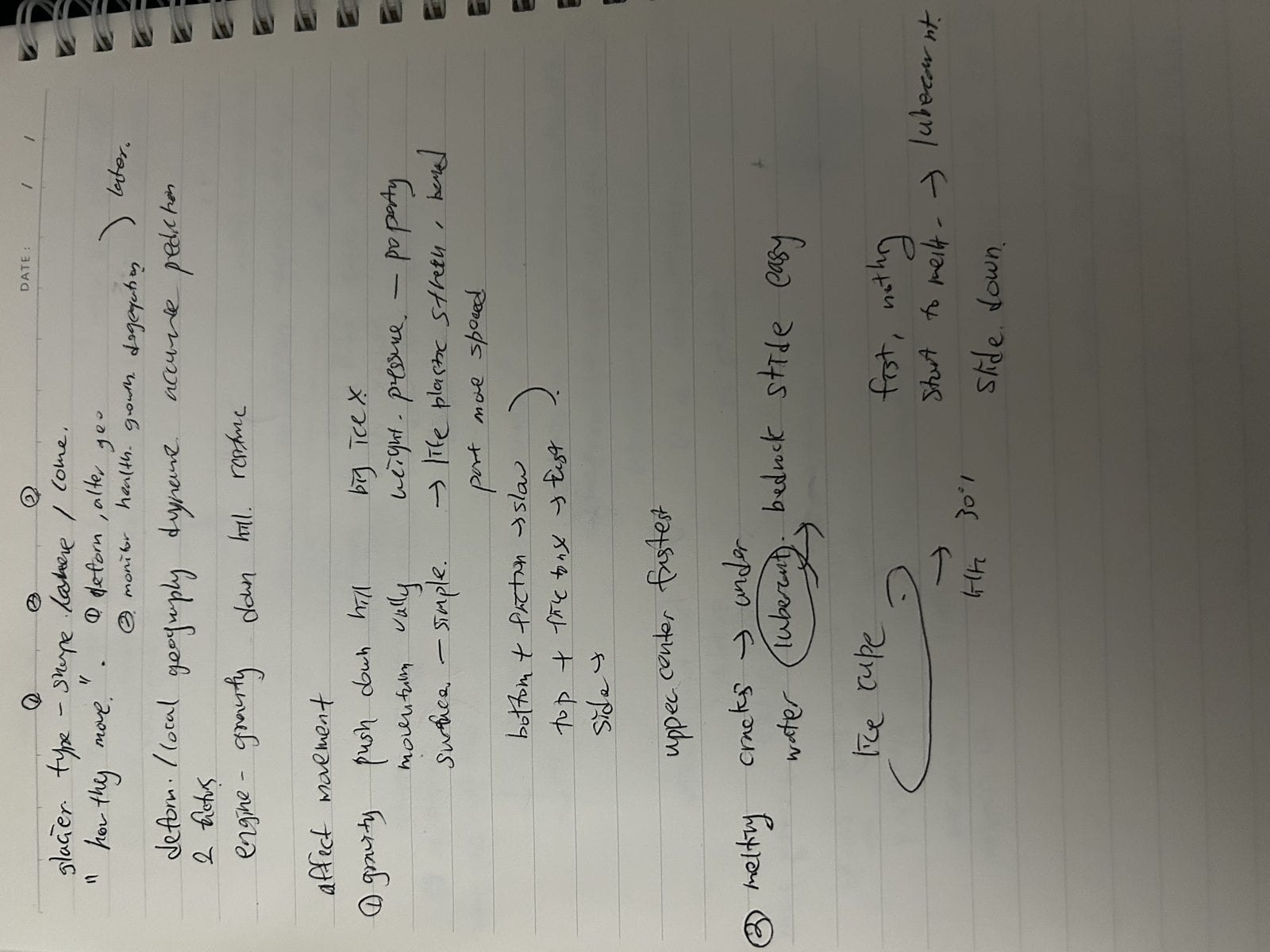
Two causes, gravity and melting, are numbered, and arrows connect each one to its effect (speed change, reduced friction). The cause and effect relationship the professor actually emphasized survives in the structure of the notes.
Comparing the two approaches side by side
Take a short lecture on bird migration. Say the professor explains it like this: "There's a theory that birds use the magnetic field to navigate, and another that they use the position of the stars. Young birds that had never seen the night sky still migrated normally, which supports the magnetic field theory more strongly."
A note taken without judgment looks like this.
birds navigate using magnetic field theory and also star
position theory young birds never...
By trying to follow full sentences, the student never even reaches the part that matters most: which theory the research actually supports.
A note taken with judgment and structure looks like this instead.
Bird navigation - 2 theories

① magnetic field
② stars

research: birds w/o sky exposure → still migrated OK
  = supports ①
There's less written down, but the core logic survives, two competing theories and a research result that favors one. That's almost always what the test questions are actually asking about.
Start practicing this way today
Note taking isn't a talent you're born with. It's a judgment call you build through practice. At first, writing less will feel unsettling, but the right benchmark is whether your notes alone let you explain the whole lecture once it's over. Try this approach on our free listening practice questions and build the habit while it still counts.