TOEFL Writing Evidence: 6 Types With Everyday Examples

"I think school uniforms are bad. Students do not like wearing them. So schools should not require them." The grammar is correct and the opinion is clear, yet a writing like this rarely scores well. The reason is simple. It says uniforms are bad but never shows why the writer thinks so. It has no evidence.
In an English essay, evidence is the support that makes readers believe your claim. There are six types of it. Once you know them, you can pick one whenever you get stuck on "what do I write here?" Each type below comes with a picture and an everyday example.
There are six types of evidence
1. Anecdotal (Anecdotal evidence)

Concept: Proof based on your own experience or an episode that happened around you.
Example: "I did this exercise for ten minutes every day, and my back pain clearly went down."
2. Testimonial (Testimonial evidence)

Concept: Proof that quotes a statement from someone trustworthy, such as an expert, a guide, or an eyewitness.
Example: "Dr. Kim, a physician, also said in an interview, "Drinking a glass of water on an empty stomach in the morning is essential for stomach health.""
3. Statistical (Statistical evidence)

Concept: Proof that uses numbers, data, probabilities, or percentages to make the point objective.
Example: "According to the survey, 92% of customers who used the new product said they would buy it again."
4. Textual (Textual evidence)

Concept: Proof that quotes or shows a recorded original directly: a recording, a letter, a document, an article.
Example: "Article 4, Clause 2 of the contract states, "A penalty applies if you cancel early.""
5. Analogical (Analogical evidence)
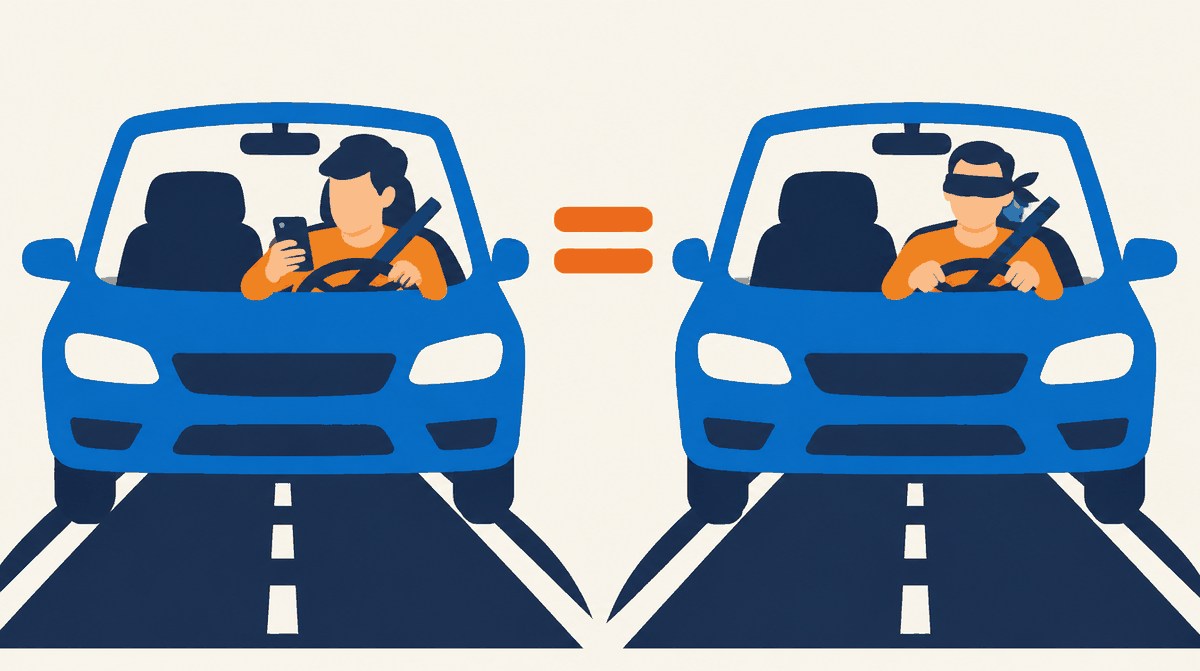
Concept: Proof that compares your claim to a similar event or case to show it holds up.
Example: "Looking at your phone while driving is like driving down the road with your eyes closed."
6. Hypothetical (Hypothetical evidence)

Concept: Proof built from an imagined scenario ("what if this happened?") to show a risk or a need.
Example: "If we do not set aside emergency savings now, we will fall into serious debt when a sudden accident happens."
Which evidence fits which situation
Here are all six at a glance. Different topics suit different types.
| Type | In one line | Best when |
|---|---|---|
| Anecdotal | Your own experience, stories around you | Personal topics: daily life, school, habits |
| Testimonial | Words from an expert or witness | Topics that need expertise: health, science |
| Statistical | Numbers, survey results | Social issues, policy, consumer choices |
| Textual | A written record | Topics with a document: rules, contracts, policies |
| Analogical | Comparing to something similar | Explaining an unfamiliar or abstract idea simply |
| Hypothetical | An "if this happened" scenario | When you have no real case, or want to show a risk or a need |
4 ways to use evidence well
1. Pick evidence that connects directly to your claim
Evidence can sound convincing and still be useless if it does not match the claim. If your claim is "uniforms stop students from expressing themselves" and your evidence is "uniforms are expensive," those are two different stories. Before you write the evidence, ask yourself once: does this really support my claim?
2. Be specific
Even within the same anecdotal evidence, how specific you are changes its strength.
Weak evidence: Many students feel uncomfortable in uniforms.
Strong evidence: When my cousin's school introduced uniforms, she quit the art club because she felt there was nothing left to express.
"Many students" is something anyone can write. "My cousin quit the art club" gives the reader a scene, so it feels believable.
3. Go deep on one type per paragraph
Rather than listing several types, choose one and write it in detail. One anecdote told so the reader can picture it is more convincing than one line each of anecdote, statistics, and analogy.
4. Connect the evidence with one sentence
If you drop the evidence and move on, the reader thinks "so what?" After the evidence, add one sentence that says why it proves your claim. After the art club story above, something like "This suggests uniforms can even limit the chance for students to explore their interests" is enough.
A note on making things up in the exam
On the TOEFL, if you have no real case, you can build a situation to fill the evidence slot. That is what hypothetical evidence is for. Just remember that the 92% in the statistical example is only an illustration. If you attach a real organization's name to an invented number in the exam, it reads as fake. A softer phrase like "a survey could show" is safer.
In Academic Discussion, pick just one piece of evidence
An Academic Discussion answer is short, so there is no room for several pieces of evidence. Pick the easiest of the six and write it in one or two sentences. If you are replying to another student, it looks like this. The example below uses hypothetical evidence.
I agree with Emma that uniforms save money, but I think the real cost is somewhere else. A student who cannot show any personal style in class may stop joining clubs that need creative thinking. That is a bigger loss than the price of a few shirts.
Start practicing like the real test today. Try an Academic Discussion in our free TOEFL writing practice tests, then mark which of the six types of evidence you used. You will see which ones you use often and which you never use. To compare with model answers, use the writing sample tests with answers. And if your score is stuck for another reason, read why TOEFL scores get stuck at 80 too.