TOEFL 80 → 100: How to Actually Get There

There's one goal I hear more than any other in 1-on-1 sessions. "I'm in the 80s right now, and I want to break into triple digits." But look closely at the students saying this, and you'll find two completely different groups hiding under the same sentence. Same score, different cause, and if the cause is different, the fix has to be too. A lot of students study the same way regardless and end up burning months without moving the needle.
I've coached enough of these students to stop trusting the total score by itself. Two students can both hand me an 80 and need almost opposite study plans. Mix them up, and you get a student grinding through listening drills for months when the real bottleneck was reading comprehension the whole time.
Two ways to get stuck at 80
From the outside, both look like "stuck at 80." Once you actually coach them, they turn out to be entirely different students.
- All four sections sitting in the 80s, more or less evenly — reading, listening, speaking, writing, all similarly weak.
- One or two sections dragging behind — usually listening or speaking, noticeably weaker than the rest.
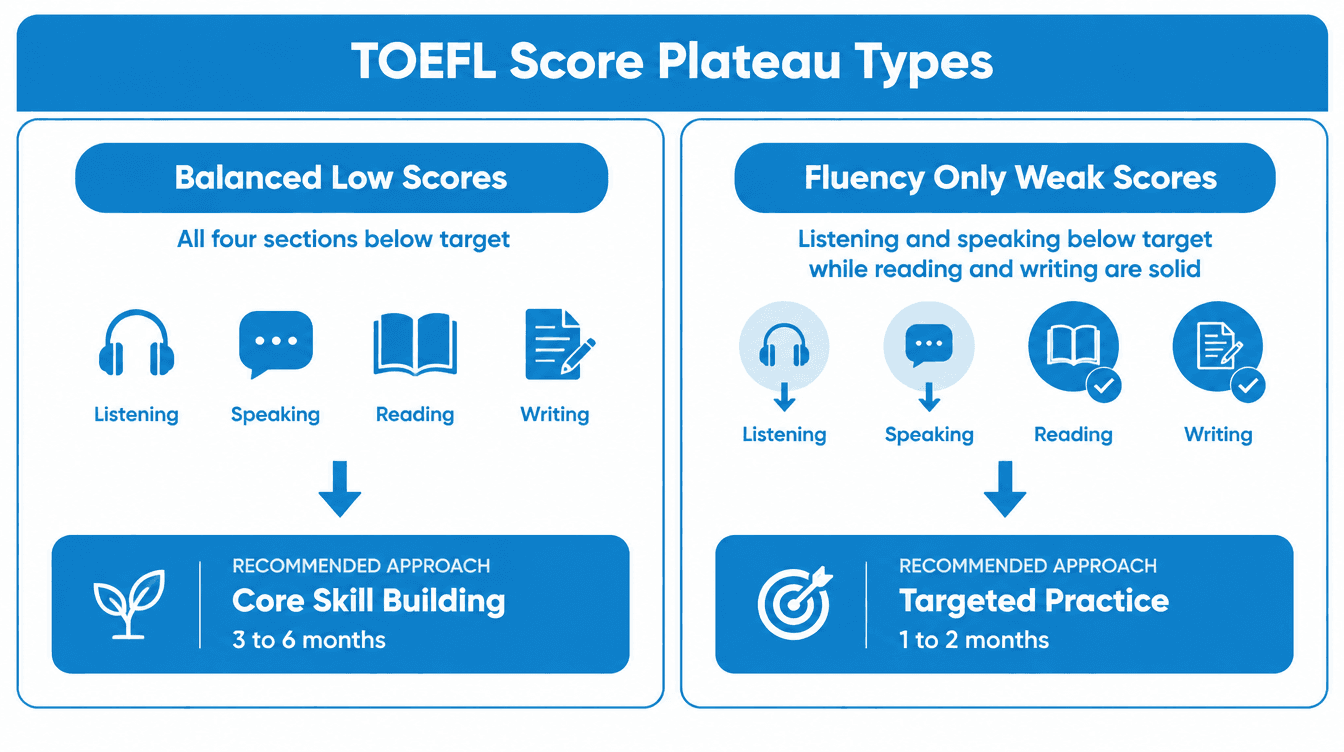
When only the fluency sections are weak
This case is actually good news, because it means reading and writing are already carrying their weight. Watch students whose listening or speaking alone is lagging, and one pattern shows up again and again.
- Simply haven't practiced enough.
- Personality gets in the way — careful, deliberate students who wait until they've built a perfect sentence in their head are the ones who run out of time in speaking's 15-second prep window.
This type just needs focused work on the specific skill that's lagging. One-on-one coaching that builds exam-day instincts fast tends to work especially well here, and I'll get into exactly what that looks like in a future post. Students in this group usually show visible improvement within one to two months.
When every section is evenly low
The second type is the harder one. If all four sections are roughly equally weak, there's no shortcut, unfortunately. You have to go back to reading first. A reading score acts like a ceiling that the other sections have a hard time climbing past. You need the ability to read a passage and interpret it accurately, plus enough vocabulary to support that. On top of that, you need practice actually constructing sentences yourself in writing, and that's what lets core ability take hold. This type usually needs three to six months before the change becomes visible.
Why studying one section alone won't move that section alone
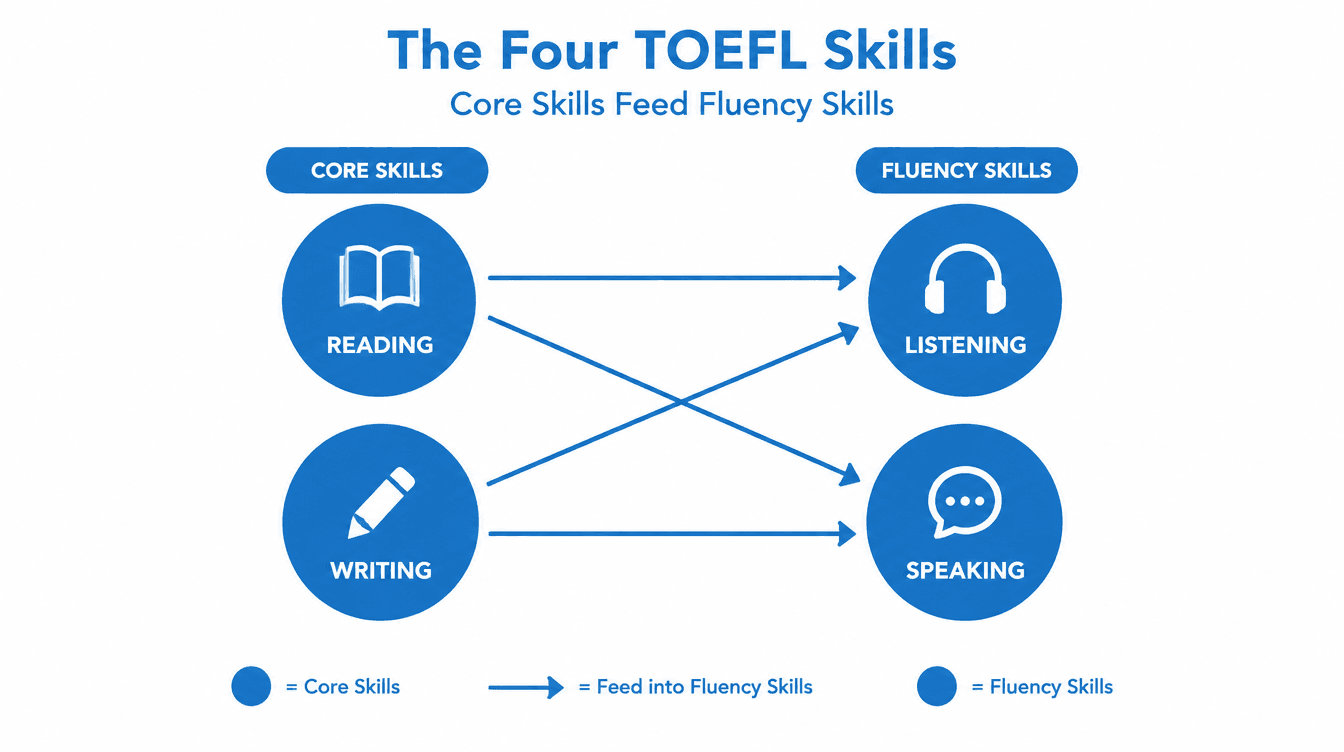
Here's where a lot of students and parents get it wrong. If listening is weak, the instinct is to study listening in isolation, and if speaking is weak, study speaking in isolation, as if each section were its own closed system. But the four sections are far more tightly connected than that.
- Listening only reaches as far as what you can already read and interpret with your eyes — a sentence you can't parse on the page won't suddenly become clear no matter how many times you hear it.
- Speaking works the same way — you can only produce in speech what you're already capable of constructing in writing. A sentence you can't write, you won't be able to say either.
So if a student's overall level is low across the board, building the core skills, reading and writing, first, then moving on to the fluency skills, listening and speaking, ends up being the faster path.
The bottom line
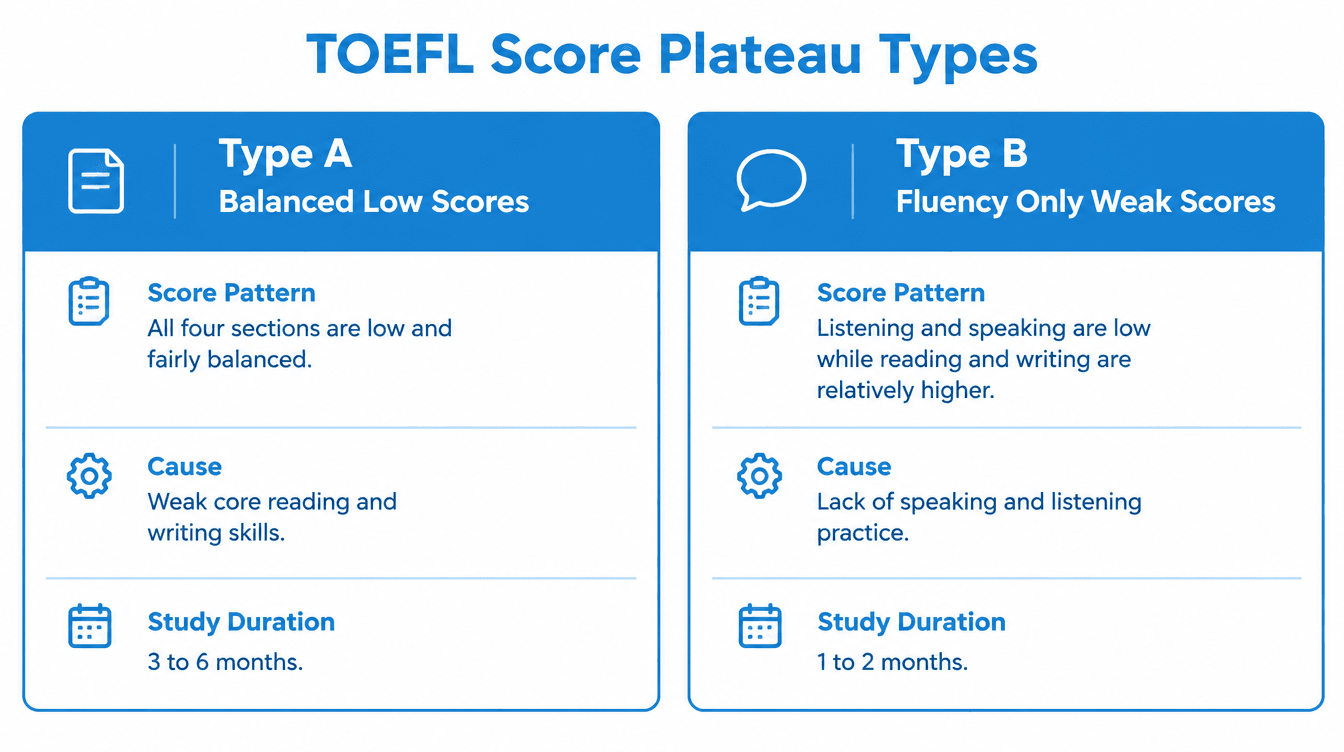
Same score of 80, two different causes.
- Only the fluency sections holding you back? Focus there — one to two months should be enough.
- Every section evenly low? Start with reading and writing to build the core — give that process three to six months.
Figuring out which type you are is the real first step toward triple digits.
Start practicing like it's the real thing. You can work through free reading, writing, listening, and speaking practice sets on our site right now.