TOEFL Writing Logical Fallacies: 7 Types With Everyday Examples
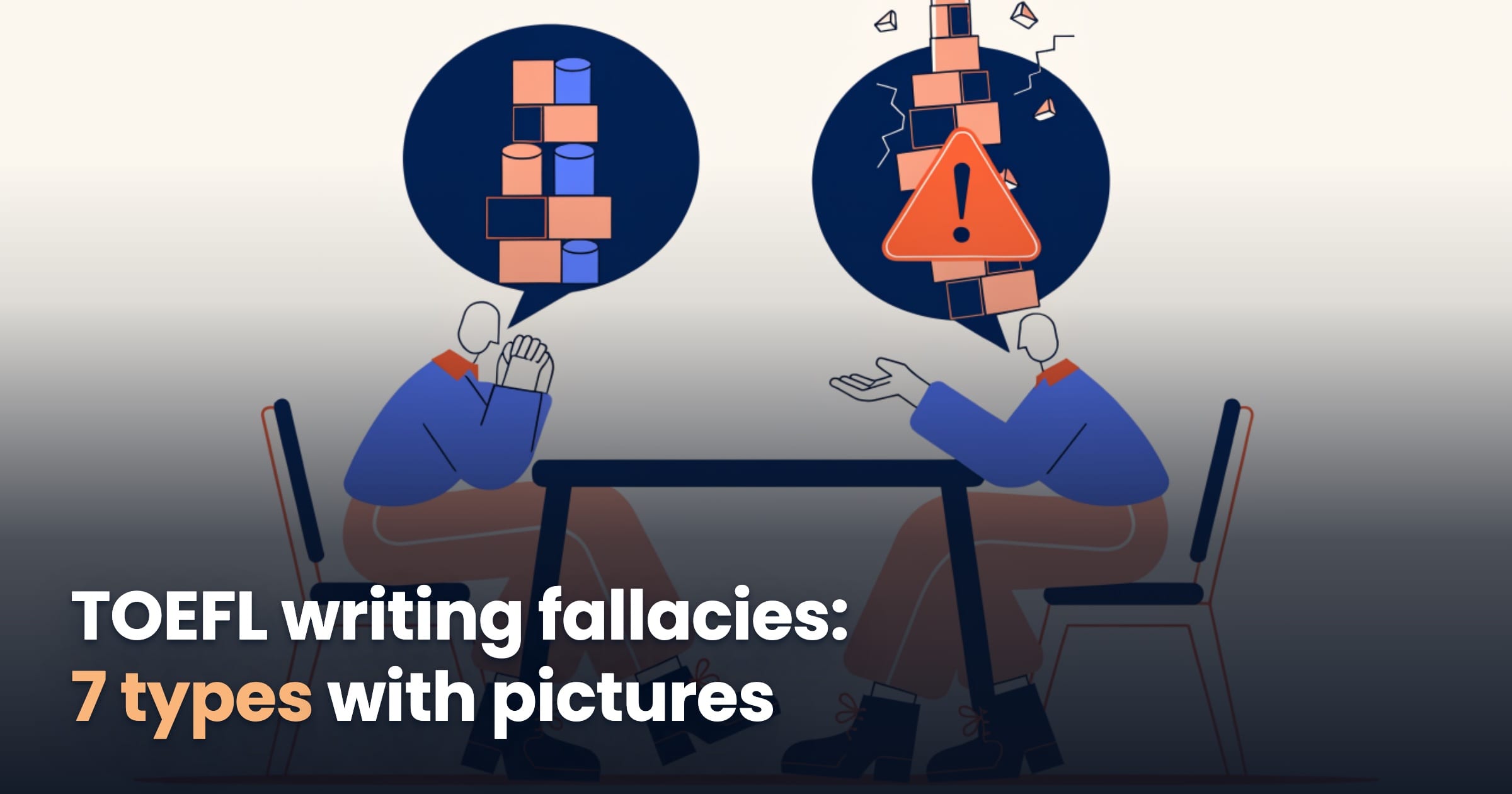
When you reply to a classmate in Academic Discussion, you might write something like this. "Emma says we should reduce homework, but she is not even a good student, so ignore her." The English is fine, but the logic falls apart. Emma's grades have nothing to do with whether homework should be reduced. A sentence like this is called a logical fallacy.
A logical fallacy is a way of arguing that sounds convincing but has nothing solid under it. If you know these seven, you can avoid them in your own writing, and you can spot the gaps in someone else's argument when you reply. Each one comes with a picture and an everyday example.
Seven logical fallacies
1. Ad Hominem (Personal Attack)

Concept: The speaker skips the argument and attacks the person instead. Instead of dealing with the logic and evidence, they go after the other person's status, character, qualifications, or motives to make the claim look untrustworthy.
Example: "Ignore that person's environmental policy. He drives a huge car himself."
How to fix it: Leave the person out and argue about the policy itself: "The policy cuts emissions very little for its cost."
2. Appeal to Authority (Appeal to Authority)

Concept: The speaker offers no real reasons and leans on someone famous. A well-known figure's reputation and past titles are used to push the claim through.
Example: "A doctor from a famous TV show recommended this medicine, so it must work."
How to fix it: Set aside who said it. Show the research or data that supports the claim.
3. Single Cause (Single Cause)
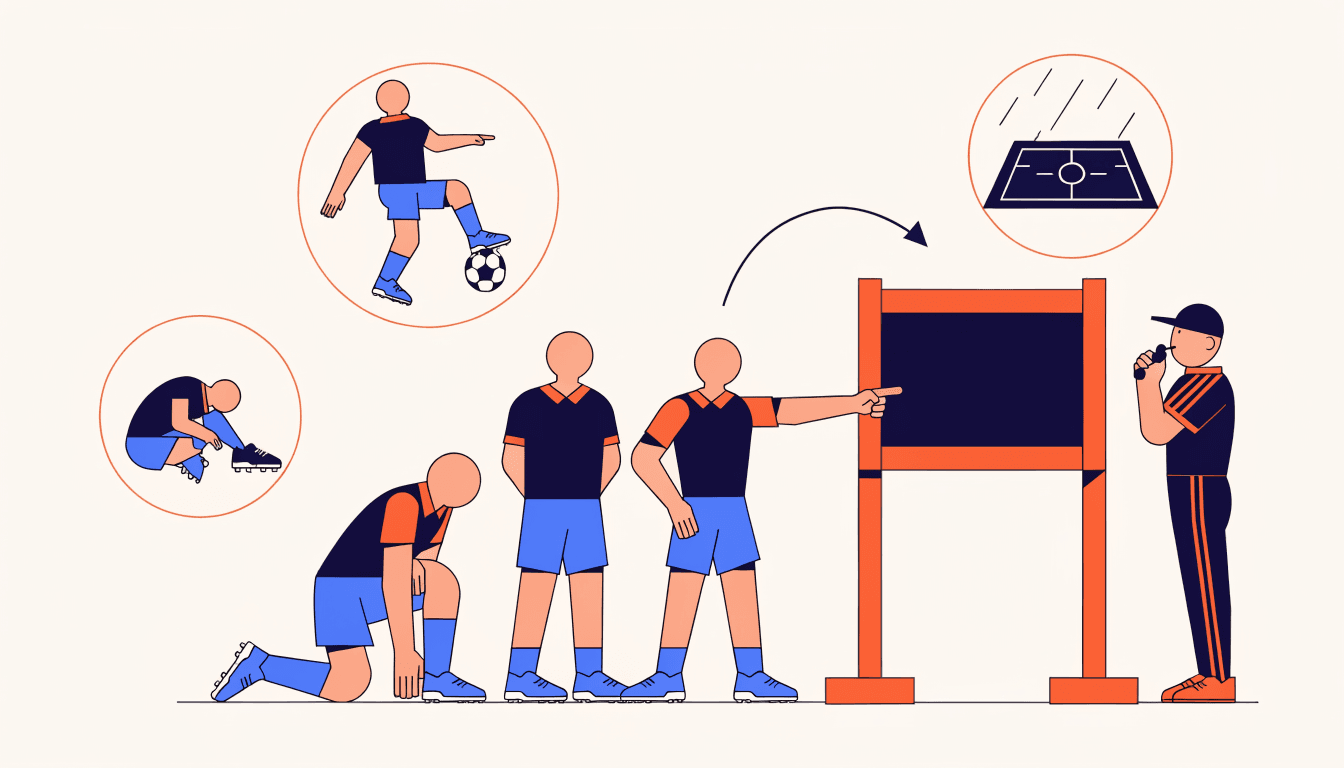
Concept: There are many causes but only one gets the blame. An event that came from several factors together is oversimplified into a single reason.
Example: "We lost the game entirely because of one bad call by the referee."
How to fix it: Admit there may be several causes: "The bad call mattered, but tired legs in the second half and defensive mistakes mattered too."
4. False Cause (False Cause)

Concept: The speaker treats something that came first, or happened by coincidence, as the cause. Two events that merely appear together are mistaken for cause and effect.
Example: "Every time I wear this shirt I do well on my exams, so this shirt is the reason I pass."
How to fix it: Ask whether there is a real reason linking the two. A shirt has no way to change an exam score.
5. False Choice / False Dilemma (Black-and-White Thinking)

Concept: There are many options, but only two are shown. Middle choices and other paths clearly exist, yet the argument is framed as if only two extremes were possible. Think of a mountain: it is "reach the summit or fail," as if resting at a mid-level camp or taking another route down were not choices.
Example: "If you do not start studying right now, you will ruin your life."
How to fix it: Bring out the middle options: "Even starting with 30 minutes today is enough to catch up."
6. Appeal to the Masses / Bandwagon (Appeal to the Crowd)

Concept: There is no valid reason, only "everybody does it." The speaker rides on a trend or on crowd psychology to make people accept the claim.
Example: "90% of the students in school use this product, so of course you should use it too."
How to fix it: Leave out how many people use it and say what is actually good about the product.
7. Straw Man (Straw Man)

Concept: The speaker does not deal with the real claim. They exaggerate or simplify it into a dummy that is easy to knock down, then argue against the dummy.
A: "Let's not give children too many sweets."
B: "A is saying we should stop feeding children and let them go hungry!"
How to fix it: First restate what the other person really said, then respond to that.
All seven at a glance
Here are the seven in one table. When you suspect a fallacy in your own writing or someone else's, ask the question on the right.
| Fallacy | In one line | Question to ask |
|---|---|---|
| Ad Hominem Personal attack | Attacks the person, not the claim | Am I talking about the logic or about the person? |
| Appeal to Authority Appeal to authority | A famous person said it, so it is true | What is the evidence, or is it only a big name? |
| Single Cause Single cause | Reduces many causes to one | Really no other causes? |
| False Cause False cause | Mistakes what came first for the cause | Is there a reason linking the two? |
| False Dilemma False dilemma | Says only two extremes exist | Is there a middle option? |
| Bandwagon Bandwagon | Everyone does it, so it is right | Is something right just because many people do it? |
| Straw Man Straw man | Distorts a claim, then attacks it | Did the other person really say that? |
3 ways to avoid logical fallacies
1. Argue against the claim, not the person
When you dislike someone's opinion, the easiest move is to attack the person. But a reply should aim at what was said. Leave out "what kind of person is this" and write only "why this claim is wrong."
2. Put "why?" after every reason
Ask yourself "why is that?" after each sentence you write. If the only answers are "a famous person said so," "everybody thinks so," or "it happened after that," your reason is empty. Replace it with a specific reason, example, or number.
3. Restate the other person's claim accurately before you reply
This habit is especially useful in Academic Discussion. If you sum up the other student's view in one accurate sentence, such as "Emma said that ...," and then respond, you will not build a straw man. An accurate summary also makes your reply look more convincing.
How to fix a fallacy in Academic Discussion
Say another student wrote that homework should be reduced. First comes a reply with a fallacy, then the fixed reply.
Reply with a fallacy: Emma says homework should be reduced, but she gets bad grades, so she just wants an easy life.
Fixed reply: Emma argues that homework should be reduced, but I disagree. Short daily assignments help students remember what they learned in class, so cutting them may hurt learning more than it helps.
The fixed reply drops the personal detail about Emma's grades, restates her claim accurately, and then gives a reason. That is why the same disagreement is much more convincing.
Start practicing like the real test today. Try Academic Discussion in our free TOEFL writing practice tests, then check your answer against the seven fallacies using the questions in the table. For model answers, compare with the writing sample tests with answers. If you also want to see how to build support for a claim, read the six types of evidence in TOEFL writing.