TOEFL Speaking: How to Go From 22 to 28

Students who go from 22 to 28 on TOEFL Speaking don't get stuck for the same reason the whole way. They hit one wall in the low 20s, then hit a second, completely different wall around 24-25. After 12 years of teaching speaking, I've found that treating both walls with the same fix is exactly why students stay stuck longer than they need to.
The cause is different depending on your score band
TOEFL Speaking tests fluency, meaning how well you deliver your answer, not just what's in it. Since it's a US-administered test, intonation and stress matter more than most students expect. But that delivery problem only matters for students plateaued in the 24-25 range, where the content and structure are already solid. If you're still in the low 20s, there's something else to fix first.
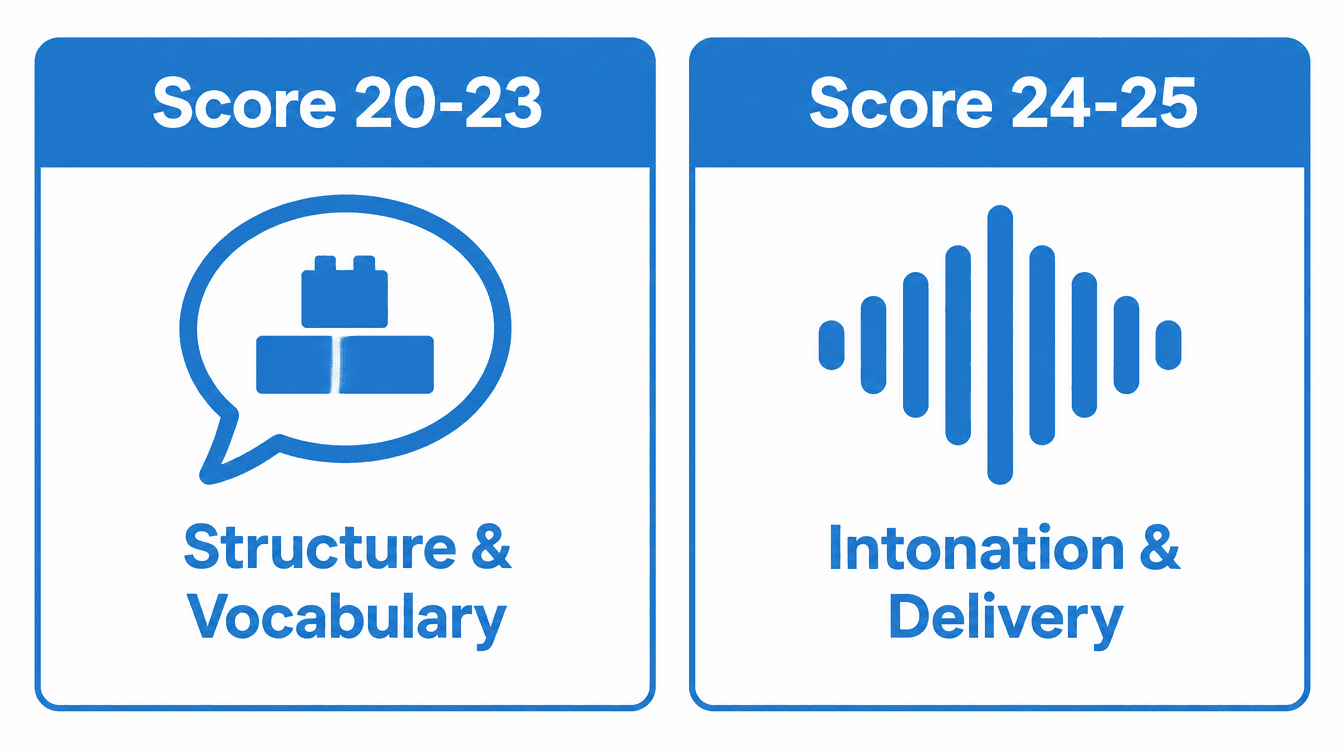
If you're still in the low 20s, structure comes first
If you're still in the low 20s, intonation isn't the priority yet. Practicing logical, abstract speech comes first. If a student defaults to speaking in overly concrete, detailed terms, the vocabulary stays at that same level too. Flip it around: practice structuring your answer abstractly and with more complexity, and the vocabulary naturally rises to match. Even a mundane topic scores well on both structure and vocabulary if you talk about it in a more sophisticated way. Trying to fix intonation at this stage means solving the wrong problem first. At this level, raters are listening for logic, not pronunciation.
If you're stuck at 24-25, the problem is delivery
If your content and word choice are already solid but you're still capped at 24-25, look at intonation and stress. The mistakes at this stage are consistent and predictable.
- Reading the answer like a script, with the same falling intonation at the end of every sentence.
- Filler sounds ("uh," "um") slipping in between sentences without the speaker noticing.
- Flat delivery that doesn't stress the words that should carry emphasis.
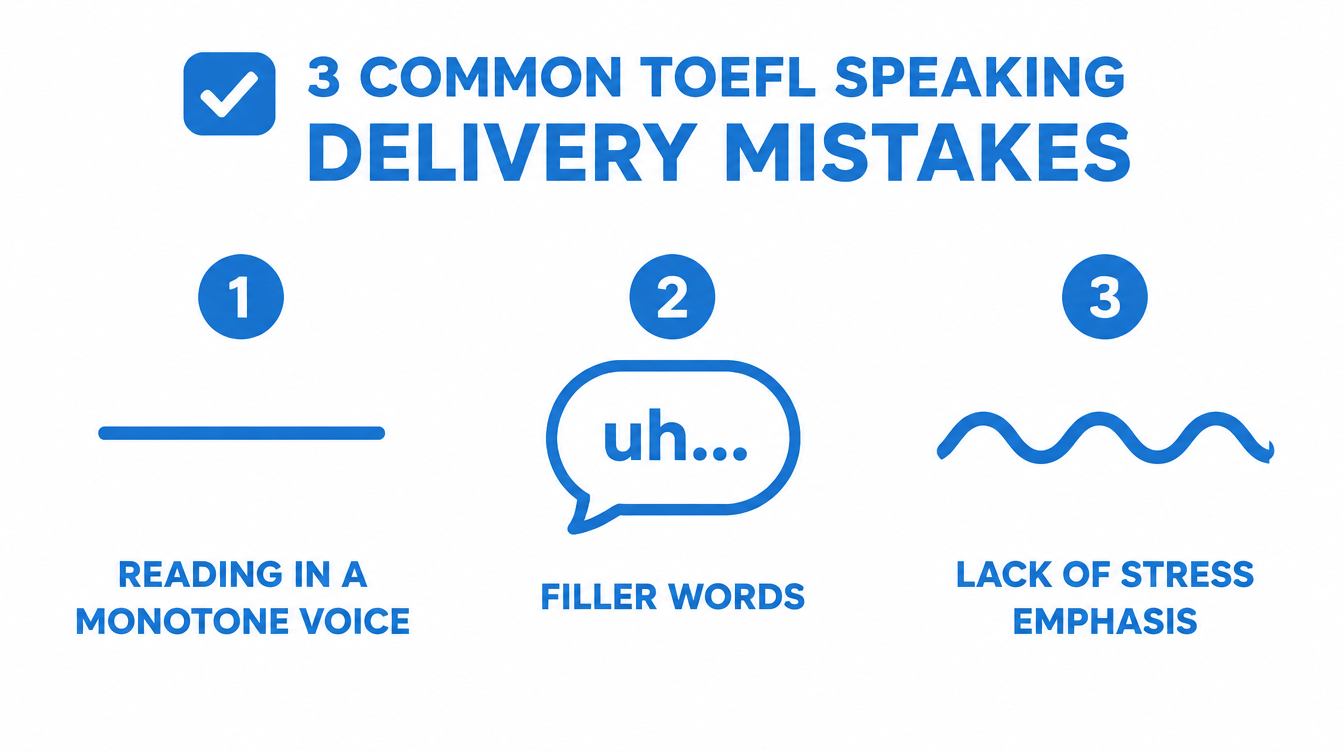
The catch is that students can't hear this in themselves while they're talking. That's why recording yourself and listening back is non-negotiable. The first time a student hears their own recording, they're usually shocked at how flat it sounds.
This shows up most clearly on Task 2
This distinction matters most on Task 2, the independent task. Prep time is short and the answer has to be built on the spot, so a student who already has solid structure sees an immediate score bump just from cleaning up delivery. Coaching these two things separately, matched to score band, in a 1:1 setting produced the biggest gains within about a month. Several students moved up 5 points using just these two fixes.
The two hardest things to actually fix
Knowing the fix doesn't make it easy. The two hardest parts are recognizing and correcting a speaking habit you've had for years, and coming up with a strong structure on the spot within the prep time. Both take longer to fix than to understand, so there's no shortcut besides repeated recording and repeated practice. This kind of score-band split isn't unique to Speaking, either. Reading and Writing have similar plateaus, and the diagnosis works about the same way.
Start today by recording yourself and actually listening back. Try a free TOEFL Speaking practice question, time your prep exactly like the real test, then listen to your own answer. You'll know exactly which wall you're stuck at.