토플 리스닝 대화 구어 표현 100개, 속뜻과 예문 정리
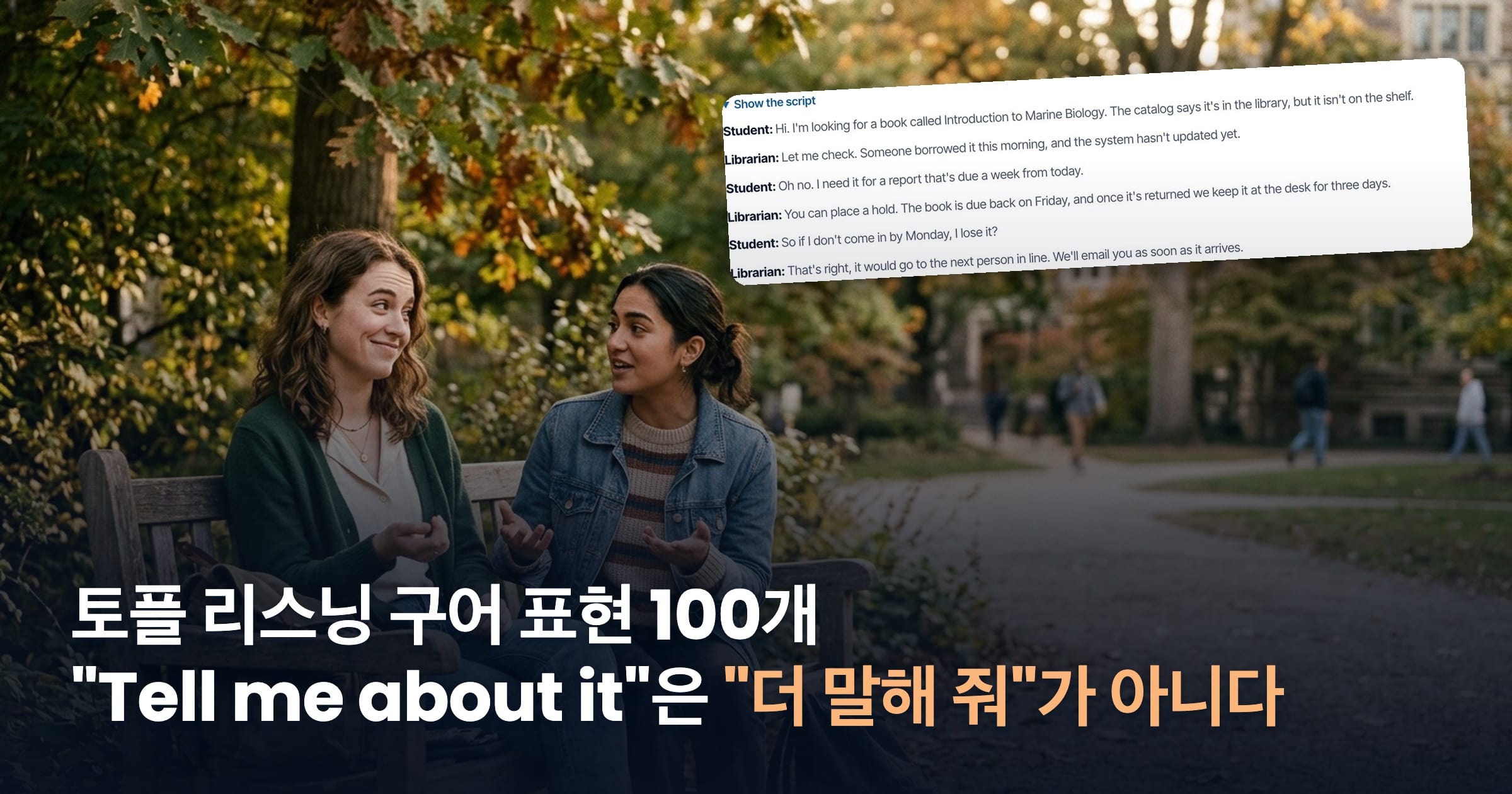
토플 리스닝 대화 문제를 틀리는 학생들은 대부분 대충의 맥락은 안다. 누가 무슨 일로 왔는지, 어떤 상황인지까지는 따라온다. 그런데 "그 사람이 왜 그 말을 했나"를 묻는 문항에서 틀린다. 상황은 아는데 그 한 마디의 속뜻을 모르기 때문이다.
원인은 연습 방향에 있다. 학술 지문과 강의 위주로 준비하다 보니 글말에는 강한데, 사람들이 실제로 말할 때 쓰는 미묘한 표현에는 약하다. 친구가 "Tell me about it."이라고 하면 더 말해 달라는 게 아니라 "나도 완전 그래"라는 뜻이다. 이런 건 듣기 연습만으로는 잘 안 쌓인다. 문어체와 별개로 따로 외워야 한다.
그래서 캠퍼스 대화에 자주 나오는 구어 표현 100개를 화자의 의도별로 10묶음으로 모았다. 표현마다 속뜻과 캠퍼스 대화 예문을 붙였다. 대화 문제 전체를 푸는 법은 토플 Listen to a Conversation 팁에 따로 정리했다.

우리 리스닝 대본에서 직접 세어 본 것
testpracticelab 토플 풀테스트 12세트의 리스닝 대본 전체(대화, Choose a Response, 공지, 강의)와 리스닝 연습 페이지 대본을 모았다. 합쳐서 4만 3,956단어다. 여기서 아래 100개 표현이 몇 번 나오는지 셌다.
결과는 우리에게도 따끔했다. 연습 문제를 아무리 많이 풀어도 이런 표현은 생각보다 적게 만난다. 그래서 따로 외워야 한다는 게 이 글의 출발점이다.
집계: testpracticelab 토플 풀테스트 12세트 리스닝 대본 3만 4,885단어 + 리스닝 연습 페이지 대본 9,071단어. 표현의 핵심 구절이 그대로 나온 경우만 셌다(대소문자 무시).
직역하면 정반대로 읽히는 여섯 개
100개 중에서도 화자 의도 문항에서 특히 자주 오답으로 이어지는 표현이다. 단어 뜻을 그대로 이으면 엉뚱한 답을 고르게 된다.
Why don't you try the third floor?
"왜 안 해?"라는 이유 질문이 아니다. "3층에 가 보는 게 어때"라는 제안이다. 문항이 "남자가 무엇을 제안하나"라면 답이 여기 있다.
Tell me about it.
더 얘기해 달라는 부탁이 아니다. "나도 그래, 완전 공감해"라는 맞장구다. 상대가 불평한 뒤에 나오면 거의 이 뜻이다.
No way! That's great.
거절이 아니라 놀람이다. 뒤에 That's great가 붙으면 기쁜 놀람이다.
I'm with you.
"네 편이야"일 수도 있지만 설명 중간에 나오면 "잘 따라가고 있어"라는 뜻이다. 동의했다고 단정하면 틀린다.
I see where you're coming from, but...
"네 입장은 이해해"까지만이다. 진짜 하려는 말은 but 뒤에 오는 반대 의견이다.
Good luck with that.
말 그대로의 응원이 아니라 "그거 잘 안 될걸"이라는 빈정거림이다. 억양이 처지면 거의 이쪽이다.
구어 표현 100개, 의도별 10묶음
묶음 이름이 곧 화자의 의도다. 화자 의도 문항의 정답은 대개 이 묶음 이름과 같은 말(동의한다, 거절한다, 의심한다, 놀랐다)로 쓰여 있다. 필요한 묶음을 누르면 바로 넘어간다.
- 맞장구·동의 (10)
- 완곡한 거절·반대 (10)
- 의심·회의 (10)
- 놀람·의외 (10)
- 걱정과 안심시키기 (10)
- 제안·권유 (10)
- 정정·말 바꾸기 (10)
- 이해·확인 (10)
- 불만·지침 (10)
- 일정·상황 (10)
맞장구·동의 (Agreeing)
| 표현 | 속뜻 | 예문 |
|---|---|---|
| Tell me about it. | 나도 완전 그래 (공감). 말해 달라는 뜻이 아니다 | A: This lab report is taking forever. B: Tell me about it. I've been on mine since Monday. |
| You can say that again. | 완전 맞는 말이야 | A: The new library hours are terrible. B: You can say that again. |
| I'm all for it. | 대찬성이야 | A: Should we start the project this weekend? B: I'm all for it. |
| Fair enough. | 그럴 만하네 (이유를 받아들임) | A: I can't meet Friday because I work. B: Fair enough. How about Thursday? |
| That makes sense. | 납득된다, 이해했다 | A: The form needs your adviser's signature first. B: That makes sense. |
| Sounds like a plan. | 좋아, 그렇게 하자 (합의) | A: Library at six, then dinner? B: Sounds like a plan. |
| I couldn't agree more. | 전적으로 동의해 | A: We should ask the professor before changing the topic. B: I couldn't agree more. |
| Count me in. | 나도 낄게, 같이 할게 | A: A few of us are going to the career fair. B: Count me in. |
| You've got a point. | 일리 있네 (생각이 바뀌는 중) | A: If we split the reading, we'll finish sooner. B: You've got a point. |
| Works for me. | 난 괜찮아, 그 시간 돼 | A: Can we move the meeting to two? B: Works for me. |
완곡한 거절·반대 (Saying no politely)
| 표현 | 속뜻 | 예문 |
|---|---|---|
| I'm not so sure about that. | 난 그렇게 생각 안 해 (반대) | A: Online sections are always easier. B: I'm not so sure about that. |
| I'd rather not. | 안 하고 싶어 | A: Want to present first? B: I'd rather not. |
| I'll pass. | 난 빠질게, 사양할게 | A: We're grabbing pizza after the lab. B: I'll pass. I have an early shift. |
| That's a stretch. | 그건 좀 무리야 (논리 비약) | A: One survey proves students prefer mornings. B: That's a stretch. |
| I see your point, but... | 무슨 말인지 알지만 (곧 반대가 온다) | A: We should drop the interview part. B: I see your point, but the professor asked for it. |
| Not really. | 별로, 사실상 아니야 | A: Did the review session help? B: Not really. |
| I wish I could, but... | 그러고 싶지만 안 돼 (거절) | A: Can you cover my shift Saturday? B: I wish I could, but I'm going home. |
| Maybe some other time. | 이번엔 안 돼 (대개 거절) | A: Join our study group tonight? B: Maybe some other time. |
| I'm afraid that won't work. | 유감이지만 그건 안 돼요 | A: Could I submit it next month? B: I'm afraid that won't work. |
| That's not really my thing. | 내 취향은 아니야 | A: You should join the debate club. B: That's not really my thing. |
의심·회의 (Doubting)
| 표현 | 속뜻 | 예문 |
|---|---|---|
| I wouldn't count on it. | 기대하지 마, 안 될 거야 | A: Maybe the professor will cancel the quiz. B: I wouldn't count on it. |
| I doubt it. | 아닐 것 같아 | A: Will the shuttle run during break? B: I doubt it. |
| Easier said than done. | 말은 쉽지 (실제론 어렵다) | A: Just finish the thesis by May. B: Easier said than done. |
| I'll believe it when I see it. | 직접 봐야 믿지 (안 믿음) | A: They promised the Wi-Fi will be fixed this week. B: I'll believe it when I see it. |
| Don't get your hopes up. | 너무 기대하지 마 | A: I applied for the scholarship late. B: Don't get your hopes up. |
| Good luck with that. | (빈정) 잘 안 될걸 | A: I'll read all six chapters tonight. B: Good luck with that. |
| Yeah, right. | (빈정) 퍽이나 그러겠다 | A: The exam will be easy. B: Yeah, right. |
| That sounds too good to be true. | 말이 너무 좋은데? (함정이 있을 것) | A: The course has no exams and no papers. B: That sounds too good to be true. |
| I have my doubts. | 글쎄, 의심스러워 | A: The new schedule will fix the overcrowding. B: I have my doubts. |
| It's a long shot. | 가능성이 낮아 | A: Could I still get into the full class? B: It's a long shot. |
놀람·의외 (Surprise)
| 표현 | 속뜻 | 예문 |
|---|---|---|
| No way! | 진짜?! (놀람, 거절 아님) | A: I got an A on the final. B: No way! That's great. |
| You're kidding. | 농담이지? 설마 | A: The deadline moved up to Monday. B: You're kidding. |
| That's news to me. | 처음 듣는 얘기야 (몰랐다) | A: Office hours moved to Thursday. B: That's news to me. |
| I had no idea. | 전혀 몰랐어 | A: The gym is free for students. B: I had no idea. |
| Since when? | 언제부터 그랬어? (의외라는 반응) | A: You need a permit to park there now. B: Since when? |
| Who would have thought? | 누가 상상이나 했겠어 | A: Our small club won the grant. B: Who would have thought? |
| That came out of nowhere. | 갑자기 웬일이야, 예고도 없이 | A: The professor gave a pop quiz. B: That came out of nowhere. |
| I didn't see that coming. | 그건 예상 못 했어 | A: Mark switched his major to music. B: I didn't see that coming. |
| Seriously? | 진짜? (놀람이나 짜증) | A: The printer is broken again. B: Seriously? |
| That's a first. | 처음 있는 일이네 (평소엔 안 그렇다) | A: The bus actually came on time. B: That's a first. |
걱정과 안심시키기 (Worry and reassurance)
| 표현 | 속뜻 | 예문 |
|---|---|---|
| I'm freaking out. | 완전 패닉이야 | A: How's the thesis? B: I'm freaking out. It's due in two days. |
| It's been on my mind. | 계속 신경 쓰이고 있어 | A: Did you decide about studying abroad? B: Not yet. It's been on my mind. |
| I'm a nervous wreck. | 너무 긴장돼서 미치겠어 | A: Ready for your presentation? B: I'm a nervous wreck. |
| Don't sweat it. | 걱정 마, 괜찮아 | A: Sorry I'm late. B: Don't sweat it. |
| You'll be fine. | 잘될 거야 | A: I've never done an interview. B: You'll be fine. |
| It's not the end of the world. | 큰일 난 거 아니야 | A: I failed the first quiz. B: It's not the end of the world. |
| Take it easy. | 무리하지 마, 진정해 | A: I've been up studying since four. B: Take it easy. |
| No big deal. | 별일 아니야 | A: I forgot to bring your notes. B: No big deal. |
| You've got this. | 넌 할 수 있어 | A: My defense is tomorrow. B: You've got this. |
| Hang in there. | 조금만 버텨 | A: Three exams this week. B: Hang in there. |
제안·권유 (Suggesting)
| 표현 | 속뜻 | 예문 |
|---|---|---|
| Why don't you...? | ~해 보는 게 어때 (이유 질문이 아니다) | A: I can't find a quiet place to study. B: Why don't you try the third floor? |
| How about...? | ~는 어때 | A: When should we meet? B: How about after lunch? |
| You might want to... | ~하는 게 좋을걸 (완곡한 충고) | A: My essay is due Friday. B: You might want to start the outline today. |
| It wouldn't hurt to... | ~해서 손해 볼 건 없지 (해 봐) | A: Should I email the professor? B: It wouldn't hurt to ask. |
| If I were you, I'd... | 내가 너라면 ~할 거야 | A: Two courses I like meet at the same time. B: If I were you, I'd take the one that fills up first. |
| Have you thought about...? | ~는 생각해 봤어? (제안) | A: I need money for books. B: Have you thought about the library job? |
| What if we...? | ~하면 어떨까 | A: The room is booked. B: What if we meet in the lounge? |
| I'd go with... | 나라면 ~ 고를래 | A: Statistics or economics? B: I'd go with statistics. |
| It might be worth... | ~해 볼 만할지도 몰라 | A: The class is full. B: It might be worth joining the waiting list. |
| Let's play it by ear. | 미리 정하지 말고 상황 봐서 하자 | A: Should we book the room for two hours? B: Let's play it by ear. |
정정·말 바꾸기 (Correcting and changing your mind)
| 표현 | 속뜻 | 예문 |
|---|---|---|
| Actually, ... | 사실은 (앞의 말을 고친다) | A: So the paper is due Monday? B: Actually, it's Wednesday. |
| On second thought, ... | 다시 생각해 보니 (결정 변경) | A: Let's take the bus. On second thought, let's walk. It's nice out. |
| Come to think of it, ... | 생각해 보니 (새로 떠오름) | A: Did anyone mention the deadline? B: Come to think of it, the TA did. |
| Scratch that. | 방금 말 취소 | A: Meet at noon. Scratch that, I have a lab. Meet at one. |
| I take that back. | 방금 말 취소할게 | A: The class is easy. Well, I take that back. The final is hard. |
| What I meant was... | 내 말은 ~라는 거였어 (오해 바로잡기) | A: You don't like my topic? B: What I meant was it's too broad. |
| Let me put it another way. | 다르게 말해 볼게 | A: I don't follow. B: Let me put it another way. |
| That's not what I meant. | 그런 뜻이 아니었어 | A: So you want to quit the group? B: That's not what I meant. |
| I stand corrected. | 내가 틀렸네 (인정) | A: The lab closes at eight, not nine. B: I stand corrected. |
| Never mind. | 됐어, 신경 쓰지 마 | A: Can you... never mind, I found it. |
이해·확인 (Understanding and checking)
| 표현 | 속뜻 | 예문 |
|---|---|---|
| So what you're saying is... | 그러니까 네 말은 ~라는 거지? (요약 확인) | B: So what you're saying is I need two signatures? |
| Got it. | 알겠어 | A: Submit it through the portal, not by email. B: Got it. |
| I'm with you. | 잘 따라가고 있어 (동의라는 뜻은 아닐 수 있다) | A: First we collect data, then we code it. B: I'm with you. |
| I'm lost. | 못 따라가겠어 | A: Then the variable becomes the control. B: Sorry, I'm lost. |
| That went over my head. | 하나도 이해 못 했어 | A: Did you get the lecture on quantum states? B: That went over my head. |
| Could you run that by me again? | 다시 한 번 설명해 줄래? | A: Could you run that by me again? The part about the forms. |
| Fill me in. | 무슨 일 있었는지 알려 줘 | A: I missed the meeting. Fill me in. |
| Does that make sense? | 이해됐어? (확인) | A: You take the core courses first. Does that make sense? |
| I see where you're coming from. | 네 입장은 이해해 (동의는 아님) | A: I think grades shouldn't count participation. B: I see where you're coming from, but... |
| Point taken. | 알았어, 무슨 말인지 인정할게 | A: You keep starting too late. B: Point taken. |
불만·지침 (Frustration and stress)
| 표현 | 속뜻 | 예문 |
|---|---|---|
| I'm swamped. | 일이 너무 많아 (부탁 거절의 이유로 자주 나온다) | A: Can you help me edit this? B: Sorry, I'm swamped this week. |
| I'm fed up with... | ~에 질렸어 | A: I'm fed up with the noise in my dorm. |
| It's driving me crazy. | 미치겠어, 짜증 나 | A: The Wi-Fi keeps dropping. It's driving me crazy. |
| That's the last straw. | 더는 못 참아 (행동에 나설 것) | A: They lost my form again? That's the last straw. |
| I've had it with... | ~는 이제 진절머리 나 | A: I've had it with this group. Nobody does their part. |
| It's a pain. | 귀찮아, 번거로워 | A: Renewing the permit online is a pain. |
| What a hassle. | 아, 번거롭다 | A: I have to go to three offices for one signature. What a hassle. |
| I'm running on empty. | 기진맥진이야 | A: You okay? B: I'm running on empty. Three hours of sleep. |
| I'm stuck. | 막혔어 | A: How's the coding assignment? B: I'm stuck on the second part. |
| I'm behind on... | ~가 밀려 있어 | A: I'm behind on the readings for this class. |
일정·상황 (Plans and status)
| 표현 | 속뜻 | 예문 |
|---|---|---|
| I'm on it. | 내가 할게, 지금 하고 있어 | A: Can someone book the room? B: I'm on it. |
| It's up in the air. | 아직 안 정해졌어 | A: Is the trip still on? B: It's up in the air. |
| I'll get back to you. | 나중에 답 줄게 (지금은 결정 안 함) | A: Can you join the panel? B: I'll get back to you tomorrow. |
| It slipped my mind. | 깜빡했어 | A: Did you send the form? B: Oh no, it slipped my mind. |
| I'm cutting it close. | 시간이 아슬아슬해 | A: The bus leaves at 8:50 and class starts at nine. I'm cutting it close. |
| It came down to the wire. | 막판까지 갔어 (겨우 했다) | A: Did you finish on time? B: It came down to the wire. |
| It's a done deal. | 확정됐어 | A: Did they approve your transfer? B: It's a done deal. |
| Let's call it a day. | 오늘은 여기까지 하자 | A: We've been here five hours. Let's call it a day. |
| Keep me posted. | 소식 생기면 알려 줘 | A: I'll hear about the internship next week. B: Keep me posted. |
| Off the top of my head, ... | 지금 바로 떠오르는 걸로는 (확실하진 않다) | A: Which professor teaches that? B: Off the top of my head, Dr. Lee. |
외우는 법
- 예문째로 외운다. 표현만 외우면 들릴 때 안 떠오른다. 앞사람이 무슨 말을 했을 때 이 표현이 나오는지까지 한 덩어리로 외워야 대화 속에서 바로 알아듣는다.
- 속뜻 칸을 의도 한 단어로 줄인다. "Easier said than done" 옆에 "의심"이라고만 써 두는 식이다. 시험 보기는 그 한 단어로 쓰여 있는 경우가 많다.
- 억양까지 같이 듣는다. Good luck with that, Yeah, right처럼 같은 단어가 억양에 따라 응원도 되고 빈정거림도 된다. 예문을 소리 내어 읽을 때 두 가지로 다 말해 보자.
- 대본에서 표시한다. 대화 문제를 풀고 나면 대본을 열어 이 표에 있는 표현에 줄을 긋는다. 한 번 시험 맥락에서 만난 표현은 훨씬 오래 남는다.
오늘은 한 묶음만
100개를 한 번에 외울 필요는 없다. 오늘은 한 묶음 10개만 예문째로 외우고, 토플 풀테스트 001의 대화 문제를 풀어 보자. 다 풀고 정답·해설 페이지에서 대본을 열면 어떤 표현이 어디서 쓰였는지 바로 보인다.
대화 문제를 푸는 순서와 노트 쓰는 법은 토플 Listen to a Conversation 팁에, 대화와 강의를 더 듣고 싶다면 토플 리스닝 연습에 있다.