TOEFL Listening Conversations के लिए 100 बोलचाल के English Expressions
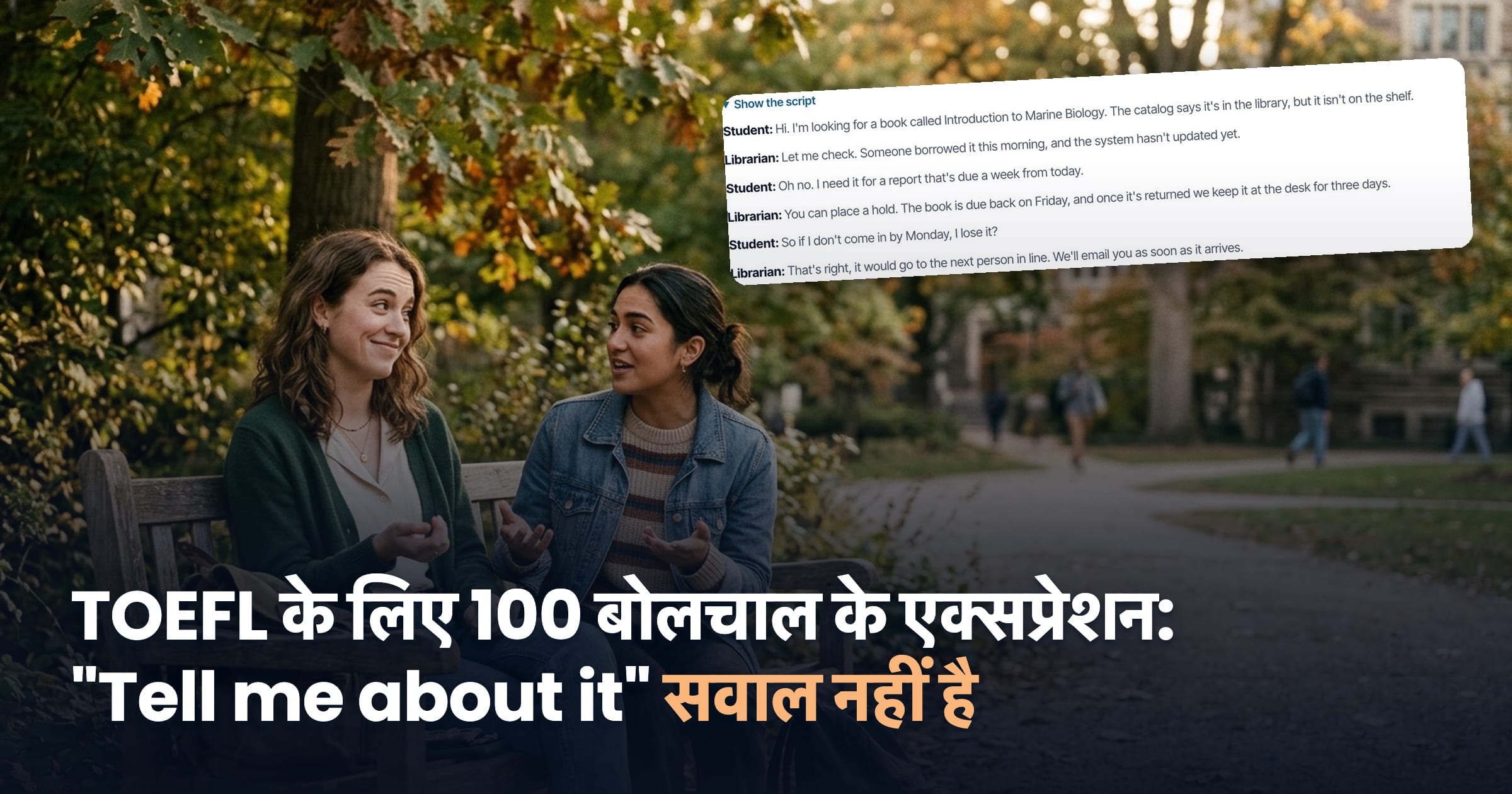
TOEFL Listening के conversation सवाल गलत करने वाले ज़्यादातर students बातचीत की मोटी स्थिति समझ लेते हैं। उन्हें पता होता है कि कौन आया और क्यों। वे उस सवाल पर फिसलते हैं जो पूछता है कि किसी ने कोई बात क्यों कही। scene समझ आ जाता है, पर उस एक लाइन का असली मतलब छूट जाता है।
वजह practice का तरीका है। तैयारी अक्सर academic passages और lectures पर टिकी रहती है, इसलिए students लिखित English में मज़बूत हो जाते हैं और रोज़ बोले जाने वाले छोटे expressions में कमज़ोर रह जाते हैं। जब कोई दोस्त कहता है "Tell me about it," तो वह और details नहीं माँग रहा। उसका मतलब है "हाँ यार, मेरे साथ भी यही है।" सिर्फ listening practice से यह समझ कम ही बनती है। इन expressions को लिखित English से अलग, खुद याद करना पड़ता है।
इसलिए यहाँ campus की बातचीत में अक्सर आने वाले 100 बोलचाल के expressions हैं, बोलने वाले के इरादे के हिसाब से 10 समूहों में बँटे हुए। हर एक के साथ उसका असली मतलब और एक छोटा campus उदाहरण है। पूरे conversation task को कैसे हल करें, यह जानने के लिए TOEFL Listen to a Conversation: 6 टिप्स देखिए।

हमने अपनी listening scripts में क्या गिना
हमने अपने 12 TOEFL full practice tests की सारी Listening scripts (conversations, Choose a Response, announcements, academic talks) और अपने listening practice pages की scripts इकट्ठा कीं: कुल 43,956 शब्द। फिर गिना कि नीचे दिए 100 expressions में से हर एक कितनी बार आता है।
नतीजा थोड़ा चुभा, क्योंकि ये हमारी अपनी सामग्री है। आप ढेर सारे practice सवाल हल करके भी इन expressions से उतनी बार नहीं मिलते जितना आप सोचते हैं। यह list इसी वजह से बनी है।
स्रोत: testpracticelab TOEFL full tests, 12 sets की listening scripts (34,885 शब्द) और listening practice pages की scripts (9,071 शब्द)। हर expression के मुख्य phrase का सिर्फ exact match गिना गया, capital/small letters को नज़रअंदाज़ करके।
छह expressions जिनका शब्द-दर-शब्द अनुवाद गलत मतलब देता है
speaker-intent सवालों पर बाकियों के मुकाबले ये छह ज़्यादा गलत जवाबों की ओर ले जाते हैं। शब्दों के मतलब जोड़कर सीधा अनुवाद करेंगे तो गलत option चुन लेंगे।
Why don't you try the third floor?
यह वजह नहीं पूछ रहा। यह सुझाव है: "third floor पर देखो।" अगर सवाल पूछे कि आदमी क्या सुझाव देता है, तो यही लाइन है।
Tell me about it.
और details माँगना नहीं है। मतलब है "मैं बिल्कुल समझता हूँ।" किसी शिकायत के बाद आए तो लगभग हमेशा यही मतलब होता है।
No way! That's great.
हैरानी है, मना करना नहीं। बाद में That's great हो तो यह खुशी भरी हैरानी है।
I'm with you.
इसका मतलब "मैं तुम्हारे साथ हूँ" हो सकता है, लेकिन किसी explanation के बीच में इसका मतलब है "बात समझ आ रही है।" इसे सहमति मत मान लीजिए।
I see where you're coming from, but...
इसका मतलब सिर्फ इतना है कि "मैं तुम्हारी वजह समझता हूँ।" असली संदेश but के बाद की असहमति है।
Good luck with that.
आमतौर पर हौसला बढ़ाना नहीं। यह तंज़ है: "यह होने वाला नहीं।" सपाट, नीचे गिरता tone इसकी पहचान है।
इरादे के 10 समूहों में 100 बोलचाल के expressions
हर समूह का नाम बोलने वाले का इरादा है। speaker-intent सवाल का सही option आमतौर पर इसी विचार से लिखा जाता है: agrees, declines, doubts, is surprised। किसी समूह पर जाने के लिए उस पर tap कीजिए।
- सहमति जताना (10)
- विनम्रता से मना करना (10)
- शक जताना (10)
- हैरानी (10)
- चिंता और तसल्ली (10)
- सुझाव देना (10)
- बात सुधारना और राय बदलना (10)
- समझना और पक्का करना (10)
- झुंझलाहट और थकान (10)
- योजना और हालात (10)
सहमति जताना (Agreeing)
| Expression | असली मतलब | उदाहरण |
|---|---|---|
| Tell me about it. | मेरे साथ भी बिल्कुल यही है (हमदर्दी)। और बताने को नहीं कह रहे | A: This lab report is taking forever. B: Tell me about it. I've been on mine since Monday. |
| You can say that again. | बिल्कुल सही कहा | A: The new library hours are terrible. B: You can say that again. |
| I'm all for it. | मैं पूरी तरह इसके पक्ष में हूँ | A: Should we start the project this weekend? B: I'm all for it. |
| Fair enough. | ठीक है, बात जायज़ है (वजह मान ली) | A: I can't meet Friday because I work. B: Fair enough. How about Thursday? |
| That makes sense. | समझ आ गया, बात सही लगती है | A: The form needs your adviser's signature first. B: That makes sense. |
| Sounds like a plan. | ठीक है, यही करते हैं (सहमति) | A: Library at six, then dinner? B: Sounds like a plan. |
| I couldn't agree more. | मैं पूरी तरह सहमत हूँ | A: We should ask the professor before changing the topic. B: I couldn't agree more. |
| Count me in. | मुझे भी शामिल करो, मैं भी चलूँगा | A: A few of us are going to the career fair. B: Count me in. |
| You've got a point. | तुम्हारी बात में दम है (राय बदल रही है) | A: If we split the reading, we'll finish sooner. B: You've got a point. |
| Works for me. | मेरे लिए ठीक है, उस समय मैं फ्री हूँ | A: Can we move the meeting to two? B: Works for me. |
विनम्रता से मना करना (Saying no politely)
| Expression | असली मतलब | उदाहरण |
|---|---|---|
| I'm not so sure about that. | मैं ऐसा नहीं मानता (नरमी से असहमति) | A: Online sections are always easier. B: I'm not so sure about that. |
| I'd rather not. | मैं नहीं करना चाहूँगा (विनम्र मना) | A: Want to present first? B: I'd rather not. |
| I'll pass. | नहीं, शुक्रिया; मैं नहीं आऊँगा | A: We're grabbing pizza after the lab. B: I'll pass. I have an early shift. |
| That's a stretch. | यह बात ज़रूरत से ज़्यादा खींची जा रही है | A: One survey proves students prefer mornings. B: That's a stretch. |
| I see your point, but... | समझता हूँ, पर सहमत नहीं (असली बात but के बाद) | A: We should drop the interview part. B: I see your point, but the professor asked for it. |
| Not really. | ज़्यादातर नहीं, असल में नहीं | A: Did the review session help? B: Not really. |
| I wish I could, but... | करना चाहता हूँ पर नहीं हो पाएगा (मना करना) | A: Can you cover my shift Saturday? B: I wish I could, but I'm going home. |
| Maybe some other time. | अभी नहीं (अक्सर नरमी से मना) | A: Join our study group tonight? B: Maybe some other time. |
| I'm afraid that won't work. | माफ़ कीजिए, ऐसा नहीं हो सकता (staff या professor का विनम्र मना) | A: Could I submit it next month? B: I'm afraid that won't work. |
| That's not really my thing. | यह मेरी पसंद की चीज़ नहीं है | A: You should join the debate club. B: That's not really my thing. |
शक जताना (Doubting)
| Expression | असली मतलब | उदाहरण |
|---|---|---|
| I wouldn't count on it. | उम्मीद मत रखो, ऐसा नहीं होगा | A: Maybe the professor will cancel the quiz. B: I wouldn't count on it. |
| I doubt it. | मुझे नहीं लगता | A: Will the shuttle run during break? B: I doubt it. |
| Easier said than done. | कहना आसान है, करना मुश्किल | A: Just finish the thesis by May. B: Easier said than done. |
| I'll believe it when I see it. | खुद देखूँगा तब मानूँगा (भरोसा नहीं) | A: They promised the Wi-Fi will be fixed this week. B: I'll believe it when I see it. |
| Don't get your hopes up. | ज़्यादा उम्मीद मत लगाओ | A: I applied for the scholarship late. B: Don't get your hopes up. |
| Good luck with that. | (तंज़) यह होने वाला नहीं | A: I'll read all six chapters tonight. B: Good luck with that. |
| Yeah, right. | (तंज़) हाँ, ज़रूर, बिल्कुल नहीं मानता | A: The exam will be easy. B: Yeah, right. |
| That sounds too good to be true. | इतना अच्छा है कि ज़रूर कोई पेच होगा | A: The course has no exams and no papers. B: That sounds too good to be true. |
| I have my doubts. | मुझे यकीन नहीं है, शक है | A: The new schedule will fix the overcrowding. B: I have my doubts. |
| It's a long shot. | मुमकिन है पर संभावना कम है | A: Could I still get into the full class? B: It's a long shot. |
हैरानी (Surprise)
| Expression | असली मतलब | उदाहरण |
|---|---|---|
| No way! | सच में?! (हैरानी, मना करना नहीं) | A: I got an A on the final. B: No way! That's great. |
| You're kidding. | मज़ाक कर रहे हो? यकीन नहीं होता | A: The deadline moved up to Monday. B: You're kidding. |
| That's news to me. | यह तो पहली बार सुन रहा हूँ (पता नहीं था) | A: Office hours moved to Thursday. B: That's news to me. |
| I had no idea. | मुझे बिल्कुल पता नहीं था | A: The gym is free for students. B: I had no idea. |
| Since when? | ऐसा कब से हो गया? (हैरानी) | A: You need a permit to park there now. B: Since when? |
| Who would have thought? | किसने सोचा था, किसी को उम्मीद नहीं थी | A: Our small club won the grant. B: Who would have thought? |
| That came out of nowhere. | बिना बताए अचानक हो गया | A: The professor gave a pop quiz. B: That came out of nowhere. |
| I didn't see that coming. | इसकी तो उम्मीद ही नहीं थी | A: Mark switched his major to music. B: I didn't see that coming. |
| Seriously? | सच में? (हैरानी या झुंझलाहट) | A: The printer is broken again. B: Seriously? |
| That's a first. | ऐसा पहली बार हुआ (आमतौर पर नहीं होता) | A: The bus actually came on time. B: That's a first. |
चिंता और तसल्ली (Worry and reassurance)
| Expression | असली मतलब | उदाहरण |
|---|---|---|
| I'm freaking out. | मैं बहुत घबराया हुआ हूँ | A: How's the thesis? B: I'm freaking out. It's due in two days. |
| It's been on my mind. | यह बात दिमाग से निकल नहीं रही | A: Did you decide about studying abroad? B: Not yet. It's been on my mind. |
| I'm a nervous wreck. | मैं बेहद नर्वस हूँ | A: Ready for your presentation? B: I'm a nervous wreck. |
| Don't sweat it. | चिंता मत करो, कोई बात नहीं | A: Sorry I'm late. B: Don't sweat it. |
| You'll be fine. | सब ठीक हो जाएगा | A: I've never done an interview. B: You'll be fine. |
| It's not the end of the world. | कोई बड़ी आफ़त नहीं, संभल जाओगे | A: I failed the first quiz. B: It's not the end of the world. |
| Take it easy. | आराम से, ज़्यादा ज़ोर मत डालो | A: I've been up studying since four. B: Take it easy. |
| No big deal. | कोई बड़ी बात नहीं | A: I forgot to bring your notes. B: No big deal. |
| You've got this. | तुम कर लोगे | A: My defense is tomorrow. B: You've got this. |
| Hang in there. | थोड़ा और टिके रहो, सब बेहतर होगा | A: Three exams this week. B: Hang in there. |
सुझाव देना (Suggesting)
| Expression | असली मतलब | उदाहरण |
|---|---|---|
| Why don't you...? | ...करके देखो (सुझाव, वजह नहीं पूछ रहे) | A: I can't find a quiet place to study. B: Why don't you try the third floor? |
| How about...? | ...कैसा रहेगा? (सुझाव) | A: When should we meet? B: How about after lunch? |
| You might want to... | ...कर लो तो अच्छा रहेगा (नरम सलाह) | A: My essay is due Friday. B: You might want to start the outline today. |
| It wouldn't hurt to... | ...करने में कोई नुकसान नहीं (कर लो) | A: Should I email the professor? B: It wouldn't hurt to ask. |
| If I were you, I'd... | मैं तुम्हारी जगह होता तो ...करता (सीधी सलाह) | A: Two courses I like meet at the same time. B: If I were you, I'd take the one that fills up first. |
| Have you thought about...? | ...के बारे में सोचा है? (सवाल के रूप में सुझाव) | A: I need money for books. B: Have you thought about the library job? |
| What if we...? | ...करें तो कैसा रहेगा? | A: The room is booked. B: What if we meet in the lounge? |
| I'd go with... | मैं होता तो ... चुनता | A: Statistics or economics? B: I'd go with statistics. |
| It might be worth... | ...करके देखना फ़ायदेमंद हो सकता है | A: The class is full. B: It might be worth joining the waiting list. |
| Let's play it by ear. | अभी तय नहीं करते, हालात देखकर करेंगे | A: Should we book the room for two hours? B: Let's play it by ear. |
बात सुधारना और राय बदलना (Correcting and changing your mind)
| Expression | असली मतलब | उदाहरण |
|---|---|---|
| Actually, ... | असल में (पहली बात को सुधार रहे हैं; नई जानकारी अहम है) | A: So the paper is due Monday? B: Actually, it's Wednesday. |
| On second thought, ... | दोबारा सोचा तो (फैसला बदल गया) | A: Let's take the bus. On second thought, let's walk. It's nice out. |
| Come to think of it, ... | अब सोचता हूँ तो (अभी याद आया) | A: Did anyone mention the deadline? B: Come to think of it, the TA did. |
| Scratch that. | अभी जो कहा, वह छोड़ो | A: Meet at noon. Scratch that, I have a lab. Meet at one. |
| I take that back. | अपनी बात वापस लेता हूँ | A: The class is easy. Well, I take that back. The final is hard. |
| What I meant was... | मेरा मतलब यह था कि... (गलतफ़हमी दूर करना) | A: You don't like my topic? B: What I meant was it's too broad. |
| Let me put it another way. | दूसरे तरीके से समझाता हूँ | A: I don't follow. B: Let me put it another way. |
| That's not what I meant. | मेरा यह मतलब नहीं था | A: So you want to quit the group? B: That's not what I meant. |
| I stand corrected. | मैं गलत था (मान लेना) | A: The lab closes at eight, not nine. B: I stand corrected. |
| Never mind. | छोड़ो, अब ज़रूरत नहीं | A: Can you... never mind, I found it. |
समझना और पक्का करना (Understanding and checking)
| Expression | असली मतलब | उदाहरण |
|---|---|---|
| So what you're saying is... | यानी तुम्हारा कहना है कि...? (समझ पक्की करना) | B: So what you're saying is I need two signatures? |
| Got it. | समझ गया | A: Submit it through the portal, not by email. B: Got it. |
| I'm with you. | बात समझ में आ रही है (हमेशा सहमति नहीं) | A: First we collect data, then we code it. B: I'm with you. |
| I'm lost. | अब समझ नहीं आ रहा | A: Then the variable becomes the control. B: Sorry, I'm lost. |
| That went over my head. | कुछ भी समझ नहीं आया, सिर के ऊपर से निकल गया | A: Did you get the lecture on quantum states? B: That went over my head. |
| Could you run that by me again? | एक बार फिर समझा दोगे? | A: Could you run that by me again? The part about the forms. |
| Fill me in. | जो छूट गया, बता दो | A: I missed the meeting. Fill me in. |
| Does that make sense? | समझ आया? (पक्का करना) | A: You take the core courses first. Does that make sense? |
| I see where you're coming from. | तुम्हारी वजह समझता हूँ (सहमति नहीं) | A: I think grades shouldn't count participation. B: I see where you're coming from, but... |
| Point taken. | ठीक है, तुम्हारी बात मान ली (आलोचना स्वीकार) | A: You keep starting too late. B: Point taken. |
झुंझलाहट और थकान (Frustration and stress)
| Expression | असली मतलब | उदाहरण |
|---|---|---|
| I'm swamped. | बहुत ज़्यादा काम है (अक्सर मना करने की वजह) | A: Can you help me edit this? B: Sorry, I'm swamped this week. |
| I'm fed up with... | ...से तंग आ गया हूँ | A: I'm fed up with the noise in my dorm. |
| It's driving me crazy. | इससे पागल हो रहा हूँ, बहुत झुंझलाहट है | A: The Wi-Fi keeps dropping. It's driving me crazy. |
| That's the last straw. | अब बर्दाश्त नहीं (आगे कोई कदम उठेगा) | A: They lost my form again? That's the last straw. |
| I've had it with... | ...से अब हद हो गई | A: I've had it with this group. Nobody does their part. |
| It's a pain. | बड़ा झंझट है, परेशानी वाला काम है | A: Renewing the permit online is a pain. |
| What a hassle. | कितना झंझट है | A: I have to go to three offices for one signature. What a hassle. |
| I'm running on empty. | बिल्कुल थक चुका हूँ, ताकत नहीं बची | A: You okay? B: I'm running on empty. Three hours of sleep. |
| I'm stuck. | अटक गया हूँ, आगे नहीं बढ़ पा रहा | A: How's the coding assignment? B: I'm stuck on the second part. |
| I'm behind on... | ...में पीछे चल रहा हूँ, काम बाकी है | A: I'm behind on the readings for this class. |
योजना और हालात (Plans and status)
| Expression | असली मतलब | उदाहरण |
|---|---|---|
| I'm on it. | मैं कर रहा हूँ, संभाल लूँगा | A: Can someone book the room? B: I'm on it. |
| It's up in the air. | अभी तय नहीं हुआ | A: Is the trip still on? B: It's up in the air. |
| I'll get back to you. | बाद में जवाब दूँगा (अभी फैसला नहीं) | A: Can you join the panel? B: I'll get back to you tomorrow. |
| It slipped my mind. | भूल गया | A: Did you send the form? B: Oh no, it slipped my mind. |
| I'm cutting it close. | समय बहुत कम बचा है, बस मुश्किल से | A: The bus leaves at 8:50 and class starts at nine. I'm cutting it close. |
| It came down to the wire. | आखिरी पल में जाकर हुआ (बड़ी मुश्किल से) | A: Did you finish on time? B: It came down to the wire. |
| It's a done deal. | पक्का हो गया, तय है | A: Did they approve your transfer? B: It's a done deal. |
| Let's call it a day. | आज के लिए इतना ही | A: We've been here five hours. Let's call it a day. |
| Keep me posted. | कोई खबर मिले तो बताते रहना | A: I'll hear about the internship next week. B: Keep me posted. |
| Off the top of my head, ... | अभी जो याद आ रहा है उसके हिसाब से (पक्का नहीं) | A: Which professor teaches that? B: Off the top of my head, Dr. Lee. |
इन्हें याद कैसे करें
- सिर्फ phrase नहीं, उदाहरण याद कीजिए। अकेला phrase बातचीत के बीच याद नहीं आएगा। सामने वाले ने उससे ठीक पहले जो कहा, उसे साथ में एक टुकड़े की तरह याद कीजिए।
- मतलब को एक इरादे वाले शब्द में समेटिए। Easier said than done के आगे "शक" लिख दीजिए। answer options अक्सर इसी एक विचार से लिखे होते हैं।
- tone की भी practice कीजिए। Good luck with that और Yeah, right tone के हिसाब से दोस्ताना भी हो सकते हैं और तंज़ भी। हर उदाहरण दोनों तरह ज़ोर से बोलकर देखिए।
- असली scripts में इन्हें निशान लगाइए। conversation सवाल के बाद script खोलिए और इस list का कोई भी expression underline कीजिए। परीक्षा के संदर्भ में एक बार मिला phrase दिमाग में टिक जाता है।
आज एक समूह
सभी 100 एक साथ याद करने की ज़रूरत नहीं। आज दस का एक समूह उदाहरणों के साथ याद कीजिए, फिर TOEFL Full Practice Test 001 की बातचीतें हल कीजिए। उसके बाद answer key page पर scripts खोलिए, आप देख पाएँगे कि हर expression ठीक कहाँ इस्तेमाल हुआ।
इस task में कदमों का क्रम और notes लेने का तरीका जानने के लिए TOEFL Listen to a Conversation: 6 टिप्स पढ़िए। और ज़्यादा बातचीतों और lectures के लिए TOEFL listening practice पर जाइए।