How to practice: This set collects only the Write About the Photo question type from the real DET (Duolingo English Test), covering DET Writing questions. No grading and no timer, so solve it yourself, then tap each question to reveal the answer or model response.
Q1
Describe what you see in this photo.
1:00 for this question
Show Model Answer
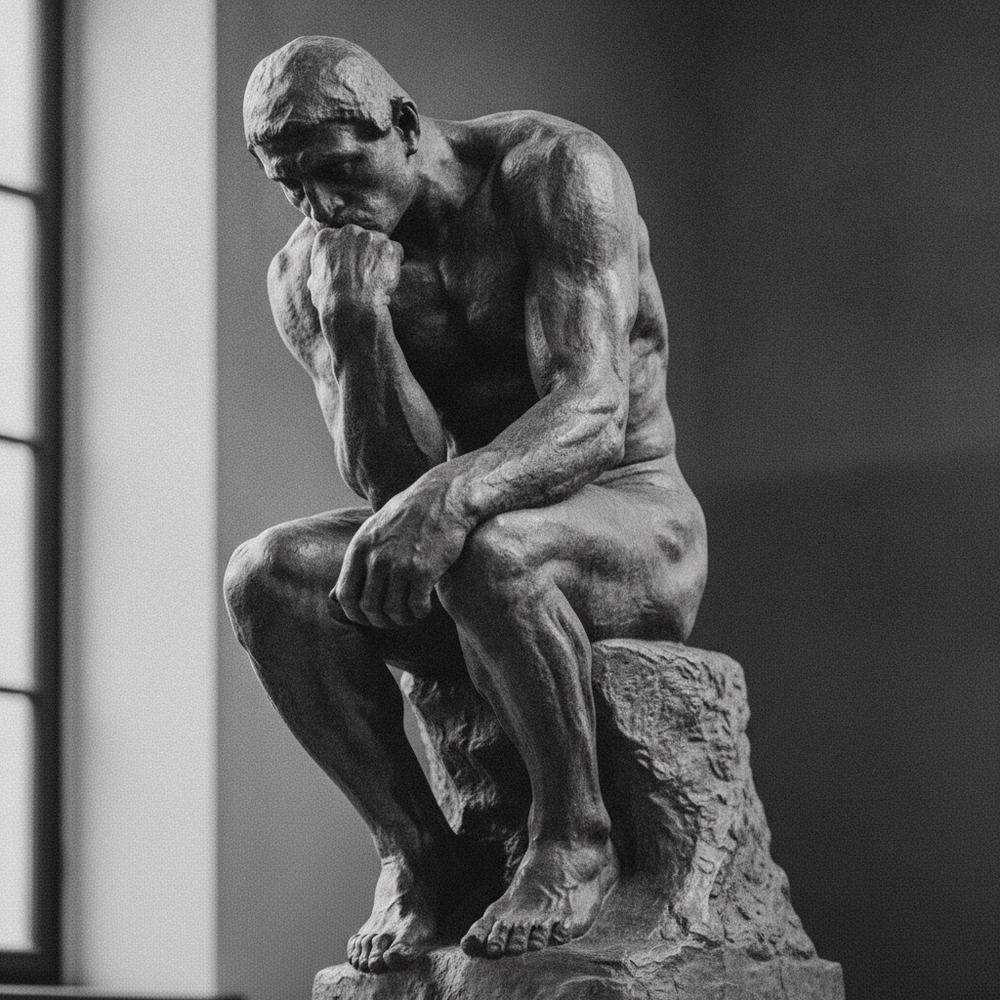
This photograph presents a close-up view of Auguste Rodin's renowned sculpture 'The Thinker, ' captured in black and white in a way that emphasizes the textured surface of the bronze and the intense physicality of the figure. The seated figure, muscular, head inclined, chin resting on a clenched fist, conveys a state of profound internal concentration that seems almost paradoxically strenuous. What the image communicates most powerfully is the idea that serious thought is not passive but effortful, that grappling with a difficult problem can demand as much of a person as physical exertion. This quality makes the sculpture an enduring icon of philosophical inquiry: the posture does not suggest serene contemplation but rather the strain of wrestling with questions that do not yield to easy resolution. Seen in this light, the image is an apt emblem for the discipline of philosophy itself.
Q2
Describe what you see in this photo.
1:00 for this question
Show Model Answer
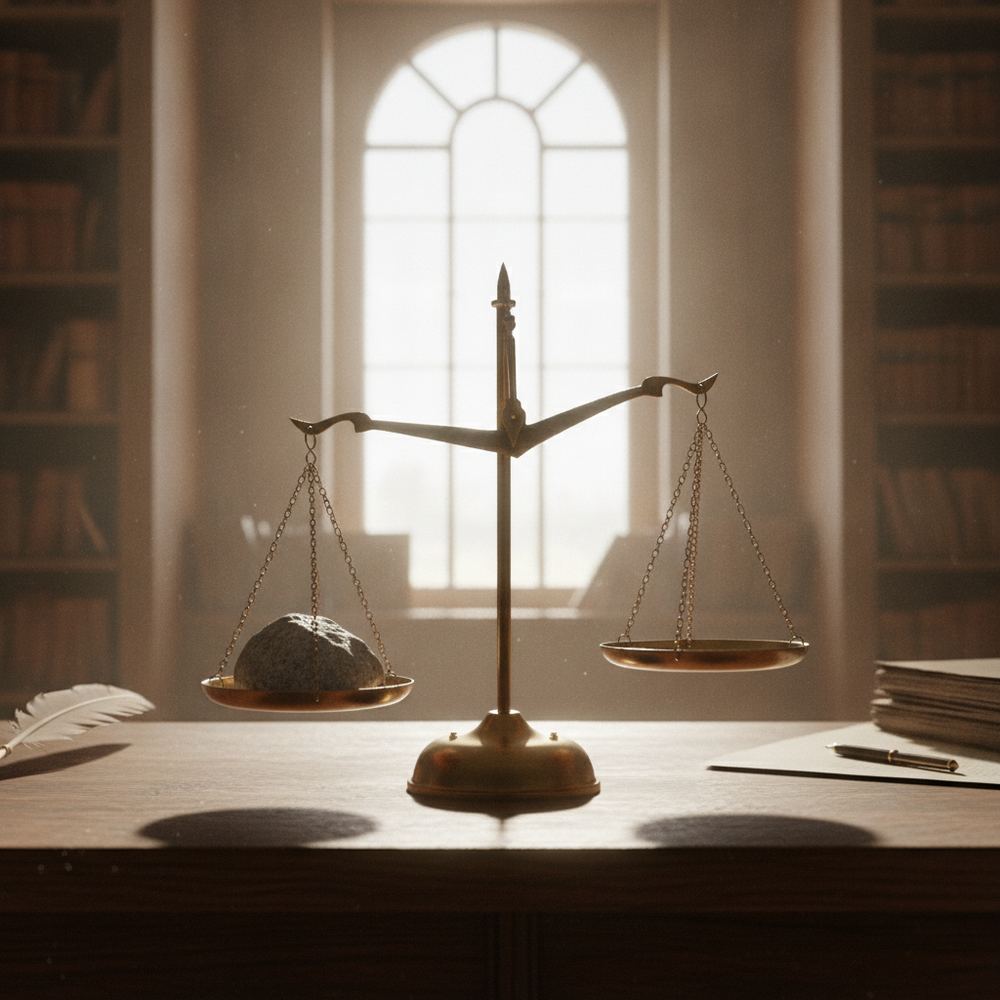
The photograph shows a classic balance scale positioned on a wooden desk, with one pan weighted by a small stone and the other left empty, causing the scale to tilt visibly toward the heavier side. Natural light from a tall window illuminates the scene, lending it a quality that is simultaneously austere and contemplative. The image is a familiar symbol of justice and ethical deliberation, but its particular composition here is more ambiguous than triumphant. The imbalance, one side bearing weight, the other empty, could represent the inherent difficulty of moral judgment: the competing considerations are rarely equal, and the task of the ethical reasoner is not to find a perfect symmetry but to determine which side of the scale the stronger argument occupies. The empty pan invites the viewer to consider what belongs there, making the image not a statement about resolved justice but an invitation to ongoing moral inquiry.
Q3
Describe what you see in this photo.
1:00 for this question
Show Model Answer
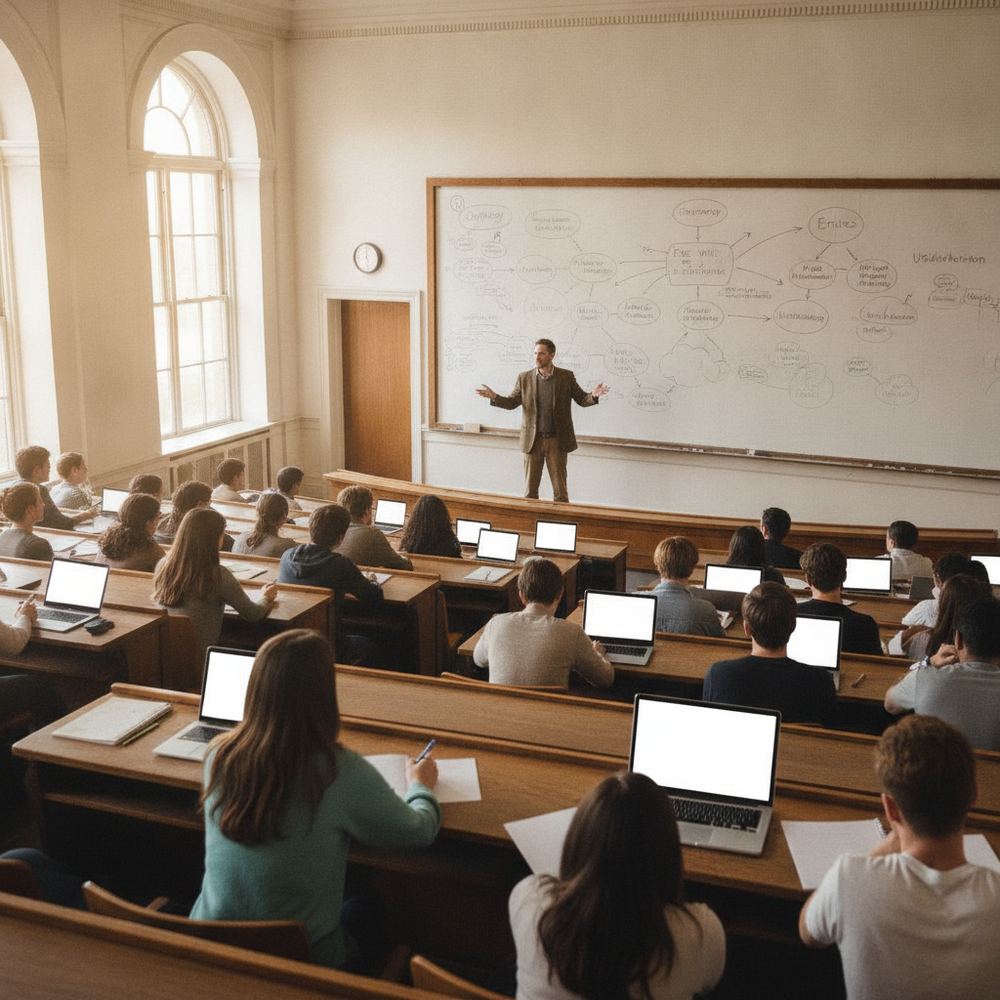
This wide-angle photograph captures the interior of a large university lecture hall during what appears to be a philosophy or logic class. The professor stands at the front of the room, mid-gesture, pointing toward a whiteboard that is dense with diagrams, argument maps, and written propositions, the kind of structured visual representation used to make abstract reasoning concrete. Students fill the rows of seats facing forward, a mixture of those typing on laptops and those writing by hand in notebooks, suggesting varying approaches to capturing and processing ideas. What strikes me about this image is the contrast between the scale of the physical space and the intimacy of the intellectual work being done within it. Philosophy proceeds through argument and counter-argument, through the careful examination of premises and conclusions, activities that are ultimately personal and internal even when conducted in a communal setting. The lecture hall frames this as a collective endeavor, which it is, but the actual work of following and evaluating an argument happens one mind at a time.