📚 20 vivid expressions to describe any photo, color, position, atmosphere, texture & action words that make your answer sound advanced.
How to practice: This set collects only the Speak About the Photo question type from the real DET (Duolingo English Test), covering DET Speaking questions. No grading and no timer, so solve it yourself, then tap each question to reveal the answer or model response.
Q1
Speak about the photo.
20s to prepare · 1:30 to speak · 1 take only
Useful Expressions
This image captures... · One could infer that... · The atmosphere conveys... · It seems to suggest... · This raises the question of...
Show Model Response
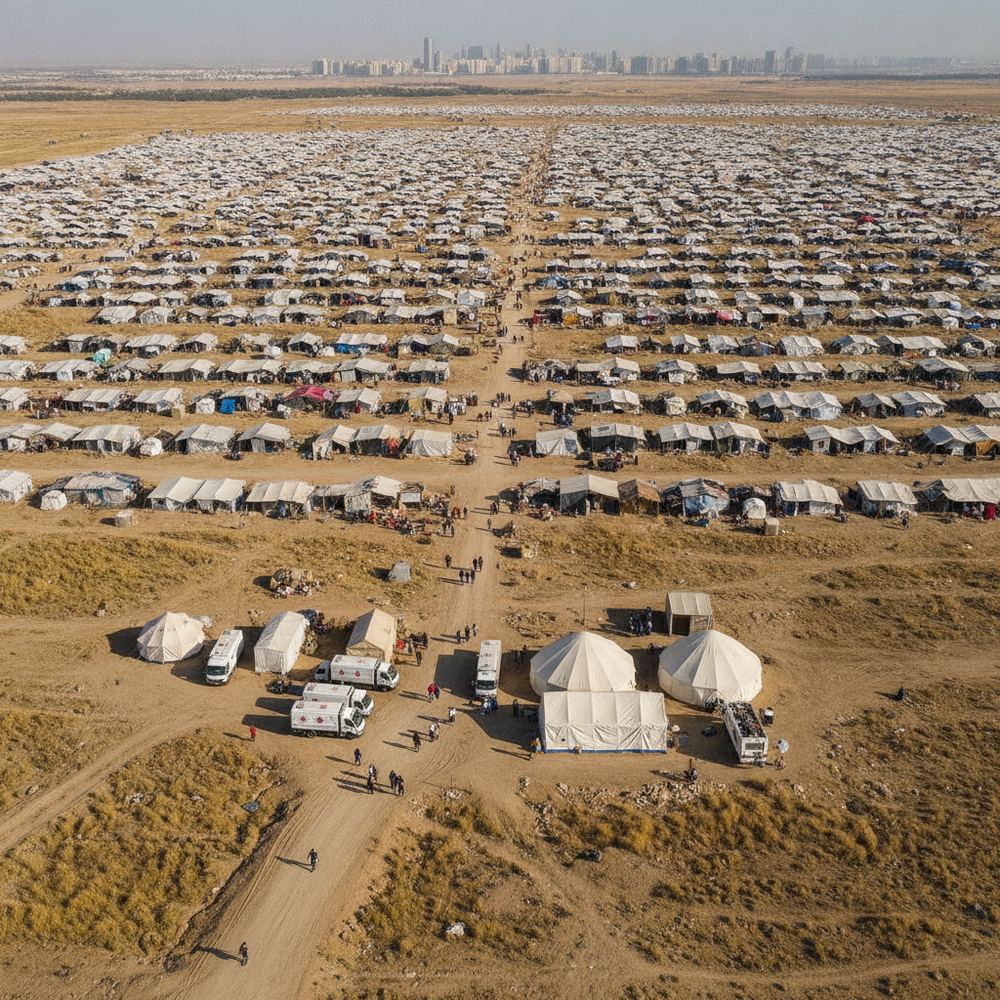
This image captures a large refugee camp photographed from above, with rows of white tents and makeshift shelters stretching across an arid, seemingly endless landscape. The scale of the camp, combined with the small figures of people visible between the structures, makes the sheer number of displaced individuals feel overwhelming even from this distant vantage point. One could infer that this crisis has forced an enormous number of people to leave their homes, given how far the shelters extend toward the horizon. The atmosphere conveys both urgency and hardship, especially with aid vehicles and supply tents positioned near the entrance, suggesting an ongoing, coordinated humanitarian response. The faint outline of a distant city skyline seems to suggest just how far removed these displaced families are from any semblance of normal life. This raises the question of what long-term solutions exist for crises of this scale, beyond the immediate aid being provided, and how the international community can better support recovery and resettlement.
Q2
Speak about the photo.
20s to prepare · 1:30 to speak · 1 take only
Useful Expressions
This image captures... · One could infer that... · The atmosphere conveys... · It seems to suggest... · This raises the question of...
Show Model Response
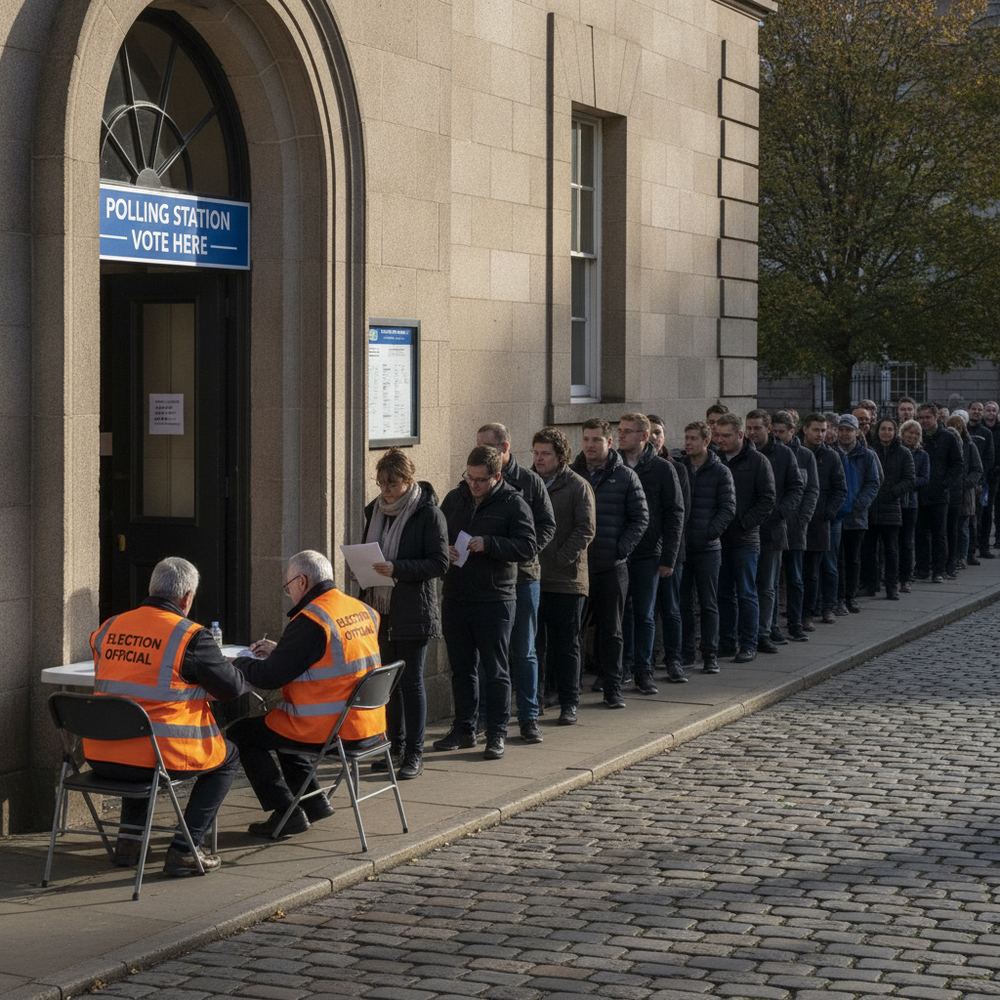
This image captures a long line of voters stretching outside a polling station, all waiting patiently and calmly on what is clearly election day. What stands out immediately is the order and calmness of the queue, with voters of different ages standing side by side despite what could easily have been a stressful or chaotic environment. One could infer that civic participation is being taken seriously here, since so many people appear willing to wait in line, likely for a considerable amount of time, just to cast their vote. The atmosphere conveys a quiet sense of determination and responsibility, reinforced by the election officials methodically checking identification at the entrance table. It seems to suggest that this community places real value on the democratic process, treating voting not as an inconvenience but as an important civic duty. This raises the question of how accessible voting truly is in different regions, and whether long wait times like this one might discourage participation among those with less flexible schedules.
Q3
Speak about the photo.
20s to prepare · 1:30 to speak · 1 take only
Useful Expressions
This image captures... · One could infer that... · The atmosphere conveys... · It seems to suggest... · This raises the question of...
Show Model Response
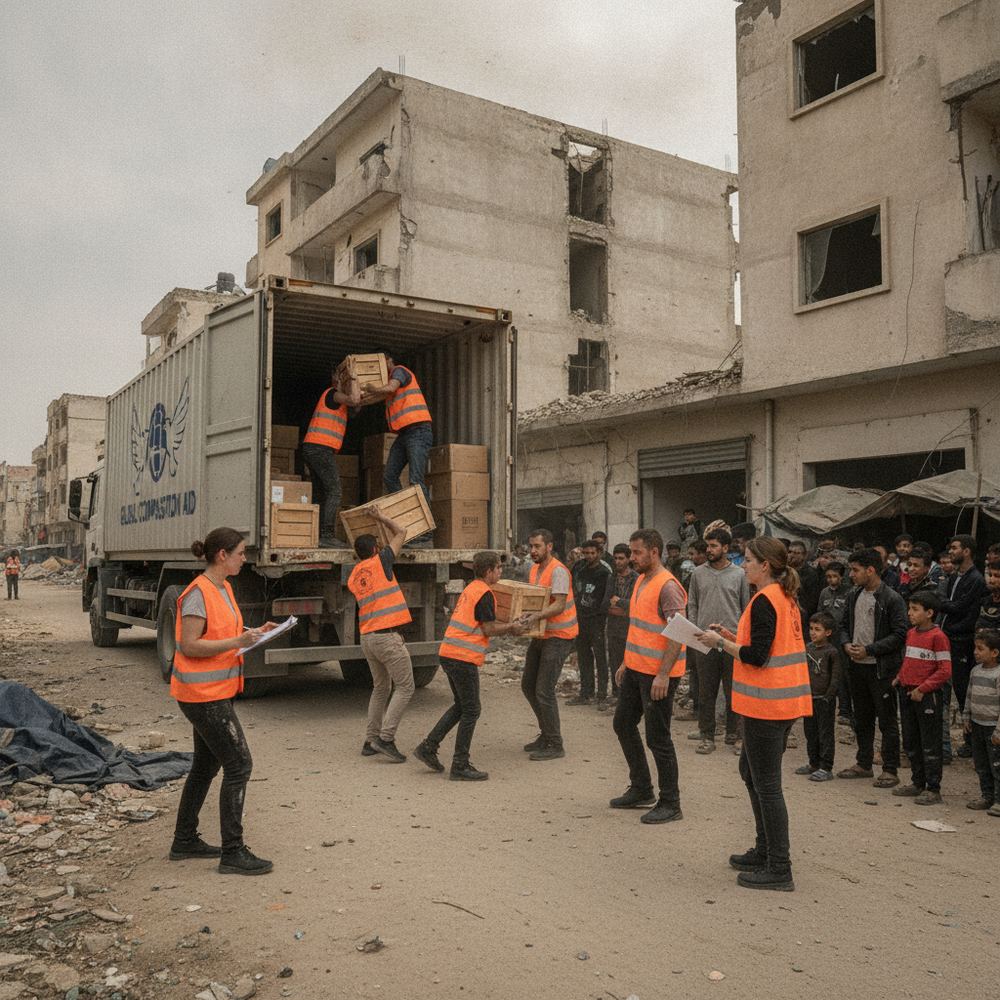
This image captures international aid workers in bright orange vests unloading crates of supplies from a truck in what is clearly a crisis zone, judging by the partially destroyed buildings visible in the background. What strikes me most is the visible collaboration between the aid workers and local community members, some of whom appear to be assisting directly with unloading and organizing the supplies. One could infer that trust has already been established between the organization and the people receiving aid, since community members are actively participating rather than simply waiting on the sidelines. The atmosphere conveys urgency tempered with organization, as workers consult clipboards to ensure supplies are distributed efficiently rather than chaotically. The large humanitarian logo on the truck seems to suggest that this operation is backed by an established international organization with experience managing crisis response. This raises the question of how communities rebuild not just their infrastructure but their sense of stability after a crisis of this magnitude.