📚 20 vivid expressions to describe any photo, color, position, atmosphere, texture & action words that make your answer sound advanced.
How to practice: This set collects only the Speak About the Photo question type from the real DET (Duolingo English Test), covering DET Speaking questions. No grading and no timer, so solve it yourself, then tap each question to reveal the answer or model response.
Q1
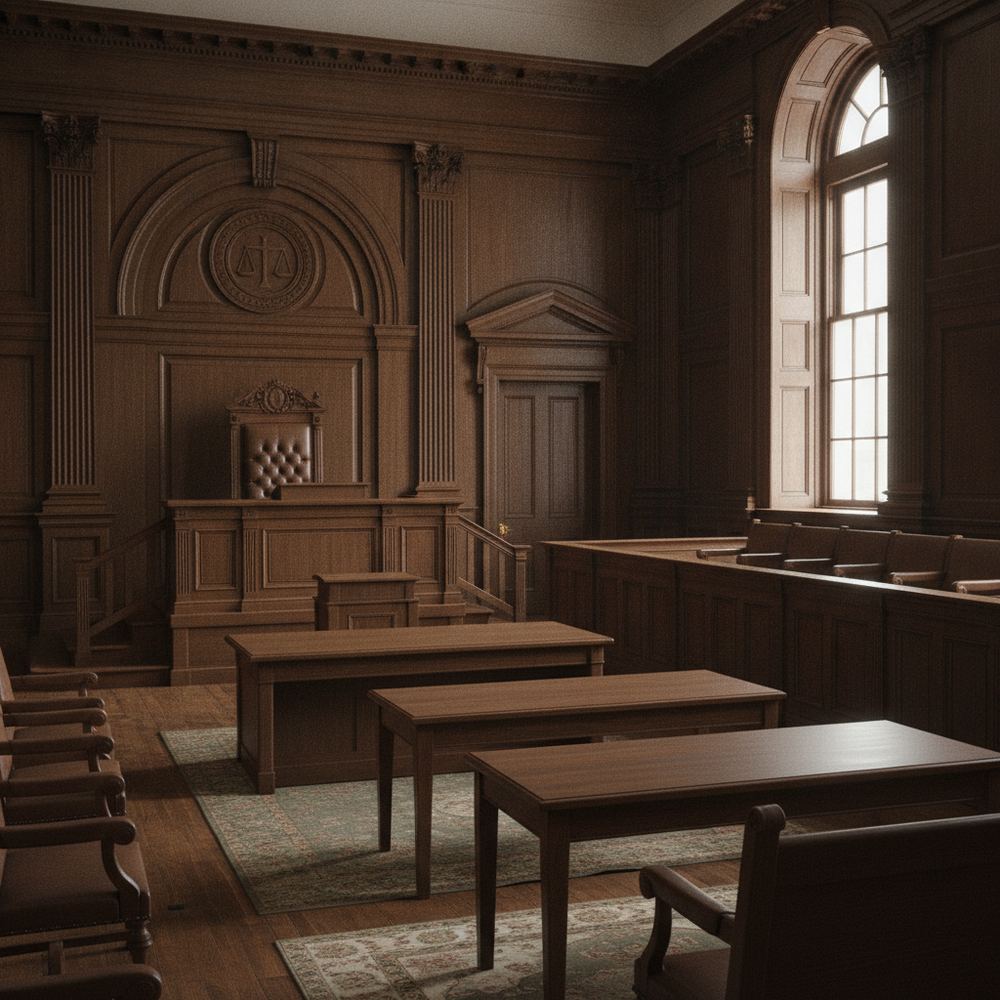
Speak about the photo.
20s to prepare · 1:30 to speak · 1 take only
Useful Expressions
This image captures... · One could infer that... · The atmosphere conveys... · It seems to suggest... · This raises the question of...
Show Model Response
This image captures the interior of a formal courtroom, completely empty except for the dim, solemn lighting that fills the space. The dark wood paneling, raised judge's bench, and the scales of justice emblem on the wall all contribute to an atmosphere of authority and gravity, even without a single person present. One could infer that this room has witnessed countless significant moments, from life-changing verdicts to emotional testimonies, given how central it is to the justice system. The atmosphere conveys a sense of weight and seriousness, reminding me that decisions made within these walls can permanently alter people's lives. The empty jury box with its twelve vacant seats seems to suggest a temporary pause, a room simply waiting for its next case rather than a space that has lost its purpose. This raises the question of how such formal, imposing environments might affect the people who step into them, whether as defendants, witnesses, or jurors experiencing the justice system firsthand.
Q2
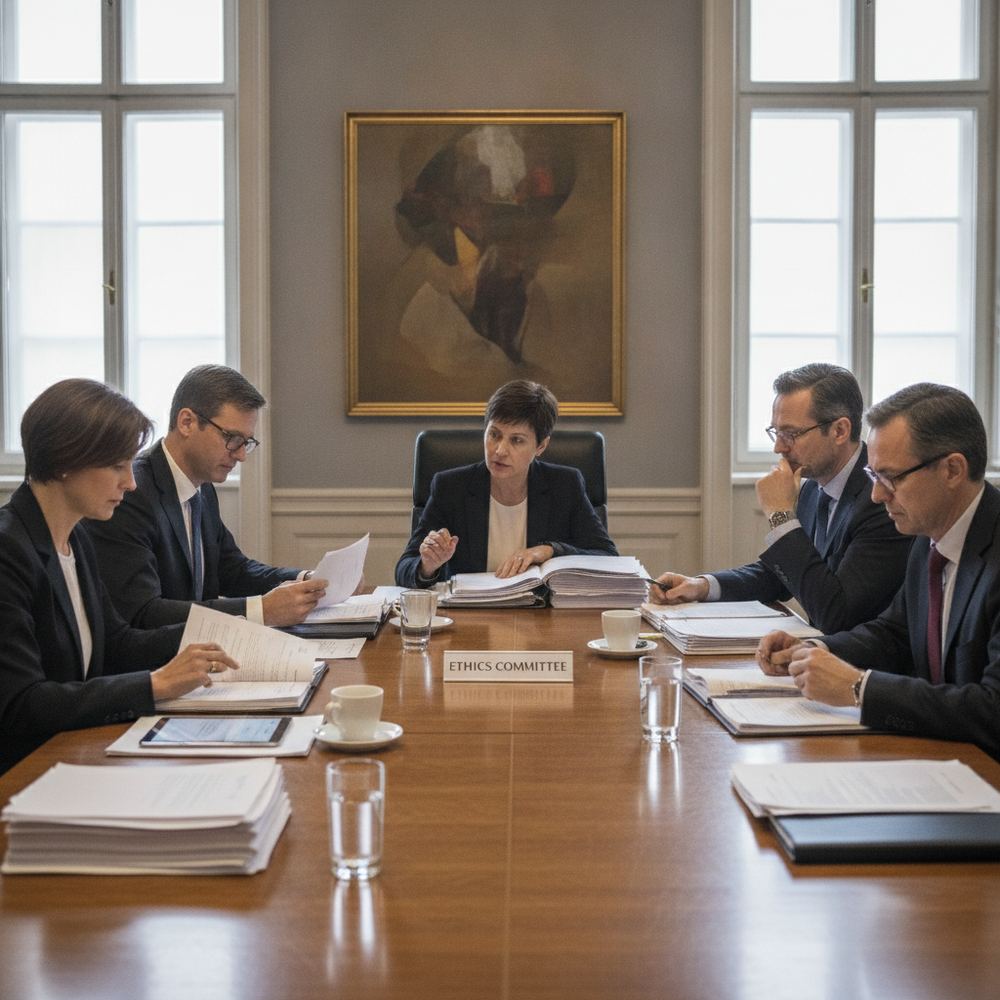
Speak about the photo.
20s to prepare · 1:30 to speak · 1 take only
Useful Expressions
This image captures... · One could infer that... · The atmosphere conveys... · It seems to suggest... · This raises the question of...
Show Model Response
This image captures a panel of five people seated around a long table, deeply engaged in reviewing documents during what appears to be a formal committee meeting. The nameplate reading 'Ethics Committee' immediately signals that the discussion likely involves sensitive or complex decisions with real consequences for the people or cases being reviewed. One could infer, based on the serious expressions and body language, that this isn't a routine administrative meeting but rather one that requires careful, deliberate judgment. The atmosphere conveys a strong sense of responsibility, as if each member understands the weight of getting the decision right. It seems to suggest that ethics committees like this one play a crucial, if often invisible, role in institutions ranging from hospitals to research organizations. This raises the question of how such panels balance competing interests, whether legal, moral, or practical, while trying to reach a fair and defensible conclusion.
Q3

Speak about the photo.
20s to prepare · 1:30 to speak · 1 take only
Useful Expressions
This image captures... · One could infer that... · The atmosphere conveys... · It seems to suggest... · This raises the question of...
Show Model Response
This image captures a researcher in a lab coat carefully examining samples under a microscope, surrounded by neatly arranged vials and equipment in a modern research laboratory. What immediately stands out is the consent form visible on a clipboard nearby, which suggests that this research likely involves human or biological samples requiring strict ethical oversight. One could infer that this scene represents just one small step in a much longer research process, one that probably involves years of data collection, peer review, and regulatory approval before any findings are published. The atmosphere conveys precision and focus, reflecting how much scientific research depends on careful, methodical work rather than dramatic breakthroughs. This raises the question of how researchers balance the pursuit of important discoveries with the ethical responsibility of protecting the people or subjects whose samples and data make that research possible in the first place.